

By Mark E. Saunders of “The Scottish Minuteman” https://www.facebook.com/profile.php/?id=61575625542197
Hold on just a wee minute here.
When John Swinney announced a proposal to make food more affordable for Scottish families — by capping the prices of essential food items in large supermarket chains — what was the reaction from opposition parties at Holyrood?
A “political stunt”. A “snoozefest”. “Implausible freebies”.
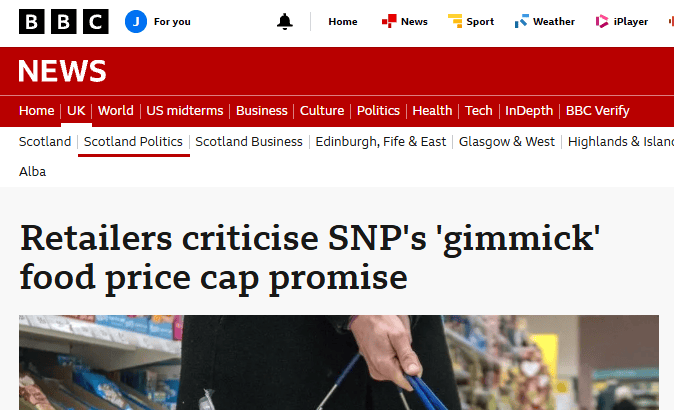
And what was the media headline?
“Retailers criticise SNP’s ‘gimmick’ food price cap promise.”
Then along comes the UK Government, proposing to remove import tariffs on essential food items to help ease the cost of living.
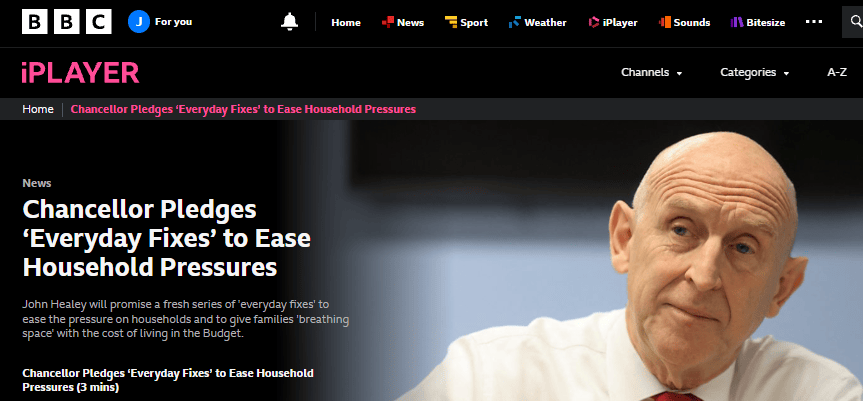
What’s the headline now?
Labour to introduce “everyday fixes” to give families “breathing space”.
How very strange.
One John tries to help people with the cost of their weekly shopping and gets labelled a gimmick merchant. Another John announces a different way of trying to reduce household costs and gets christened the fixer of everyday problems.
Of course, the proposals are different. They have to be, and I’ll get to that. But the broad aim is the same: to make life just that little bit more affordable for ordinary families.
So here’s the important bit that often gets overlooked.
Westminster holds the cards when it comes to import tariffs. Holyrood doesn’t have those and many other statecraft powers — they’re still reserved to Westminster.
The UK Government has the powers of a national government at its disposal. Swinney has to work within the limitations of devolution. He cannot simply pull the same levers as Westminster. So he looks for other ways to help.
And gets ridiculed for it?
Any commentator or economist can argue about whether a cost-of-living proposal will work. That’s only fair. But why is an attempt in Scotland presented to the public as a gimmick, while Westminster’s alternative is presented as an everyday fix?
Perhaps the real gimmick is devolution itself.
A Scottish Government is expected to tackle the problems facing its people, yet is denied many of the powers available to the government in London.
Its metaphorical hands are tied behind its metaphorical back.
But when Westminster announces its own measures, it takes centre stage, and is presented as a beneficent government delivering ordinary solutions for ordinary folk.
So here’s the question.
Does the British media rely on the public not understanding how the constitutional arrangements of these islands actually work?
Does that lack of understanding make it easier to praise the government in London while ridiculing the government in Scotland for attempting to address similar problems?
Funny how the description changes when the announcement comes from Westminster.
Perhaps that’s a question the media should be asking, rather than taking sides in a game being played out on an obviously uneven field.
By all means, criticise the Scottish Government. That’s part of democracy.
But just remember that it’s trying to help the people of Scotland within the limits of the powers it has.
And perhaps we should be asking why those forced limitations still exist in the first place.
By Mark E Saunders — author of The Union That Democracy Forgot — https://amzn.eu/d/0bpdWvl9
Discover more from Talking-up Scotland
Subscribe to get the latest posts sent to your email.

