

Would you trust any human, academic or otherwise, to answer that honestly? Not me so this is AI based on my thesis and post-checking:
To a substantial extent. Former British colonies achieved independence primarily because of historical events that weakened the Empire and reshaped the international order, with colonial nationalism and direct efforts acting as important accelerators, localizers, and shapers of outcomes rather than the sole or dominant drivers of the rapid collapse.
The British Empire reached its peak territorial extent after World War I but unravelled with remarkable speed after 1945—most major dependencies independent by the mid-1960s (India/Pakistan 1947, many African colonies 1957–1964, etc.). Historians debate the relative weight of metropolitan (British domestic and decision-making), colonial (nationalist), and international factors. A common scholarly view treats them as interactive, but emphasizes that Britain’s post-war position and the broader geopolitical environment made widespread, relatively rapid withdrawal feasible and often preferable.
https://link.springer.com/book/10.1007/978-1-349-26922-8
https://www.academia.edu/2002497/British_Decolonization
https://erenow.org/modern/mastering-modern-world-history/24.php
Key external and metropolitan drivers
- World War II as a decisive catalyst: The war exhausted Britain’s finances, destroyed much of its independent economic capacity, and damaged prestige. Major defeats (notably Singapore in 1942) exposed imperial vulnerability. Colonies contributed troops and resources, raising expectations of political reward, while Japan’s Asian advances undermined the image of European invincibility. Post-war Britain depended heavily on U.S. support and prioritized domestic reconstruction and the welfare state over costly imperial commitments. Without the war’s impact, decolonization would almost certainly have been slower. https://pressbooks.pub/abriefhistory/chapter/decolonization-in-the-british-empire/ https://www.bbc.com/history/british/modern/endofempire_overview_01.shtml
- Economic and strategic calculation: Maintaining and defending the Empire carried high military and administrative costs relative to benefits in the post-war era. Sterling crises, the need for economic liberalization, and shifts toward European trade reduced the perceived value of formal empire. By the 1950s–60s, policymakers increasingly concluded that prolonged retention risked expensive conflicts without commensurate gains. The 1956 Suez Crisis highlighted Britain’s diminished power relative to the U.S. and USSR and accelerated acceptance of retreat. Later decisions, such as withdrawal “East of Suez,” reflected financial constraints more than local pressure alone. https://insider.iea.org.uk/p/imperial-measurement-a-costbenefit https://link.springer.com/book/10.1057/9781403919601
- Changing British political will and ideology: Successive governments (Attlee’s Labour administration accepting Indian independence; Macmillan’s Conservatives after 1957) shifted from resistance to managed transfer of power. Macmillan’s 1960 “Wind of Change” speech explicitly treated the growth of African national consciousness as a political fact that British policy must accommodate. Public opinion became less willing to support colonial wars or reintroduce conscription. Britain often preferred orderly transitions into the Commonwealth over costly suppression, viewing this as compatible with residual influence. Historians such as Robert Holland have advanced a “metropolitan thesis”: imperial powers divested colonies not mainly because internal pressures left no choice, but because imperial roles came to seem incongruent with modern foreign and economic policy goals. https://en.wikipedia.org/wiki/Wind_of_Change_(speech) https://erenow.org/modern/mastering-modern-world-history/24.php
- International environment: The rise of the U.S. and USSR (both rhetorically anti-colonial, for different reasons), UN principles of self-determination, and Cold War dynamics mattered. Prolonged resistance risked driving nationalists toward communism or alienating Third World opinion. Contagion effects from Indian independence, French and Belgian withdrawals, and events such as the Algerian War or Congo crisis reinforced the case for speed. Geo-political reconfiguration after two world wars tilted power away from European imperial centers. https://academic.oup.com/edited-volume/28076/chapter/212092197 https://www.britannica.com/topic/decolonization https://www.cambridge.org/core/books/empire-project/conclusion/044664E4CE05ED37BDC4600E43286547
John Darwin and others frame the end of the British “world-system” as driven largely by geopolitical and economic forces beyond full British control, with formal empire one element in a broader network that weakened under twentieth-century stresses. https://link.springer.com/book/10.1007/978-1-349-19547-3 https://www.cambridge.org/core/books/empire-project/conclusion/044664E4CE05ED37BDC4600E43286547
Role of colonial efforts
Nationalist movements and resistance were real and consequential. In India, the Congress movement, Gandhi’s campaigns, wartime strain, and Quit India pressure made continued rule increasingly costly and politically untenable; Indian independence set a precedent. In Africa and elsewhere, leaders such as Nkrumah and organized parties advanced constitutional demands, while armed struggles (Mau Mau in Kenya, Malayan Emergency, Cyprus, Aden) raised the human and financial price of retention. Upsurges of colonial nationalism after 1945 overtook earlier gradualist policies (David McIntyre). In quantitative and comparative work, nationalist mobilization correlates with transitions even after accounting for other factors. https://www.cambridge.org/core/books/nationalism-and-war/is-nationalism-the-cause-or-consequence-of-the-end-of-empire/81CEF7C5AFA105A9B8884A3D8F4494C6 http://www.inquiriesjournal.com/articles/5/decolonization-and-the-collapse-of-the-british-empire
However, these efforts operated within a context of metropolitan weakness and international permissiveness. Britain retained military capacity in many places (as Portugal demonstrated by holding African territories longer, or as white minority regimes in Rhodesia showed) but frequently chose not to apply it on a sustained scale due to cost, domestic politics, and strategy. Many transfers were negotiated rather than forced expulsions. Nationalism was uneven: stronger and more mature in some places (India, Gold Coast/Ghana), weaker or more fragmented in others. In the absence of strong local pressure, independence might have been delayed, but the broader conditions made the status quo increasingly unattractive to London. https://simplestudy.com/gb/a-level/aqa/history/revision-notes/1-the-british-empire-c18571967/the-winds-of-change-195767/decolonisation-pressures https://www.academia.edu/37537655/How_valid_is_the_view_that_Colonial_Nationalism_was_the_key_to_the_British_decolonization_in_Africa
Variation and overall balance
Experiences differed: evolutionary paths for white settler Dominions; intense pressure plus wartime factors in India; more top-down British decisions amid rising (but not always overwhelming) nationalism in much of Africa; prolonged contestation in strategic or settler-influenced spots. Informal empire and residual influence (Commonwealth, economic ties, bases) often outlasted formal rule.
In short, colonial direct efforts were necessary to challenge the status quo, accelerate timelines, produce local leaders and states, and raise the costs of retention in key cases. Yet the scale and speed of the end of formal empire—far faster than earlier imperial dissolutions—owed more to events that weakened Britain (especially WWII and its aftermath) and the transformed international order. Policy-makers were often overtaken by events they helped create or could not fully control, leading to managed withdrawal rather than prolonged defence. The process was multi-causal; neither pure “nationalist triumph” nor pure “British decision” fully captures it, but external and metropolitan factors carried the greater weight in explaining the overall pattern. https://www.superprof.co.uk/resources/academic/social-sciences-academic/history-resources/a-level-history/the-british-empires-path-to-decolonization.html https://academic.oup.com/book/8180/chapter/153703436
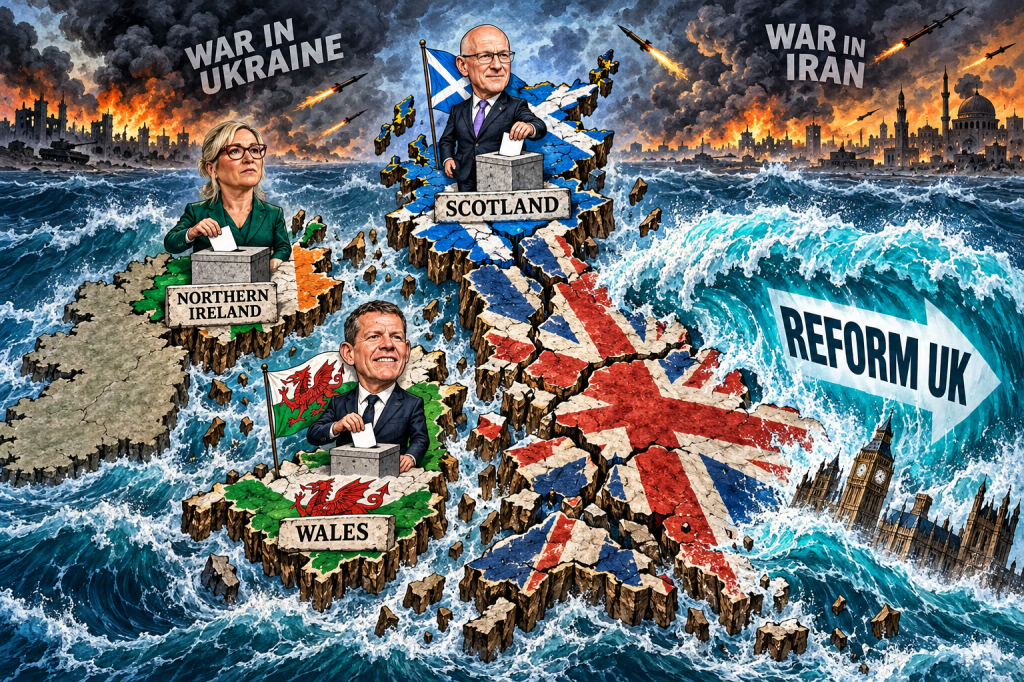
How might this apply to Scotland in the current global political climate – Ukraine, Iran, Reform UK, Three ‘Celtic’ first ministers?
Some researchers and political theorists take a more affirmative view of the similarities, treating Scottish independence as a form of “internal decolonization,” “post-colonial self-determination,” or a parallel to the late stages of British imperial withdrawal, even while acknowledging the differences from classical overseas colonies.
These views are more common in nationalist-aligned scholarship, certain strands of political theory, and some comparative studies of sub-state nationalism than in mainstream imperial history. They emphasize shared dynamics of center-periphery power, cultural recovery, democratic legitimacy claims, and the role of external shocks in shifting the cost-benefit calculation for the metropolitan state.
Key perspectives and researchers
- Internal colonialism / Celtic periphery arguments: The “internal colony” thesis (associated with Michael Hechter’s earlier work on the Celtic fringe and later adapted by some Scottish scholars) frames Scotland (along with Wales and Ireland) as having experienced structural subordination within the UK state—economic extraction, cultural marginalization, and political dependency, analogous to colonial relationships. Proponents argue that the post-1970s rise of the SNP, devolution, and independence campaigns represent a delayed decolonization process. While Hechter himself has nuanced or moved away from the strongest versions, the framing remains influential in some Scottish academic and activist writing.
- Comparative nationalism and self-determination: Scholars examining “stateless nations” (e.g., work linked to the ideas of Montserrat Guibernau, or comparative studies of Catalonia, Quebec, and Scotland) often draw parallels between Scottish claims and anti-colonial self-determination. They highlight how both involve asserting democratic majorities against a larger state, cultural revival, and appeals to international norms of self-determination. Some treat the 2014 referendum and subsequent campaigns as part of a broader wave of “second-generation” decolonization or post-imperial adjustment, especially after Brexit, which they analogize to external shocks that weakened the metropolitan center’s cohesion (similar to the post-WWII environment).
- Post-colonial and “Celtic” framing: Certain researchers and public intellectuals (sometimes associated with SNP-adjacent circles or journals on Scottish affairs) explicitly use decolonization language for Scotland. They point to:
- Cultural recovery (Gaelic, Scots language, historical narratives) as parallel to anti-colonial cultural assertion.The presence of nationalist or distinct-identity parties holding First Minister roles in Scotland, Wales, and Northern Ireland as evidence of peripheral assertion against the English/British center.External events (Brexit as a “metropolitan” decision imposed on Scotland, Ukraine-related security debates, energy policy divergences) as creating openings analogous to the international and economic pressures that accelerated colonial exits. These views treat the analogy more positively as illuminating rather than merely rhetorical, arguing that the Union’s legitimacy rests on consent that can be withdrawn, much as post-1945 Britain accepted the withdrawal of consent in the colonies.
- Academic examples and patterns: Papers and books in Scottish studies, political science, and comparative politics sometimes explore these links more sympathetically than classic imperial historians (such as Darwin or Holland). For instance, some analyses of the “Wind of Change” period draw limited parallels to how changing British political will (rather than pure force) enabled exits, suggesting similar dynamics could apply if English/UK political priorities shift under pressure from parties like Reform UK or under geopolitical strain. Others emphasize that, as in many African and Asian cases, the decisive factor is often the center’s willingness to negotiate rather than the periphery’s ability to force the issue unilaterally.
Discover more from Talking-up Scotland
Subscribe to get the latest posts sent to your email.


I think the difference today is the dependence of England on vital Scottish resources; energy and water in particular but also the value of Scottish food and whisky exports to keep the deficit down and Scottish fishing waters as a negotiating card to play with Europe. Then there’s the strategic position. Faslane provides a base for England’s nuclear submarines and our airports provide a base for patrolling the Atlantic Gap. Data centres and munitions factories can be sited in Scotland. Nuclear power plants and their toxic waste ditto.
Perfidious Albion will not leave willingly.
LikeLike