

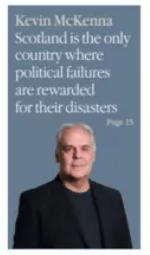
I’ve sworn off and of Kev many times then find myself angrily coming back for more. WTF is he talking about now?
This is clearly a case for AI. I have better things to do, like wipe my…………….
Here you are, 34 seconds of Grok:
Are there prominent demonstrably failed political figures in the UK or beyond who are then or later rewarded?
Yes. There are multiple prominent examples in the UK (and a similar pattern elsewhere) of political figures linked to clear, measurable failures—election defeats, policy disasters with documented economic or institutional harm, scandals, or inquiries finding serious shortcomings—who later received peerages, knighthoods, high speaking/consulting fees, book deals, or other rewards.Huffingtonpost
“Demonstrably failed” is not purely objective (political success is contested and depends on the metric), but the cases below rest on concrete outcomes rather than mere partisan opinion: market interventions, court rulings against policies, official inquiries, wasted public money, or landslide electoral rejection.
Strong UK examples
- Liz Truss: Served 49 days as Prime Minister. Her September 2022 mini-budget triggered gilt market chaos, a sharp fall in the pound, Bank of England emergency intervention, a spike in mortgage rates, forced U-turns, and the sacking of her chancellor. She is Britain’s shortest-serving PM in modern times. Post-office rewards included substantial speaking fees (reports of ~£250k in the first year alone, including £80k for one Taiwan engagement), a memoir, the Public Duty Cost Allowance available to former PMs, and resignation honours for allies (peerages and other gongs). Critics explicitly called elements of this “rewards for failure.”Publications.parliament
- Boris Johnson: Forced from office amid the Partygate scandal (events that breached COVID rules his government imposed on the public). The Privileges Committee found he deliberately misled Parliament. His resignation honours rewarded aides and allies linked to that period with peerages, knighthoods and other honours; he also secured multi-million-pound speaking fees and large book advances.The Independent
- Chris Grayling (“Failing Grayling”): As Justice Secretary and then Transport Secretary, he was associated with a string of costly and reversed policies: an unlawful ban on books for prisoners, rushed and widely criticised probation privatisation that increased problems, a ferry contract awarded to a company with no ferries (plus related settlements costing tens of millions), and other rail and transport difficulties. Critics estimated cumulative taxpayer costs in the billions. He later received a life peerage in the 2024 dissolution honours.Mirror
- Rishi Sunak’s resignation and dissolution honours: After leading the Conservatives to a historic 2024 landslide defeat, Sunak’s lists awarded peerages and knighthoods to figures including Michael Gove, Jeremy Hunt, James Cleverly, Grant Shapps, Mel Stride and others. Alister Jack (who admitted placing bets on the election date during the campaign) received a knighthood and later a peerage. Opponents described the lists as a “parade of political flunkies” and “rewards for failure.” Chris Grayling also appeared on the dissolution list.Huffingtonpost
- Tony Blair: The Chilcot Inquiry criticised the intelligence basis, legal advice, and post-invasion planning for the Iraq War, which produced long-term instability, high casualties, and large costs. After leaving office he built a highly lucrative career through consulting (including for JP Morgan, sovereign wealth funds, and governments such as Kazakhstan and Kuwait), speaking fees, and related roles—earnings reported in the tens of millions over the years.Thetimes
- David Cameron: Called the 2016 EU referendum expecting a Remain victory; the Leave result forced his resignation and ushered in years of political and economic disruption. He subsequently earned well over £1 million from speaking engagements and related activities, published a memoir, and later returned as Foreign Secretary under Sunak. He has continued on the speaking circuit.The Guardian
Other patterns include the revolving door (e.g., George Osborne’s £650,000-a-year BlackRock advisory role for limited days after leaving the Treasury, plus high speaking fees) and civil-service or public-sector cases of “failing upward” into peerages or senior posts. Scottish politics has parallel complaints about figures such as Nicola Sturgeon and Humza Yousaf receiving book advances, speaking opportunities, or cultural/academic roles after independence and governance setbacks.Heraldscotland
Beyond the UK
The pattern is common among former leaders: high-paid speaking circuits (especially in the US), consulting, board seats, media roles, or think-tank positions. Nick Clegg moved from a sharp decline in Liberal Democrat fortunes and seat losses to a senior, highly paid role at Meta. Similar dynamics appear with various US and European figures after electoral or policy defeats. The UK honours system has a long history of criticism for cronyism, dating back at least to Lloyd George’s cash-for-honours practices.
In short, UK political culture (and peer systems elsewhere) frequently rewards service, loyalty, or prior status regardless of outcomes on specific metrics of success or failure. Former prime ministers also receive ongoing public allowances. Defenders argue that experience retains value and that private-sector demand for ex-leaders is legitimate; critics see it as an elite insulation from consequences. The examples above are among the most frequently cited as “rewards for failure.”
War criminals? This……….
What about media figures? 34 seconds of AI again:
Yes—there are clear examples of prominent media figures who suffered demonstrable failures (fabrications, ethical breaches, firings, or major errors) but later received high-profile platforms, salaries, or other rewards. The pattern is especially visible in television/cable news and the UK’s media-politics revolving door.
Strong examples
- Piers Morgan: As editor of the Daily Mirror, he was fired in 2004 after the paper published photographs purporting to show British soldiers abusing Iraqi prisoners. The images were later confirmed as a “calculated and malicious hoax,” and the paper issued an unreserved apology. Morgan had earlier faced scrutiny over a share-tipping scandal involving the paper’s City columnists. Despite this, he rebuilt a high-profile career as a TV personality: judge on America’s Got Talent and Britain’s Got Talent, host of a CNN prime-time show, co-host of ITV’s Good Morning Britain, author of bestsellers, columnist, and ongoing media figure with large audiences and earnings. He is frequently cited as a serial comeback figure in media.The Independent
- Brian Williams: Longtime anchor of NBC Nightly News, he was suspended without pay in 2015 and removed from the flagship role after admitting he had exaggerated or fabricated details in stories, most notably claiming a helicopter he was traveling in during the Iraq War had been hit by enemy fire (it had not). He later returned to NBCUniversal as a prime-time anchor on MSNBC (The 11th Hour), hosted election coverage for Amazon Prime Video, and more recently signed a podcast deal with Netflix. The demotion was significant, but he retained a well-paid, visible role in the industry for years afterward.NY Post
- Mike Barnicle: Forced to resign from the Boston Globe in 1998 after plagiarism allegations (including lifting material from a George Carlin routine) and earlier issues involving fabricated or inaccurate quotes. He later became a regular political commentator and contributor on MSNBC’s Morning Joe and other outlets, maintaining a long media presence.
Broader patterns
In the UK, there is a well-documented revolving door between senior journalism (especially BBC political roles) and government communications jobs. Figures such as Craig Oliver (BBC to David Cameron’s Director of Communications), Robbie Gibb (BBC political programming to Theresa May’s communications director), and Allegra Stratton (Newsnight/ITV to roles under Rishi Sunak and Boris Johnson) moved into well-paid political positions and sometimes returned to media, even amid controversies. This is often framed as experience-based mobility rather than pure reward for failure, but it illustrates how prior media roles can lead to subsequent opportunities regardless of outcomes.
Other noted cases include journalists who promoted later-discredited narratives (for example, aspects of Russiagate coverage or Iraq WMD reporting) who retained or advanced in lucrative roles, while some who challenged those narratives faced professional setbacks. High-profile fabricators such as Jayson Blair (New York Times) and Stephen Glass (The New Republic) largely left mainstream journalism for lower-profile work (coaching, law-related roles, writing books about their experiences), so they fit the “failed” side more than the “later richly rewarded in media” side.
Media comebacks are common once public memory fades or when audiences, ratings, or political demand align with a figure’s brand. Failures that involve outright fabrication or hoaxes are among the clearest “demonstrable” cases; many other “failures” are more subjective (editorial judgments, ratings declines, or contested political coverage). As with politicians, rewards often reflect loyalty, audience draw, networks, or residual status more than a clean record of accuracy.
OK, two or three minutes I’ll never get back.
Leave it Jhon! Eee’s not warf it Jhon.
I know.
Shit………………is 11.50 AM too soon for a wee snifter?
Discover more from Talking-up Scotland
Subscribe to get the latest posts sent to your email.


Kevin’s a good writer IMO but sadly too biased for proper journalism. Short stories would be his best genre.
It’s too early for a snifter!
LikeLike