

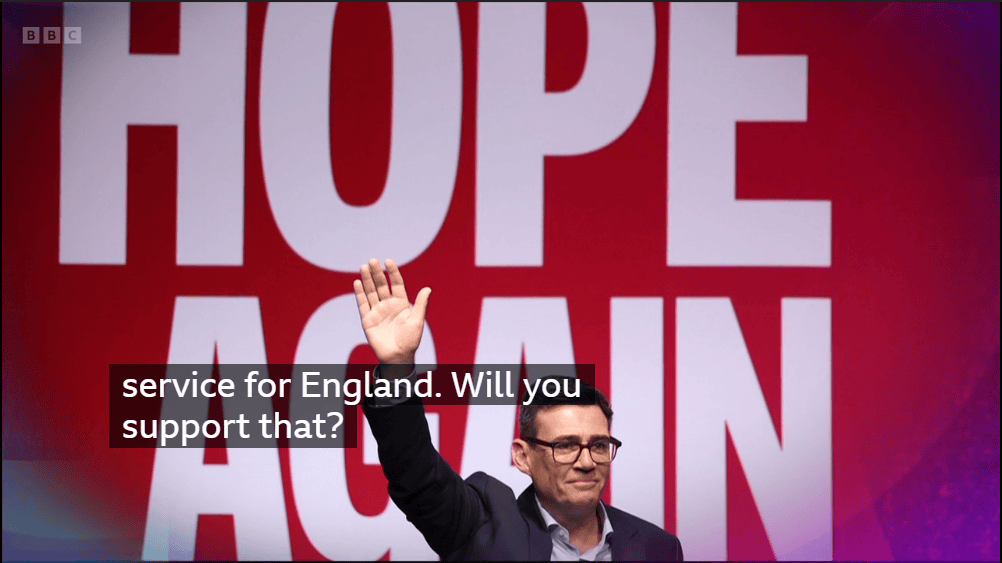
On Newsnight, last night, the above was clear with the implication that Scottish pensioners will be impoverished to pay a new national care service in England.
Before the crowdfunder finishes tomorrow, support Talking-up Scotland's work to counter the lies and get you the facts, daily, at:

Crowdfunder at: https://www.crowdfunder.co.uk/p/help-talking-up-scotland-keep-going

Or by direct bank transfer to: JOHN WATSON ROBERTSON Sort Code – 08-91-04 Account – 12266421
Scotland got a mention only when Andy Crap, Prime Minister, had a wee moment telling us about John Swinney’s prediction that Andy would be the last UK PM on the very same day, THE SAME DAY, that Andy’s dad died. How could he? Does the man have no feelings for others?
He didn’t know? That’s no excuse insists Andy’s speech-writer, Lancelot de Windsor. He should check every day before he hurts someone else.
The only other reference to Scotland was in this guy’s title, not in anything he said, wheeled on to do his real job of backing up his boss:
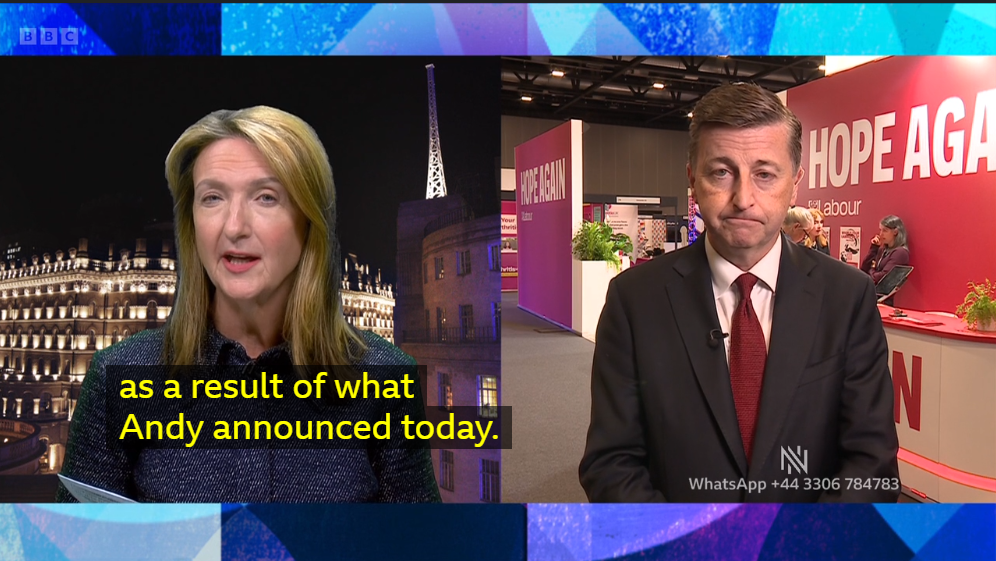
Seriously, folks, the Labour Party? Boak? ‘Andy’ eh? Not ‘the PM?’ No, that nice ‘Andy.’ The one that cried after that John Swinney said something nasty on the day Andy’s dad died. Why can’t that John Swinney be more like that sooky wee teacher’s pet, Douglas?
Seriously though, someone is shouting ‘Barnett.’
Savings from a slower-rising UK-wide pension bill sit in the UK Treasury. If those savings are then spent on extra social-care provision in England, that extra England spending is “comparable” under the Barnett formula. Scotland would therefore receive Barnett ‘consequentials‘ — extra block-grant money it can spend on its own priorities, including care. One report of the speech explicitly noted that. https://www.heraldscotland.com/news/26591799.burnham-announces-major-change-pensions-2030/
Is it certain that the Barnett formula would be applied to increase the Scottish block grant given that the UK government can based on other factors of its own choosing simply reduce it?
That outcome depends on Treasury classification and political choice. The UK government could, in principle, classify the spending differently, fund it in a way that does not trigger consequentials, or make an offsetting cut elsewhere.
So, they can present an addition to the block grant as a Barnett consequential to directly compensate Scotland but they could then ‘make an offsetting cut elsewhere.’
Before the crowdfunder finishes tomorrow, support Talking-up Scotland's work to counter the lies and get you the facts, daily, at:

Crowdfunder at: https://www.crowdfunder.co.uk/p/help-talking-up-scotland-keep-going

Or by direct bank transfer to: JOHN WATSON ROBERTSON Sort Code – 08-91-04 Account – 12266421
Has it done this before?
Yes — not usually as a labelled “clawback of this specific consequential”, but the Treasury has repeatedly used tools that have the same effect: extra money in one comparable English programme is cancelled out by less money in another, or the extra money is simply kept outside Barnett.
Examples:
1. Netting at departmental / spending-review level
Barnett is applied to the net change in a UK department’s budget, not to each announcement in isolation. Extra English social-care spending can be offset by a cut (or smaller increase) elsewhere in the same department or across comparable services. Scotland then only sees the net figure. That is normal Treasury practice, not a rare trick. https://www.gov.scot/publications/foi-202400404500/
2. Formula bypass (money given without consequentials)
The classic case is the extra £1bn for Northern Ireland after the 2017 Conservative–DUP confidence-and-supply deal. Scotland and Wales got nothing. City deals, some levelling-up pots and other one-off packages have also been allocated outside Barnett. https://www.instituteforgovernment.org.uk/article/explainer/barnett-formula
3. Classification
Treasury decides whether a line is “comparable” (triggers Barnett) or reserved / UK-wide (does not). Disputes have happened — for example over 2012 Olympics regeneration spending. If new care spending were classified as something other than straightforward England-only social care, consequentials could shrink or vanish. https://www.instituteforgovernment.org.uk/article/explainer/barnett-formula
4. Offsetting through the fiscal framework
If the extra English care spending were funded by a reserved tax rise that does apply in Scotland, or by changes that enlarge Scotland’s block-grant deduction (the BGA for devolved taxes), the net Scottish gain can be smaller than the raw Barnett figure. That is a different mechanism, but it can cancel part of the uplift. https://fraserofallander.org/funding-a-rise-in-social-care-spending-england-implications-for-the-scottish-budget/
So, the UK government has previously arranged funding so that extra English spending did not produce a matching, lasting rise in the Scottish block grant. It could do so again. It is not the default for a large, obvious England-only care programme, but it is within the Treasury’s existing toolkit.
Before the crowdfunder finishes tomorrow, support Talking-up Scotland's work to counter the lies and get you the facts, daily, at:

Crowdfunder at: https://www.crowdfunder.co.uk/p/help-talking-up-scotland-keep-going

Or by direct bank transfer to: JOHN WATSON ROBERTSON Sort Code – 08-91-04 Account – 12266421
Discover more from Talking-up Scotland
Subscribe to get the latest posts sent to your email.


Have no fear, Andy Crap (our Academy Award nominee for best tearful performance ) will make sure Scotland pays, once again, for England’s benefits.
The man is a charlatan.
LikeLike
As a pensioner, I think ending the ‘triple lock’ is the right thing to do. This was a heinous bribe to a group which is, on average, more affluent than most of the rest of society.
We do need a better care service and not just in England. The centralising instincts of the SNP has stymied attempts in Scotland to get a better care service, which really has to be substantially locally controlled. Commonwealth has set out feasible plans for how such a service can operate in Scotland.
Since pensioners – affluent and otherwise – will be the largest group of beneficiaries of such a service, removing the ‘triple lock’ will release funding for the development of such a service.
If the SNP’s local government reorganisation is to be effective it has to be significantly empowering of local government.
LikeLike
I do not think the Scot Gov have removed Social Wcare gfrom Local Councils. But have enhanced the role of Local Councils in this s are.
Integration boards in Scotland between NHS Scotland and Local Councils Social Care were set up in 2014. The integration boards are public bodies that combine local council social care and NHS community health services into a single system.
Established under the Public Bodies (Joint Working) (Scotland) Act 2014, there are 31 integration authorities across Scotland (30 operating via an Integration Joint Board and 1 via a lead agency arrangement in Highland)
The initial funding if I remember correctly was in the region of £8 billion. One of the purposes of this integration was to reduce bed-blocking due to delayed discharges.
LikeLike
I suspect that we in Scotland will , as per , be expected to just ‘sook it up’.
Though I wonder how many pensioners in Scotland, who voted Labour in 2024 , will now be content with that decision that they formerly made back then ?
Though let’s not also forget that some within Labour also want to bring down the welfare budget to pay for defence spending – as in Bombs over Bairns.
Liz S
LikeLike