

Thanks to reader Joe Murray for alerting us to this.
As the media operating in Scotland desperately struggle to blame the SNP for a problem in the QEUH water supply and drainage, signed off by a Labour dominated health board in a Labour-led authority, in 2015, two years before the SNP victory, another problem for them emerges.
Surely, they’d seen Erin Brockovich (2 000) and would have known about the deadly chromium hexavalent, if they did some reading?
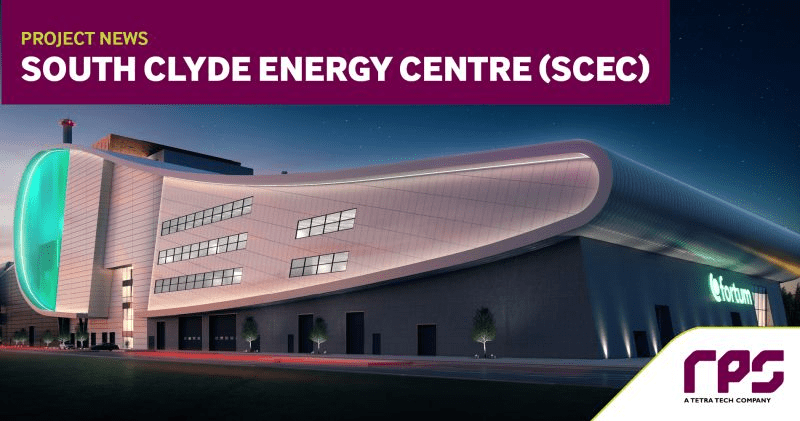
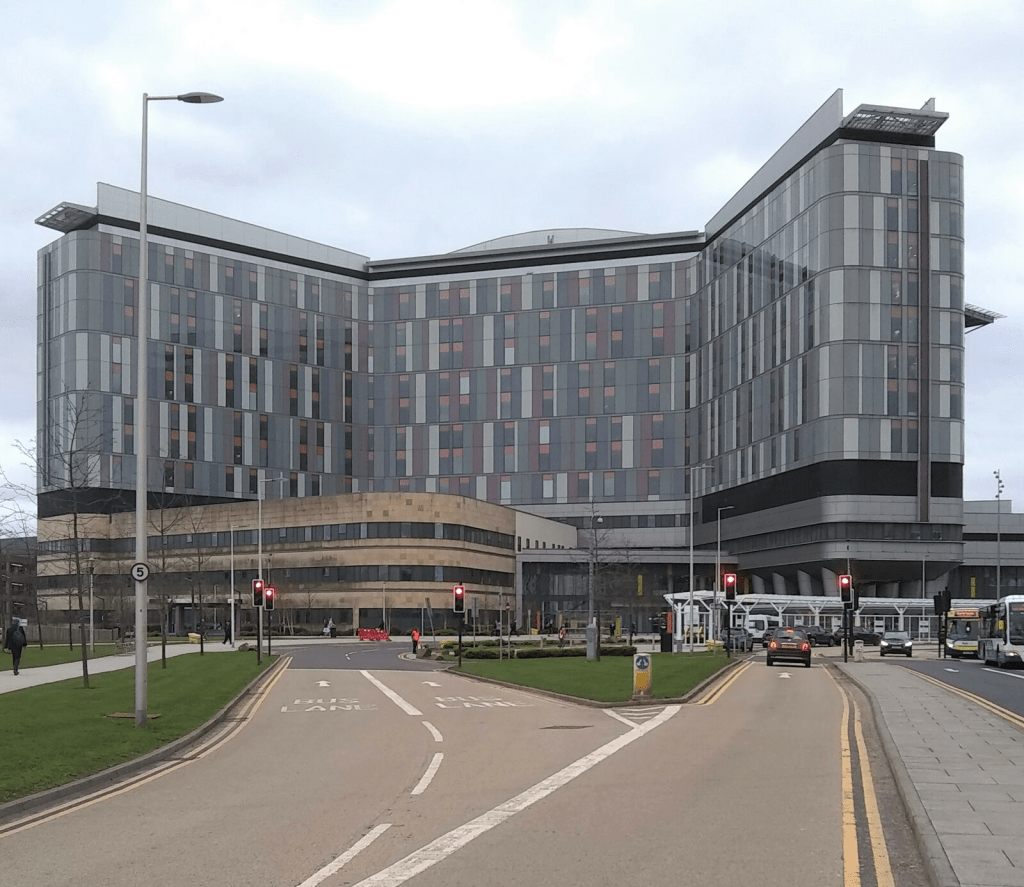
In 2012, Glasgow City Council granted planning permission for the South Clyde Energy Centre (an energy-from-waste/incinerator facility) at Bogmoor Road, North Cardonald (near Hillington), which is close to the Queen Elizabeth University Hospital (QEUH) in Govan.
Close, yes, but more important, is it upwind?
You bet it is:
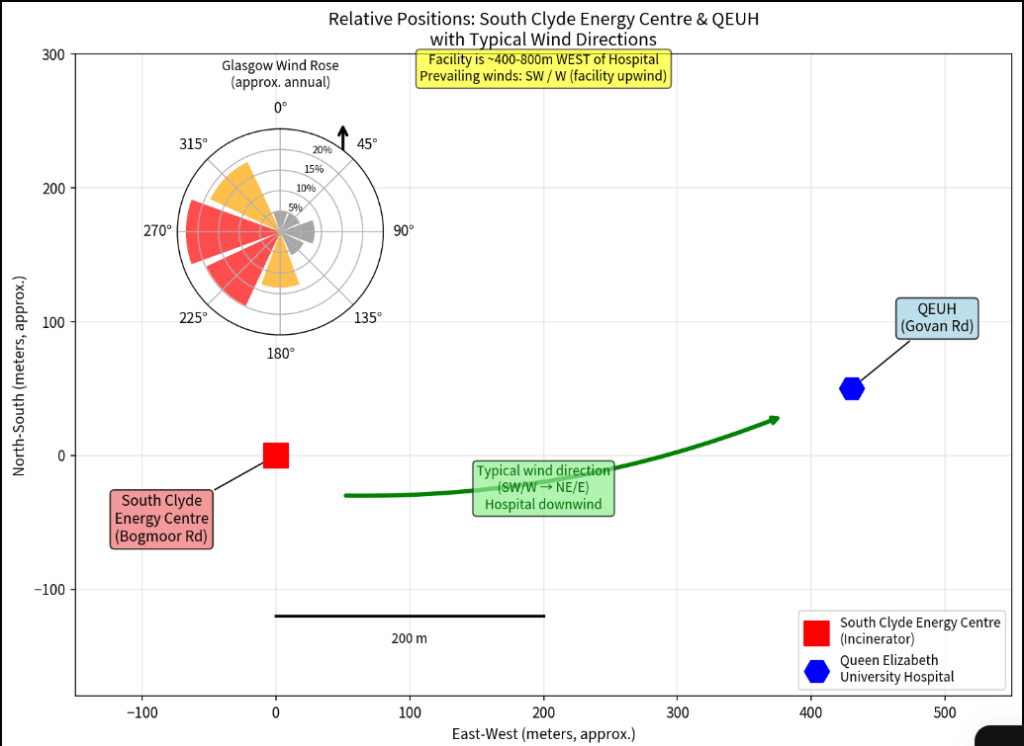
Most days, the wind will blow directly from the Bogmoor Road’s site’s chimney over the QEUH site.
Note that Scotland has had a moratorium (SNP/Greens) on new incineration capacity since 2022, but it does not apply to plants that already had planning permission (or were under construction).
Is the incinerator damaging to health?
A UK Government ‘systematic review’ of epidemiological evidence (post-Waste Incineration Directive) found no clear evidence of associations with cancers, adverse birth outcomes, or other morbidity. Any potential effects on people living nearby are likely to be very small it said.
However, the absence of evidence is not the evidence of absence, and:
Hospitals treating immunocompromised patients are inherently more vulnerable to any airborne contaminants. Modelling accounts for this, but residual uncertainty remains for ultra-low-level or poorly characterised emissions (e.g., certain ultrafine particles or trace organics).
Sources?
Numerous peer-reviewed papers on hospital-acquired infections and air quality that note elevated risk for immunocompromised groups – Here are several concrete examples of peer-reviewed papers that discuss elevated risk of airborne/hospital-acquired infections for immunocompromised patients (with direct links where available):
- Microbial Air Quality in Healthcare Facilities (2021)
https://pmc.ncbi.nlm.nih.gov/articles/PMC8296088/
Explicitly states that airborne microorganisms are generally harmless to healthy people but pathogenic/opportunistic agents can cause infections in immunosuppressed patients, making indoor air quality critical in hospitals. - Analysis of Mould Exposure of Immunosuppressed Patients at a German University Hospital (2023)
https://pmc.ncbi.nlm.nih.gov/articles/PMC10672964/
Focuses on mould (Aspergillus etc.) exposure risks specifically for immunosuppressed patients and links indoor air contamination to potential nosocomial infections. - Improving ventilation hygiene in wards for immunocompromised patients (2025)
https://pmc.ncbi.nlm.nih.gov/articles/PMC12276443/
Discusses the particular vulnerability of haematology/immunocompromised patients to airborne fungal spores (e.g., Aspergillus) from ventilation systems and the risks of inadequate air quality. - Seasonal Characterization of the Aerobiome in Hematopoietic Stem Cell Transplant Rooms: Potential Risk for Immunosuppressed Patients (2024)
https://doi.org/10.3390/microorganisms12112352
Highlights the elevated infection risk for immunocompromised HSC transplant patients from airborne microorganisms and the need for strict air quality controls (HEPA filtration, etc.). - CDC Guidelines – Environmental Infection Control in Health-Care Facilities (Air section)
https://www.cdc.gov/infection-control/hcp/environmental-control/air.html
Official guidance listing hematopoietic stem-cell transplant patients, chemotherapy patients, organ-transplant recipients, and other immunocompromised groups as those at greatest risk from airborne pathogens.
These are representative examples from the literature; many more exist in infection-control and environmental-health journals.
Finally, the QEUH is 60m high (14 storeys). The incinerator chimney is only 80m high.
Hot exhaust gases rise further above the stack (plume rise due to buoyancy and momentum). At the short distance involved (~400–800 m), the plume centreline is often still elevated. A 60 m-high building can therefore sample air closer to (or within) the denser part of the plume than a ground-level receptor would, especially under stable atmospheric conditions or light winds.
Concentrations are highest near the plume centreline and decrease both above and below it. Taller structures can therefore experience higher concentrations than lower buildings or street level in some meteorological scenarios.
Shoddy work by the Planning Committee or pressure from a Labour donor?
Discover more from Talking-up Scotland
Subscribe to get the latest posts sent to your email.


A Labour sanctioned Incinerator ? Will it be burning any ‘Brown envelopes ‘ responsible for its planning permission ?
LikeLiked by 1 person
Try this Australian review paper for ‘The health impacts of waste incineration: a systematic review’: https://www.sciencedirect.com/science/article/pii/S132602002300732X “A range of adverse health effects were identified, including significant associations with some neoplasia, congenital anomalies, infant death and miscarriage, but not for other diseases.”
And don’t forget the two sewage cesspits both north of the hospital campus (sewage under treatment) and contiguous with the hospital campus to the west (raw sewage including that from the new Shieldhall Tunnel, Scotland’s largest sewer). Diagram en route courtesy of Glasgow City Council Planning Department.
LikeLiked by 2 people
But one thing of which we can be sure is if any patients suffer because of the outflow from this incinerator, the finger of blame will point in the wrong direction.
LikeLiked by 2 people
was the planning committee made up of exclusively Labour councillors. Surely the SNP and Green councillors objected to this. Even if they were outnumbered at that time, they are now in control of Glasgow and the national Government could force through some changes too.
LikeLike
As I understand it only Labour and they told the Scot Gov all was well.
LikeLike