

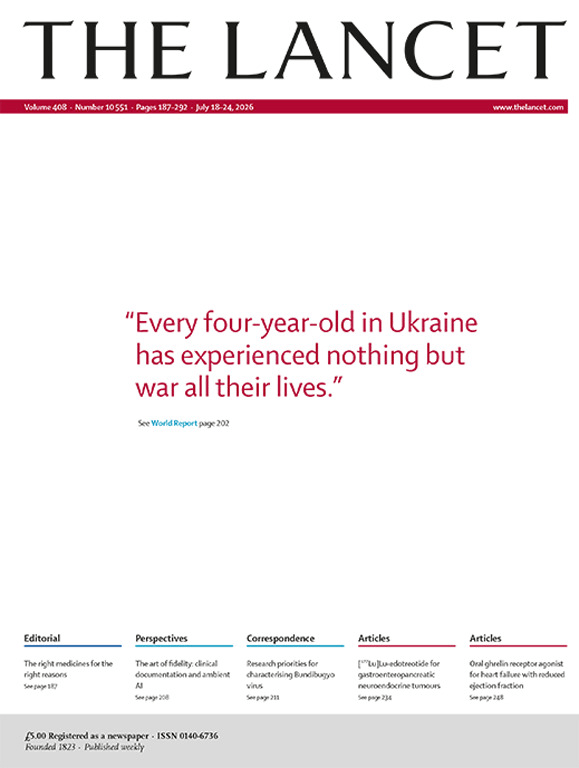
The Lancet is one of the world's most highly respected and influential general medical journals. Latest Journal Impact Factor (JIF): 109.0 (2025 JCR, released June 2026, based on 2025 citation data). This is a significant increase from 88.5 the previous year. It ranks #1 in the "Medicine, General & Internal" category (Q1), ahead of competitors like the New England Journal of Medicine (NEJM).
In the Lancet today:
By focusing narrowly on reactor operations, portraying reactor hazards as “extremely small”, and ignoring nuclear energy’s other dangers, Talha Burki’s World Report1 supports the mendacious narrative that nuclear power is a “safe, clean, and affordable” solution to both rising electricity demand and climate change.2
Uranium, the fuel of nuclear power, is radioactive and carcinogenic.3 It endangers health across the entire nuclear fuel cycle. Uranium miners suffer increased risk of lung cancer. Nuclear fuel production workers are exposed to uranium hexafluoride and radon.4 Reactor operators and nearby communities are exposed to radioisotopes; in the USA, 115 000 cancer deaths since 2000 are attributed to residence near nuclear plants.5 All reactors produce waste that will remain radioactive for millennia.6 Reactor decommissioning liberates this waste, exposing workers and communities.
Nuclear power is unique among energy sources in its potential for catastrophe—meltdown, fuel diversion, and weaponisation. A life-cycle analysis of 388 nuclear plants finds that all reactors, large and small, are susceptible to nuclear incidents.7
Nuclear power is not climate neutral. Nuclear power releases 66 g of greenhouse gases per kWh of electricity, which is far less than any fossil fuel, but more than any renewable. Most greenhouse-gas releases occur during uranium mining and milling.8
Nuclear power is neither cheap nor affordable. The levelised cost of nuclear energy has increased by 47% since 2009.2 Current economic analyses do not count health-related costs and underestimate construction costs. Construction of the most recent US reactor cost over US$35 billion,9,10 more than twice its original budget.
By contrast, the cost of renewables has plummeted. Since 2010, solar power costs have decreased by 90%, wind by 70%,11 and batteries by 99%.12
Nuclear power is economically viable only when it receives massive subsidies, tax breaks, and liability exemptions. Nuclear power is a dangerous distraction. It is time to move beyond it and invest in renewables.
Full text and sources at: https://www.thelancet.com/journals/lancet/article/PIIS0140-6736(26)01304-8/fulltext?rss=yes
Discover more from Talking-up Scotland
Subscribe to get the latest posts sent to your email.


Do you think that anyone in the Scottish (sic) Labour Party will have read this article ?
Or will that well kent medical tosser , Michael Shanks, refute the findings as SNP scaremongering ?
Or , more likely , will they simply ignore this as it does not fit the agenda paid for by their Nuclear Paymasters ?
LikeLike
Sadly no but we do what we can – keep sharing
LikeLiked by 1 person
The Labour branch office in Scotland HQ’d in London I am sure keep informed about which of their kids are being debunked by John and others.
Shanks is another one not experienced for any important job in government, but here we are.
By ‘Nuclear Paymasters’ do you mean the nuclear lobby and hugely rich folk taking the cash for trying to push more deadly nuclear onto Scotland, who don’t care one iota about the people of Scotland.
No thanks!
LikeLike
Oh FFS I meant lies…how the heck that came up as kids! Grrr.
LikeLike
Well that puts the case beyond reasonable doubt. We must prevent further nuclearisation of our country and get rid of the toxic installations already here. Westminster can spend its billions removing Trident from Faslane instead of their planned “upgrade”.
C’mon Scottish Government. Let’s see a bill in Holyrood banning new nuclear and removing existing plant and cleaning up the toxic waste.
Strange that Westminster always has billions for weapons but taking children out of poverty? “The country can’t afford it”
LikeLiked by 1 person
Hard to bear all of the Burnham-esque talk of “The North” excluding large swathes of Northern England, not least the much advertised Cumbrian coast with it’s beautiful beaches (Seascale beach for a family outing anyone? – 4.4/5 on trip advisor?!?) moving into the Lake District National Park with its stunning scenery and freshwater lakes all once part of the Brittonic Kingdom of Strathclyde/Yr Hen Ogledd….I’ll have to watch a rerun of ‘Edge of Darkness’ in homage. If Sellafield is what England/Westminster/City of London (Square Mile) has done to ITS OWN PEOPLE wtf will they do to us?
Also, does anyone have web references for amateur Geiger counter users especially any groups that patrol beaches in the vicinity of nuclear sites both civil and military. Seems hard to find useful links for some reason….?
LikeLiked by 1 person