

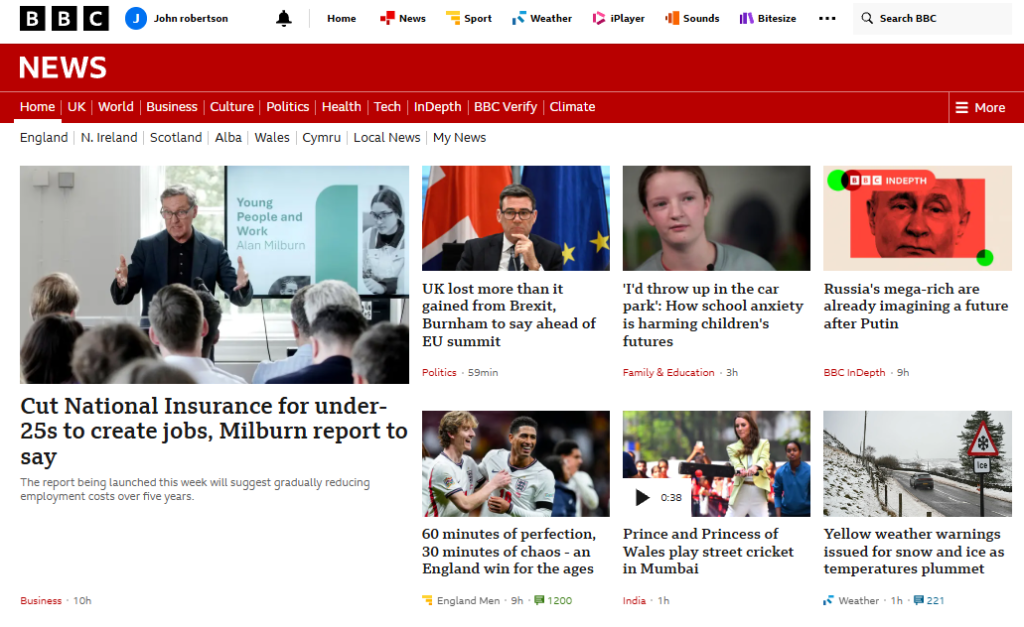
Top story across the BBC today, ‘former minister’ Alan Milburn’s report today will suggests a National Insurance cut to help solve the UK’s (sic) youth unemployment problem. BBC Scotland is not covering it. They have good reason not to. The BBC UK report only has only one reference:
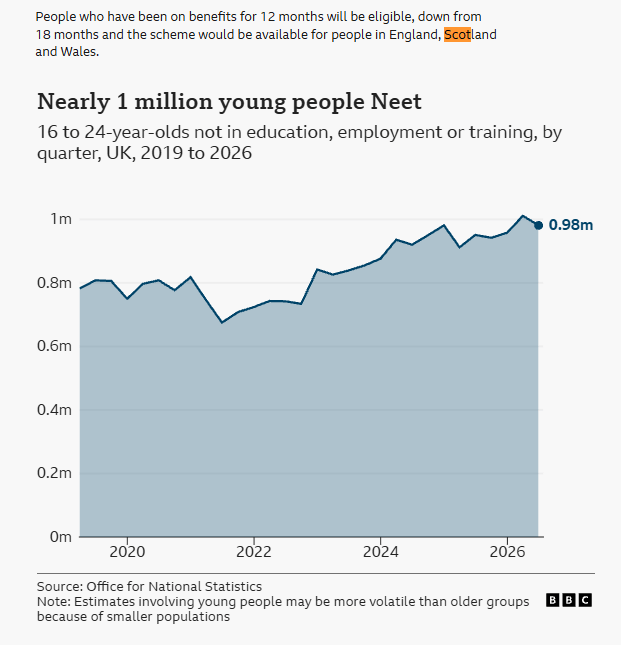
These are UK data, above. There are no separate NEET data for the four UK nations but there are for youth unemployment which clearly is the focus of a national insurance cut.
Why should there be reference to Scotland?
One, youth unemployment is far lower in Scotland than in England and two, maybe Alan Milburn could have learned from that.
The facts on the youth unemployed, looking for work and available to start, but held back by employers not able to stand the increase in National Insurance brought in by Labour in 2024:
The youth unemployment figures are 16.2% in the UK1, 16.3% in Wales2 and only 10.2% in Scotland.3 England drives most of the UK figure; regional highs in London (24.9%), Yorkshire & Humber (17.6%), North East (17.2%). England overall is slightly above the UK average.4
So, youth unemployment in the UK is almost 60% higher than in Scotland (6 as a percentage of 10.2).
Why is it lower in Scotland?
Scotland’s youth unemployment rate (around 10–12% in recent available periods, e.g. ~10.2% for Sep–Nov 2025) has consistently been lower than the UK average (currently 16.2% for Jan–Mar 2026). This gap has persisted over many years, though figures are volatile due to small sample sizes in the Labour Force Survey. https://scot-jobs.com/blog/scotland-s-youth-unemployment-in-2026-progress-pressures-and-the-path-ahead
Contributing Factors
Several structural and policy differences help explain the gap:
- Stronger emphasis on apprenticeships and vocational pathways: Scotland’s Modern Apprenticeships system is more established and integrated than in much of England. It provides paid, work-based training routes for 16+ year olds, helping smooth the school-to-work transition and keeping more young people in employment or training. High completion and retention rates in these programmes contribute to better outcomes. skillsdevelopmentscotland.co.uk
- Higher youth employment rates and lower inactivity: Scotland has often shown higher employment rates among 16–24 year olds and lower economic inactivity (not in work, education, or training) compared to the UK average. This reflects better overall engagement in the labour market or education. gov.scot
- Policy focus on youth employment: Successive Scottish Governments have prioritised youth employment strategies (e.g., Developing the Young Workforce), with targets, funding for training places, and careers support. This includes efforts to align education with employer needs. gov.scot
- Economic and sectoral differences: Scotland has strengths in sectors like energy, tourism, public services, and certain manufacturing that employ younger workers. The overall Scottish labour market has also shown resilience, with lower overall unemployment than the UK in recent periods. https://www.gov.scot/publications/labour-market-trends-march-2026/pages/unemployment-estimates/
In summary, Scotland’s better performance is largely attributed to a more developed apprenticeship and vocational system, plus targeted youth employment policies that improve transitions into work. These have helped it outperform the UK average even as broader economic conditions tighten.
Sources:
- https://commonslibrary.parliament.uk/research-briefings/sn05871/
- https://www.gov.wales/labour-market-statistics-annual-population-survey-october-2024-september-2025-html
- https://www.skillsdevelopmentscotland.co.uk/media/l2qpgqbx/economy-people-and-skills-january-2026.pdf
- https://www.statista.com/statistics/280326/uk-youth-unemployment-rate-by-region/
Discover more from
Subscribe to get the latest posts sent to your email.

