

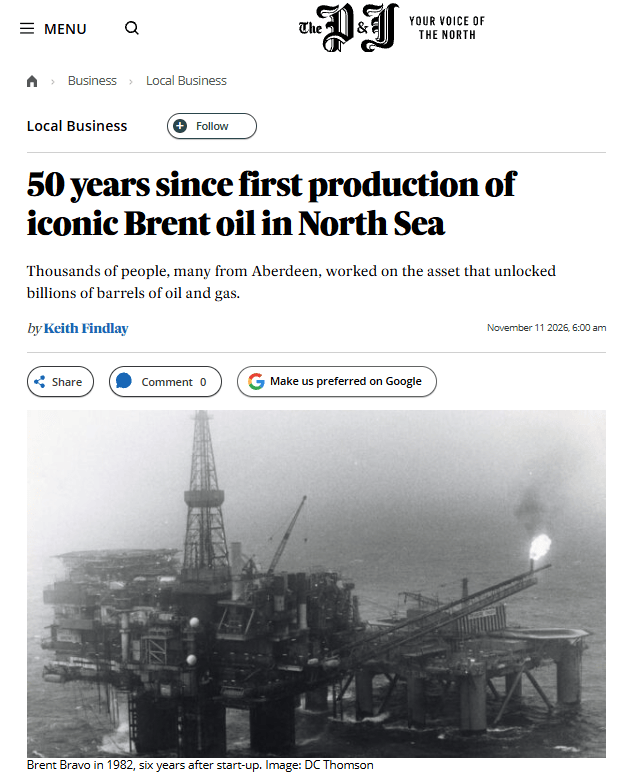
Thanks to rtpscott for sharing this with us.
He asks – What has Scotland gained from all this wealth?
He knows, we all know, we do not have the £1 trillion at least, invested, as Norway has.
What have the UK Governments, Tory and Labour, done with the revenue from those billions of barrels of oil and gas over the last 50 years?
The P&J tells us part of the answer:
Output from the asset helped the UK through the 1979 oil crisis. Brent reached peak production capacity of 504,000 barrels of oil per day in 1982. This was enough oil to power half of Britain’s homes.
How the money was used
The revenues were not ring-fenced or saved in a sovereign wealth fund (unlike Norway). They flowed into general government finances. In practice they:
- Helped cover the large fiscal costs of high unemployment in the early 1980s in benefits, lost income-tax and National Insurance receipts from industrial workers.
- Supported deficit reduction / lower public-sector borrowing.
- Enabled significant tax cuts for the better of, especially under Thatcher.
- Made the broader programme of industrial restructuring and the shift toward a more services and finance-oriented economy more politically and fiscally feasible.
Discover more from
Subscribe to get the latest posts sent to your email.


Don’t let Priests run your country
Don’t let lawyers run your country
Don’t let scientists run your country
Certainly don’t let journalists run your country.
Running out of options – shall we try academics?
LikeLike
I suspected at the time that a disproportionate amount of HM Treasury’s “windfall” was spent in Northern Ireland.
Because the UK operated a centralised tax and spending system, all North Sea oil and gas revenues went directly into the central UK Treasury (the Consolidated Fund) alongside income tax, VAT, and other receipts.
During the peak oil boom of the late 1970s and 1980s, this windfall boosted the Treasury’s overall spending power, helping to bankroll high levels of public expenditure, including the substantial fiscal subvention required to fund Northern Ireland during the Troubles.
LikeLike