

Help Talking-up Scotland keep going
Crowdfunder at: https://www.crowdfunder.co.uk/p/help-talking-up-scotland-keep-going
Or by direct bank transfer to: JOHN WATSON ROBERTSON Sort Code – 08-91-04 Account – 12266421
By Jim Mennie
On Great Bernera, a small island off Lewis with about 250 residents, a volunteer café
has become the centre of an expensive disability-discrimination claim. The dispute
turns on a contrast that is easy to miss beneath the headlines: the gap between an
owner’s assertion that a rescue dog is a trained assistance animal and the standards
that professional assistance-dog practice actually uses — task specificity, public
behaviour, temperament, and an independent training record.
That contrast is the spine of the case. The legal chronology is the civic hook: the
wrong defender was sued first, costs could not be recovered because of legal aid,
and a second volunteer charity is now in the firing line.
Claire Kellerman, 62, the adopted daughter of the late actress Sally Kellerman,
moved from California to Lewis in 2023 and later settled on Bernera. She says her
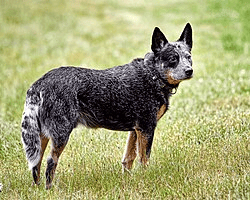
Australian cattle dog, Lady Tarkina Snow Fire, is an owner-trained assistance animal
she needs for a hidden disability linked to past trauma.
In 2025 staff at the Bernera Community Café, run by the Bernera Community
Association, refused the dog entry. The premises serve food. Signs welcome
assistance or service dogs. Kellerman says the staffs refusal was unlawful
discrimination under the Equality Act 2010. She first sued the Great Bernera
Community Development Trust, which had no role in running the café and spent
more than £7,000 defending the action before the error was conceded. A sheriff
awarded costs, but they could not be recovered because she has legal aid. The
claim was then redirected at the Association for £10,000. It is being handled by the
Ethnic Minorities Law Centre. A hearing is expected in 2027.
By early September 2026 the Association’s public appeal had raised £177,000 to
meet legal costs and keep the community centre open. The dispute is unresolved.
Around 13 other businesses on Stornoway and Lewis report similar confrontations.
Owners have described Kellerman shouting at staff, using abusive language,
threatening legal action and leaving some employees in tears after they declined to
admit the dog. Her solicitors wrote to those businesses asserting her rights as a
disabled person with an assistance dog. She says she had visited some places
without trouble before moving to the island and that staff became hostile afterwards.
UK law does not require an assistance dog to come from a charity or appear on a
national register. An owner-trained dog can have public-access rights if it is trained to
perform specific tasks that mitigate a disability and remains under control in shops,
cafés and transport. Presence, comfort or companionship is not enough. Kellerman
says she has given her lawyers doctors’ letters from the United States and the
United Kingdom and that the dog is recognised in both countries.
She has not published those letters, and she has not publicly identified the trained tasks beyond a
general claim that the dog does “whatever I need.”
Tarkina is an Australian cattle dog mix, possibly with German Shorthaired Pointer.
Kellerman adopted her after the New Mexico Humane Society found her in the
desert around 2021–22. She says the dog had been traumatised, barked
incessantly, and was trained by her alone. No public certificates, logged training
hours, public-access assessments, or independent accounts of Kellerman working
as a dog trainer have been produced. Her publicly described background centres on
regenerative farming, permaculture, writing, singing and Celtic Viking mysticism. A
secondary claim that she once worked with celebrity-owned dogs is unsourced. A
2020 Hawaii employment case mentioned “untrained dogs” at a former workplace; it
does not establish any training credential of her own. On the public record, the only
evidence of training is her own assertion that she trained this particular dog.
Cattle dogs were bred to herd independently over long distances. Typical traits
include high energy, a strong instinct to control movement, (circling, nipping heels,
trying to control movement of people or groups), intense focus on one person,
and wariness of strangers. Those qualities can help some psychiatric or trauma-
related work at home if the individual dog is unusually steady. They sit poorly with
the calm, neutral behaviour expected in a café. UK assistance-dog charities
overwhelmingly use Labradors, Golden Retrievers, their crosses, spaniels and
poodle types for that reason. A desert-rescue adult with a history of trauma and
reported reactivity would be unlikely to pass their temperament screens.
Charities start with purpose-bred or carefully screened puppies that spend their first
12–14 months with volunteer raisers learning basic socialisation and household
manners. Formal training then begins at specialist centres under professional
instructors. An Australian cattle dog taken from a desert rescue as an adult,
with a history of trauma and reported chasing of other animals, would almost
certainly be rejected at the temperament-assessment stage used by these
organisations.
That is where owner assertion and professional practice diverge most sharply.
Organisations such as Guide Dogs UK, Hearing Dogs for Deaf People and Medical
Detection Dogs start with purpose-bred or carefully screened puppies that spend
their first 12 to 14 months with volunteer raisers learning basic socialisation and
household manners. Formal training then begins at specialist centres under
professional instructors. Guide-dog formal training lasts around six months after the
puppy-raising phase; the whole process from birth to qualification typically takes two
years. Hearing and medical-alert programmes follow similar timelines and require a
minimum of about 120 hours of structured professional training plus extensive public-
access work. Owner-trained dogs that succeed usually involve the same order of
hours, plus professional supervision for task work. Kellerman has described only informal, self-directed training, with no mention of logged hours, public-access
testing or instructor involvement.
A genuine assistance dog must also perform identifiable, disability-mitigating tasks
— guiding around obstacles, alerting to sounds or medical changes, retrieving
medication, interrupting nightmares, applying deep pressure, blocking — to a high
reliability standard, often a first-command response in public. Emotional support or
mere presence does not confer those rights. Accredited dogs must remain calm, fully
toilet-trained, under close control and free of predatory or reactive behaviour in
cafés, shops and transport. High-drive herding breeds need expert management to
suppress instinctive chasing; self-training without that expertise frequently fails.
While UK law does not mandate charity certification, reputable owner-trainers still
seek independent public-access assessment and keep training records. No such
evidence has been produced in this case. An Australian cattle dog can, in principle,
work as an assistance dog for a particular handler. Suitability is judged on the
individual animal’s training, public behaviour and tasks, not breed alone. On the
public record so far, that evidence has not been shown. Presenting an unassessed,
self-trained rescue of a high-drive herding breed as the equivalent of a professionally
prepared assistance dog is the point on which this case, and the cost already borne
by two small island charities, is likely to turn.
Ms Kellerman. Word of advice. Pull the Other Paw.
Help Talking-up Scotland keep going
Crowdfunder at: https://www.crowdfunder.co.uk/p/help-talking-up-scotland-keep-going
Or by direct bank transfer to: JOHN WATSON ROBERTSON Sort Code – 08-91-04 Account – 12266421
Discover more from Talking-up Scotland
Subscribe to get the latest posts sent to your email.


Thx for setting out the issues. I was baffled by this news item but not enough to look it up myself!
LikeLike