

Help Talking-up Scotland keep going
Crowdfunder at: https://www.crowdfunder.co.uk/p/help-talking-up-scotland-keep-going
Or by direct bank transfer to: JOHN WATSON ROBERTSON Sort Code – 08-91-04 Account – 12266421
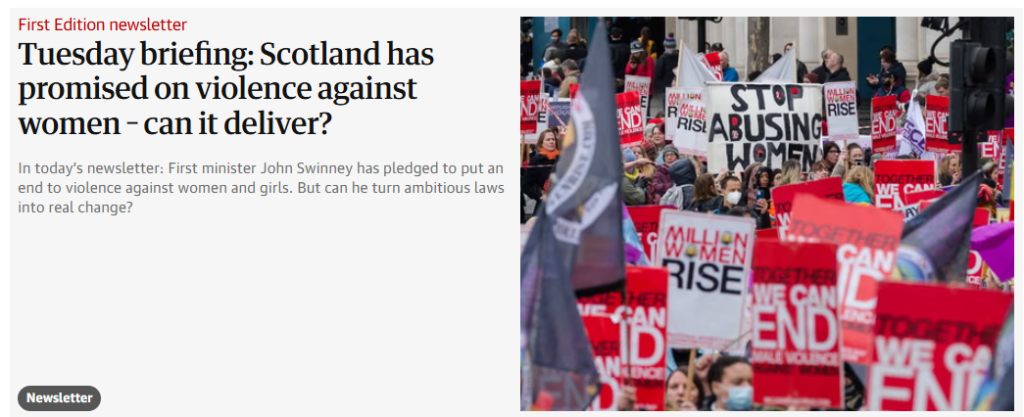
The Guardian’s Scotland Correspondent, Libby Brooks, is often ill-informed and this show little sign of doing any better.
The image is, of course, from a march in London.
Good morning. Violence against women and girls, in all its myriad forms – physical and mental, blatant and insidious – is a global challenge. It reaches back through millennia and, lately, it has been turbo-charged by technology, which offers abusers new ways to shame, harass and monitor victims. What would it take to eradicate it?
Scotland’s first minister John Swinney wants to find out. Today, he will set out his programme for government (the Holyrood equivalent of the King’s speech), and Swinney surprised many when he pledged to put ending violence against women at the heart of his government’s ambitions for the coming year and beyond.
But haven’t we been here before? Scotland has produced a raft of radical strategies, as well as legislation hailed as the international gold standard on domestic violence. So what hasn’t changed? For today’s newsletter, I spoke to equalities campaigner Talat Yaqoob, who co-chaired the Scottish government’s National Advisory Council on Women and Girls after four years until last month. I asked her what government – and societal – action constitutes meaningful change, and what other countries can learn from Scotland.
‘So what hasn’t changed?’
You see the route we’re taking but any good reader might tell us what has been achieved so far, for context.
Here is something:
In the year-ending June 2025, there were 72 804 cases of rape and attempted rape, 211 225 sexual offences and 797 530 cases of domestic abuse, in England and Wales.1
In Scotland in the same period, the figures were 2 897, 5 124 and 2 573.2, 3
England & Wales have roughly 11 times the population, so all things being equal you might have expected the figures to have been around 30 000, 55 000 and 30 000. In fact, they were between two and three times higher for rape and assisted rape, four times higher for sexual offences and a staggering 20 to 30 times higher for domestic abuse!
Now there will be differences in reporting which limit direct comparison, I know but they are not enough, given the scale, to do so significantly. Indeed, The Sexual Offences (Scotland) Act 2009 actually broadened the definition of rape in Scotland (e.g., explicitly including male victims and certain acts), which increased recorded figures there post-2010.4
Should this shocking contrast have been the other way, just as with drug deaths, you can be sure ‘our‘ media would not hesitate to have Scotland as the ‘rape capital of Europe’ and so on.
Finally, Labour aims to halve violence against women in England & Wales in 10 years, so the figures, if they manage, would be around 36 000 rapes and attempted rapes, 105 000 sexual offences and 400 000 cases of domestic abuse – in each case still higher pro rata than in Scotland!
Sources:
- https://www.ons.gov.uk/peoplepopulationandcommunity/crimeandjustice/bulletins/crimeinenglandandwales/yearendingjune2025#sexual-offences
- https://www.gov.scot/publications/recorded-crime-scotland-2024-25/pages/sexual-crimes/
- https://www.gov.scot/publications/recorded-crime-scotland-2024-25/pages/non-sexual-crimes-of-violence/
- https://www.bbc.co.uk/news/uk-scotland-41399257
Note – some (10-15%?) sexual offences and cases of domestic abuse are against men.
How was this achieved?
The horrific story of Gisele Pelicot dominates discussion of the abuse of women and girls. The comment below may trigger faux rage and deliberate misrepresentation in a few comments. However, to deal with a problem, which Scotland still has ‘in spades’, we have know how we are progressing, if at all.
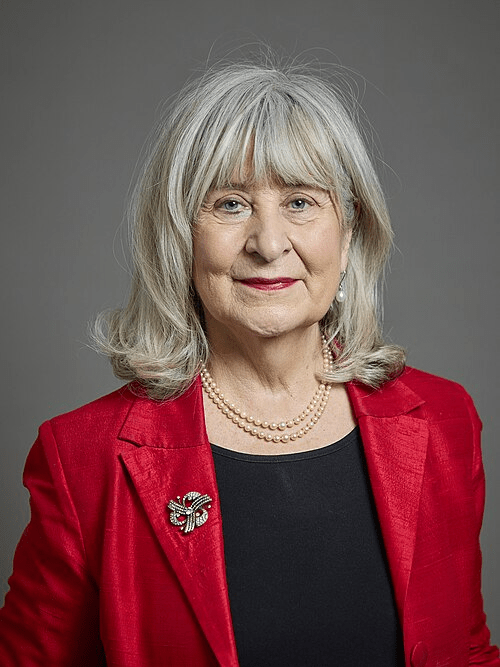
Helena Ann Kennedy, Baroness Kennedy of The Shaws, is a Scottish barrister, broadcaster, and Labour member of the House of Lords, is no supporter of the SNP in Government, so what she said nearly two years ago is still important.
By stewartb
In the light of the above BBC Newsnight report of failures by two English police forces, to protect women, from ‘Misogyny – A Human Rights Issue’ (8 March 2022), the independent report from the Scottish Government’s Working Group on Misogyny and Criminal Justice led by Dame Helena Kennedy (https://www.gov.scot/publications/misogyny-human-rights-issue/ )
Helena Kennedy writes: “Scotland has proudly led the way in many areas concerning women’s rights and violence against women; the zero tolerance campaign on domestic abuse, for example, was initiated here. Scotland was at the fore and set the gold standard in recognising that coercive, emotional and financial control was a form of domestic abuse. The reforms recommended in this report are also innovative, change-making and radical.”
She adds: “It is admirable and right that Scotland holds the ambition of ridding itself of misogyny altogether. It is an ambition for serious social change. It will be no mean feat but making a strong start by creating new laws, specifically created for women, will be a clear declaration of intent. These recommendations are intended to reach deeper into the foundations of inequality. They are purposely framed to create a profound shake-up. There will undoubtedly be opposition from those who are wedded to the old order. But men and women who want a better society for themselves and for future generations will embrace the spirit if not the letter of this Report. Change has to come and society is ready for it.”
As a postscript Kennedy notes: “I was given free rein to choose my own Independent Working Group ..”
În her introduction to the report, Kennedy remarks in a section entitled ‘Laws Worth Fighting For’:
“The invitation (i.e. from the Scottish Government) to consider misogyny and the law might be considered by many as a hospital pass. Why would anyone step into this hostile territory? I have spent my life arguing for legal reform to create systems where people can be treated without discrimination and with equality and justice. Hatred always stems from seeing certain ‘others’ as ‘lesser’ beings.
“Since the 1970s I have fought for women’s rights but I have also fought against class bias and racism and religious bigotry and homophobia. I have been a strong advocate for justice for trans people, having acted in a number of cases involving the most egregious persecution of those who have changed their gender identity.
“I was leading counsel in the first trans case in an international court – the European Court of Justice; we won my client’s case of sex discrimination when she asserted her right to live as a woman. I have acted for a young trans woman who was raped, then ridiculed by police, and when she withdrew her complaint, knowing she would be humiliated in the witness box, she was prosecuted for perverting the course of justice and wasting police time. Trans people suffer unimaginable abuse and discrimination and that should not be minimised. Trans women face misogyny as well as prejudice about their change of gender.
“Disabled women, young and elderly women, LGBTI+ women and women of colour all face prejudice alongside misogyny. The law should seek to protect as many people as possible. I should also probably add that most of my clients over the years have actually been men and I have sought justice with vigour for them too.”
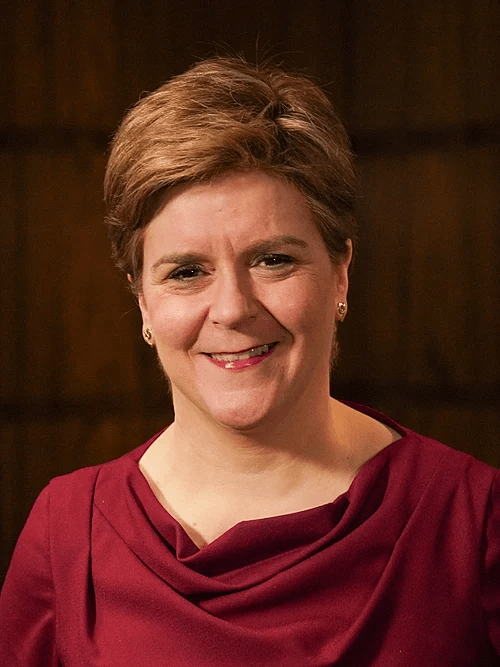
What role did First Minister Nicola Sturgeon play in this achievement?
Nicola Sturgeon, as First Minister from November 2014 to March 2023, played a leading role in advancing the recognition of coercive, emotional, and financial control as domestic abuse through legislation. https://en.wikipedia.org/wiki/Nicola_Sturgeon
Coercive Control and the Domestic Abuse (Scotland) Act 2018
Sturgeon’s government made a major, widely praised contribution:
- In 2017, her government introduced the Domestic Abuse (Scotland) Bill, creating a specific offence covering not just physical violence but patterns of psychological, emotional, and coercive/controlling behaviour.
- The Act passed with cross-party support and came into force in April 2019. It was described as “world-leading,” “gold standard,” or “groundbreaking” by campaigners, the government, and international observers for explicitly addressing non-physical abuse that was harder to prosecute before. https://www.gov.scot/news/new-powers-to-tackle-domestic-abuse-1/
- Sturgeon publicly championed it, met with survivors, announced related proposals, and highlighted early convictions under the new law (e.g., 13 by late 2019). Her administration positioned it as part of a broader “zero tolerance” approach to domestic abuse. https://www.gov.scot/news/new-powers-to-tackle-domestic-abuse-1/
This aligns directly with the report’s praise for Scotland recognizing “coercive, emotional and financial control” as domestic abuse. The reforms built on earlier work (e.g., by women’s organizations) but represented innovative statutory change under Sturgeon’s leadership.https://sourcenews.scot/worlds-gold-standard-new-domestic-abuse-law-comes-into-force-in-scotland/
Sturgeon’s government drove the legislative innovation on coercive control that the 2022 report highlights as part of Scotland’s progressive record. This was a key achievement of her administration in women’s rights and justice reform.
Help Talking-up Scotland keep going
Crowdfunder at: https://www.crowdfunder.co.uk/p/help-talking-up-scotland-keep-going
Or by direct bank transfer to: JOHN WATSON ROBERTSON Sort Code – 08-91-04 Account – 12266421
Discover more from Talking-up Scotland
Subscribe to get the latest posts sent to your email.


GUARDIAN ARE WORSE THAN RUSSIAN LEADERS
THEY WANT TO LIE AND CHEAT SCOTS OUT OF
FREEDOM TO CHOOSE OUR OWN DESTINY
GO BACK TO ENGLAND AND SPOIL YOUR OWN COUNTRIES FUTURE
LikeLike