


was really upset about everything.
Help Talking-up Scotland keep going
Crowdfunder at: https://www.crowdfunder.co.uk/p/help-talking-up-scotland-keep-going
Or by direct bank transfer to: JOHN WATSON ROBERTSON Sort Code – 08-91-04 Account – 12266421
BBC Reporting Scotland Down today, hear about flats in Greenock with RAAC in them, to be puled down and have a evidence of the above upset.
What’s this all about?
BBC England on 9 September 2025, has:
A hospital which has its ceilings held up by thousands of props has been rated the worst performing in the country. The Queen Elizabeth Hospital (QEH) in King’s Lynn, Norfolk, came bottom of the league table of 134 acute hospital trusts in England. As a hospital which has crumbling reinforced autoclaved aerated concrete (Raac), QEH has been prioritised for a rebuild by the national New Hospital Programme, which will see a new hospital built on the current site’s car park.
Is RAAC crumbling inevitable?
From Chris Goodier, professor of construction engineering and materials at Loughborough University in the Guardian 6 September 2023:
As a professor of construction engineering and materials at Loughborough University, I’ve been studying Raac in buildings in Britain – mainly in the NHS – for several years now. It has been on many people’s radar for a while. Over the past few days there have been many somewhat overblown ideas circulating about the dangers of Raac: that it is a fundamentally flawed material, that it only lasts a few decades, or that it is something like “an Aero bar” in terms of strength. These are worth pushing back on.
There is nothing in our research that has suggested Raac immediately fails after 30 years, or that it is a uniquely dangerous material. TV clips of Raac pieces being snapped in half are unhelpful. No material or building lasts for ever, and much depends on how it has been manufactured, installed and maintained, and how it is used. Our research suggests that properly maintained Raac can easily last 50 years, and should be able to carry on for several decades after that. https://www.theguardian.com/commentisfree/2023/sep/06/raac-isnt-always-dangerous-bad-news-not-just-in-schools
What is the current situation?
From the Scottish Government in 2024:
Mitigations like reinforcements and monitoring have been implemented, with no immediate safety threats reported. The Scottish Government and NHS boards emphasize that while RAAC requires ongoing management—such as regular surveys, propping, or eventual removal—there is currently no evidence of imminent collapse in these hospitals. Remedial work is funded from existing budgets, with a national program guided by the Institution of Structural Engineers recommending risk-based actions like annual monitoring for stable panels. Unlike some English cases, no Scottish hospitals have been closed due to RAAC as of mid-2024, but the issue remains a priority for long-term eradication. https://www.gov.scot/publications/raac-in-the-public-sector/pages/sector-responses/
Is the above because building regulations are more stringent in Scotland?
Yes, Scotland’s system is distinct, with a stronger emphasis on mandatory compliance with technical standards, whereas England’s Approved Documents are more advisory, allowing ‘flexibility.’ Grenfell would be an example of that ‘flexibility.’
Scotland requires a building warrant before construction begins, with local authorities verifying compliance at multiple stages. This pre-approval process is more rigorous than England’s, where private building control bodies can be used, potentially leading to inconsistencies. Grenfell would be an example of an ‘inconsistency.’
Scotland’s regulations place greater emphasis on climate resilience, such as designing for extreme weather (e.g., flooding, high winds) due to its harsher climate. This includes stricter drainage and structural requirements compared to England. https://www.nicholsonnairn.co.uk/post/scottish-building-standards-vs-english-building-regulations
Does this apply to hospitals too?
Yes, building regulations in Scotland apply to hospitals, but they are subject to additional considerations due to their specialized nature. Scotland’s building regulations, governed by the Building (Scotland) Regulations 2004 and the Scottish Building Standards Technical Handbooks, apply to all new buildings, including healthcare facilities like hospitals, as well as extensions, conversions, and major refurbishments. However, hospitals face more stringent and tailored requirements compared to standard buildings due to their critical function, high occupancy, and specific operational needs.
Hospitals must meet Section 1 (Structure), with enhanced requirements for resilience against Scotland’s harsh weather (e.g., high winds, flooding). This includes robust drainage systems and structural integrity [keeping RAAC dry] to ensure continuous operation during extreme weather.
https://www.gov.scot/publications/building-standards-2017-non-domestic/2-fire/annex-2b-additional-guidance-for-hospitals/ https://www.gov.scot/policies/building-standards/monitoring-improving-building-regulations/
Thus keeping the RAAC dry.
Has the RAAC in these Greenock flats been allowed to get wet?
What kind of council would be so stupid? Who has been the provost these last 25 years?

Have they made sure the kind of maintenance RAAC requires was done?
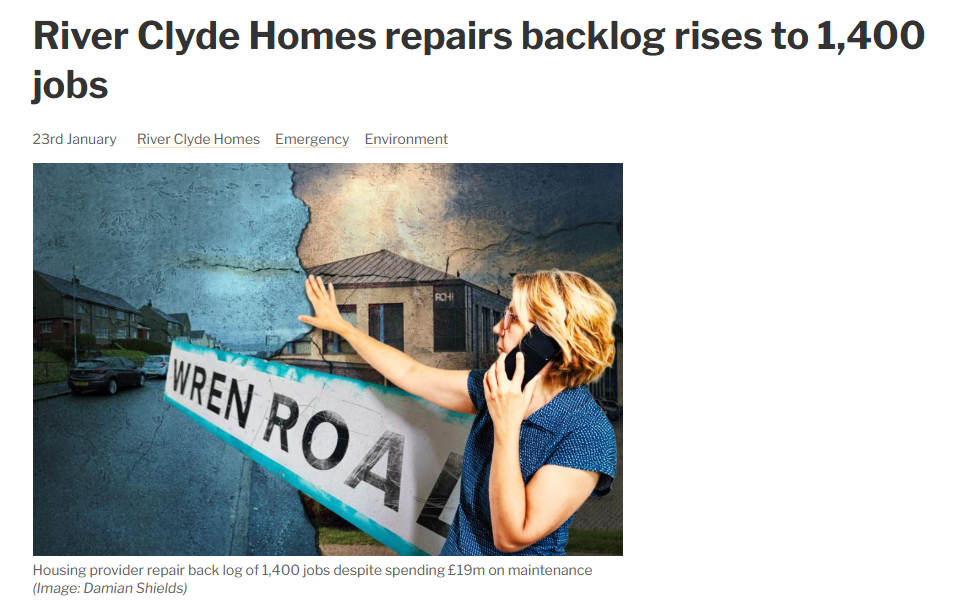
Eh, well:
Help Talking-up Scotland keep going
Crowdfunder at: https://www.crowdfunder.co.uk/p/help-talking-up-scotland-keep-going
Or by direct bank transfer to: JOHN WATSON ROBERTSON Sort Code – 08-91-04 Account – 12266421
Discover more from Talking-up Scotland
Subscribe to get the latest posts sent to your email.

