

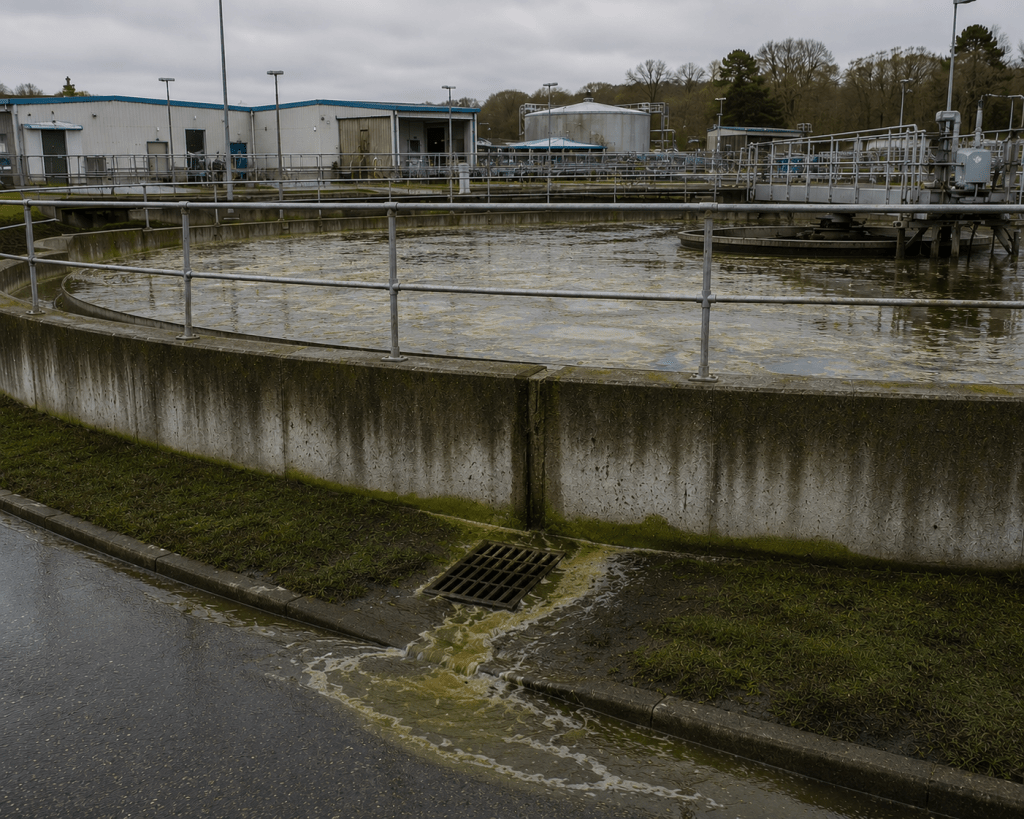
An aerated rotivated sludge pond like the 12, only 200 metres from the QEUH
Help Talking-up Scotland keep going
Crowdfunder at: https://www.crowdfunder.co.uk/p/help-talking-up-scotland-keep-going
Or by direct bank transfer to: JOHN WATSON ROBERTSON Sort Code – 08-91-04 Account – 12266421
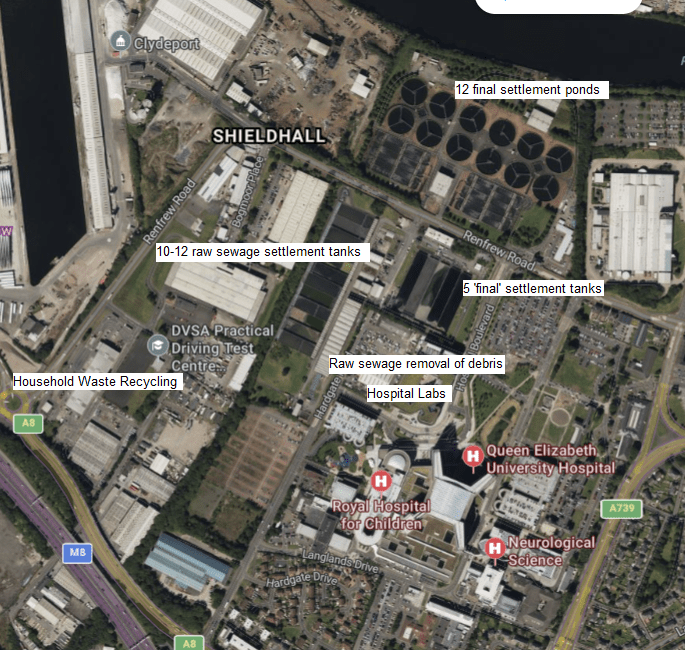
The at least 29 raw sewage ponds upwind and horribly close to a giant hospital with thousands of vulnerable patients.
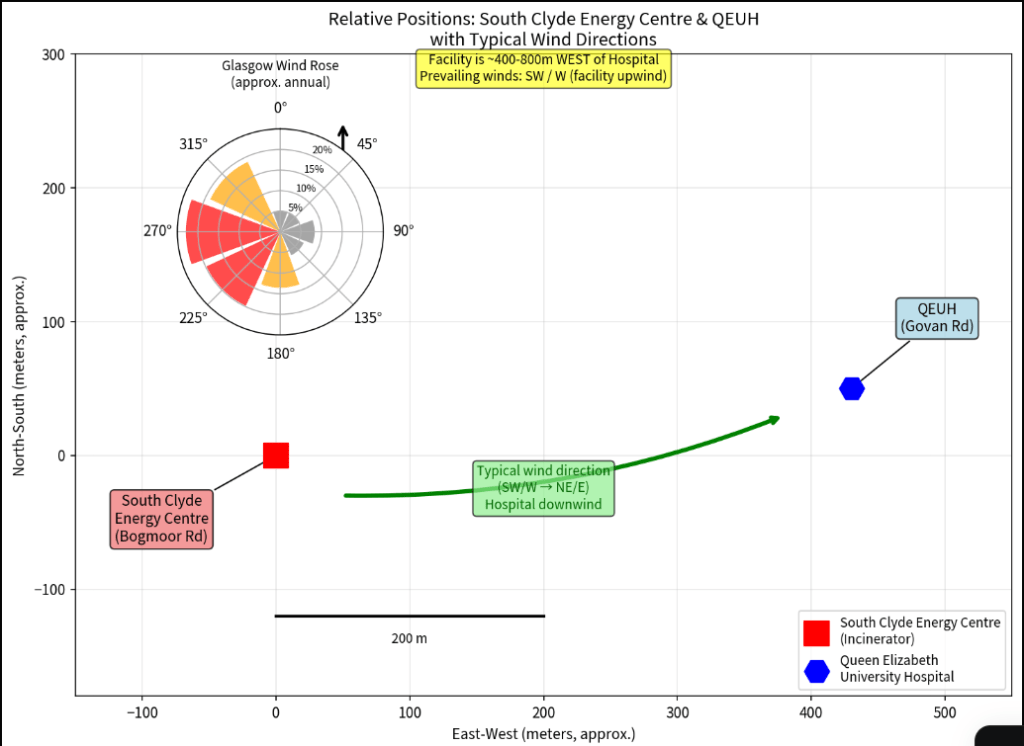
How the wind blows the sewage aerosols TO the wards.
Thanks to stewartb for finding these media reports including in particular the one from the Herald at the top of this, questioning the choice of site years before work began, approved by the Labour Glasgow City Council in 2004:
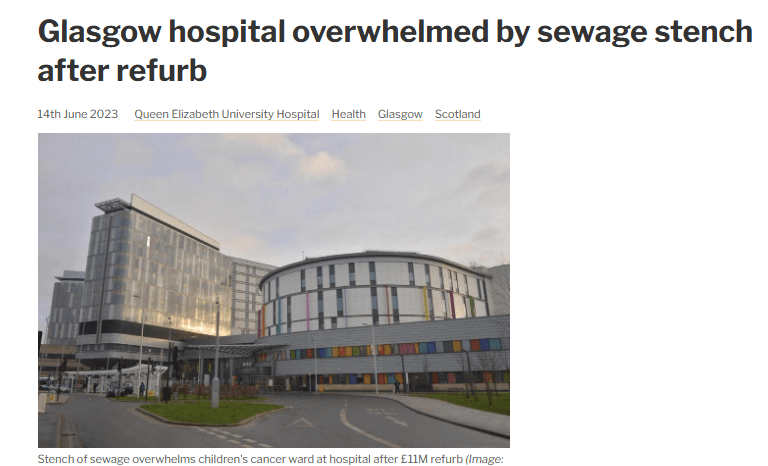
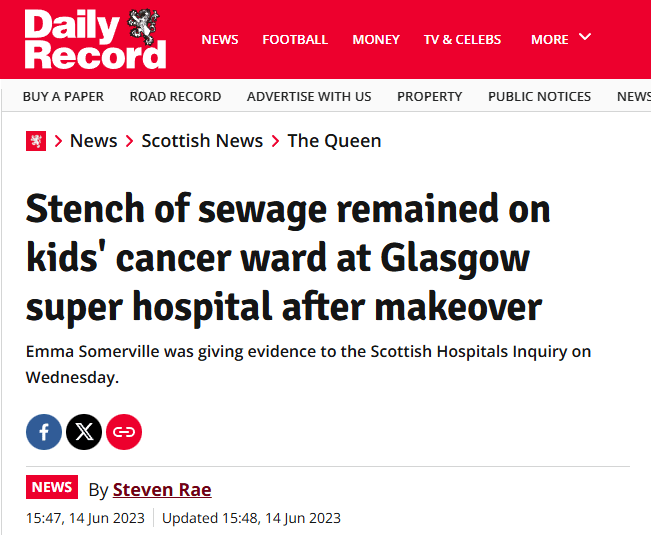
It’s notable how often media articles have made mention of the impact of the Shieldhall sewage works on air quality and health. These includes stories going back to its effects on patients at the old Southern General Hospital. So the architects and engineers designing and building the new ‘South Glasgow Hospital’ [and the councillors on the board, all Labour] would/should have been well aware of the local environmental challenges.
The Herald letter in 2 000 is a shocking indictment of the Labour Council’s decision and of the Herald’s volte face in now blaming the post-2008 SNP Scottish Government and post-2017 SNP council, for decisions made in 2004, under Labour at both council and national level.
I’m going to cut and paste much of it:
BSOME [building services operation and maintenance] correspondents in the consultation process on medical services in the South Side of Glasgow have mentioned the proximity of the sewage works at Shieldhall to the Southern General Hospital. I experienced the consequences of this bizarre siting when I practised there for over 20 years as an anaesthetist in the Institute of Neurological Sciences. Perhaps a dozen times each year that area was blanketed by a miasma of odour from the adjacent sewage works which was so powerful that staff were sometimes reduced to retching. Distinguished visitors from around the world, because we were an internationally recognised neurosciences unit, were bemused.
In the neurosurgical operating theatres, an enormous amount of money and effort had been spent achieving cleanliness and sterility, as this was where patients’ brains and spines were to be exposed. The smell of shit, or human excrement if you like, was evident everywhere. Not even the expensive and efficient air-conditiong apparatus was able to prevent the entry of this disgusting smell. The paradox of staff being dressed in sterile clothing, using instruments autoclaved to sterility, and practising painstaking techniques of sterile procedures on desperately ill patients in this revolting atmosphere was not lost.
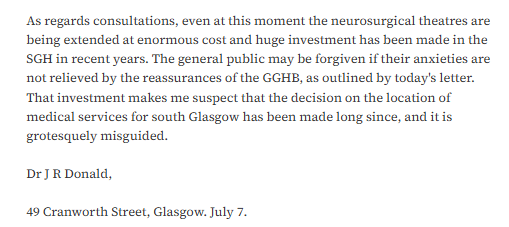
The long letter finishes with:
I’m in danger of becoming obsessed about this but it’s bloody important that Labour do not find a way to pass the blame here.

Stephen Purcell, Council Leader in 2008, accused of corruption and links with gangsters during his time as Leader of Glasgow City Council – https://www.scotsman.com/news/police-warned-steven-purcell-about-gangster-link-2471476
Finally, I cannot find DR J R Donald anywhere but have found Dr J. R. Donaldson (often styled J.R. Donaldson) was a bacteriologist/microbiologist affiliated with the University of Glasgow’s Department of Bacteriology (including the Wolfson Centre) in the 1980s. He co-authored papers on Legionnaires’ disease outbreaks in Glasgow. https://pmc.ncbi.nlm.nih.gov/articles/PMC2082894/
Was that a typo? Donaldson fits the bill well. If that was a letter from a published bacteriologist/microbiologist, then it further shocks that he was ignored by a gang of Labour councillors. You have to wonder what was in it for them.
Help Talking-up Scotland keep going
Crowdfunder at: https://www.crowdfunder.co.uk/p/help-talking-up-scotland-keep-going
Or by direct bank transfer to: JOHN WATSON ROBERTSON Sort Code – 08-91-04 Account – 12266421
Discover more from Talking-up Scotland
Subscribe to get the latest posts sent to your email.


This hospital must be closed and a proper inquiry into how the decision to build there rather than Cowglen held.
Great investigative journalism!
LikeLiked by 2 people
That is not Stephen Purcell!! At least not as I have ever seen him!!
LikeLike
Sadly, Capella is absolutely right. But this means closing QEUH, RHCG, Maternity, Neonatal, Medicine for the Elderly, School of Chiropody (remember it in green fields at Crookston?), Institute of Neurological Sciences, WESTMARC, major laboratory facilities etc. How to manage this? What to do in the interim and where to go? This was the dilemma faced by those who succeeded the pre-2007 decision makers and faced the on-going machinations of Glasgow City Council and NHSGGC. And they failed to reverse the fait accompli..but why? Queen Mum’s, Sick Children’s Hospital and (Old) Victoria Infirmary were all on the way out. Yorkhill land is being prepared for sale: https://invest-glasgow.foleon.com/igpubs/glasgow-pitchbook/yorkhill-hospital-campus. Look at the flattened ground where the Queen Mums was! Look at the red line east of the RHSC building. That’s Esmond St, and in the middle is the one-time family home of A J Cronin, himself a physician and author of ‘The Citadel’ a book said to have been part of the inspiration for the NHS. You wouldn’t have believed any of this let alone the takeover of all your health and other data by ScotAccount and the National Digital Platform (aka ScotGov sponsored ‘big tech’), would you, A J?
LikeLike