

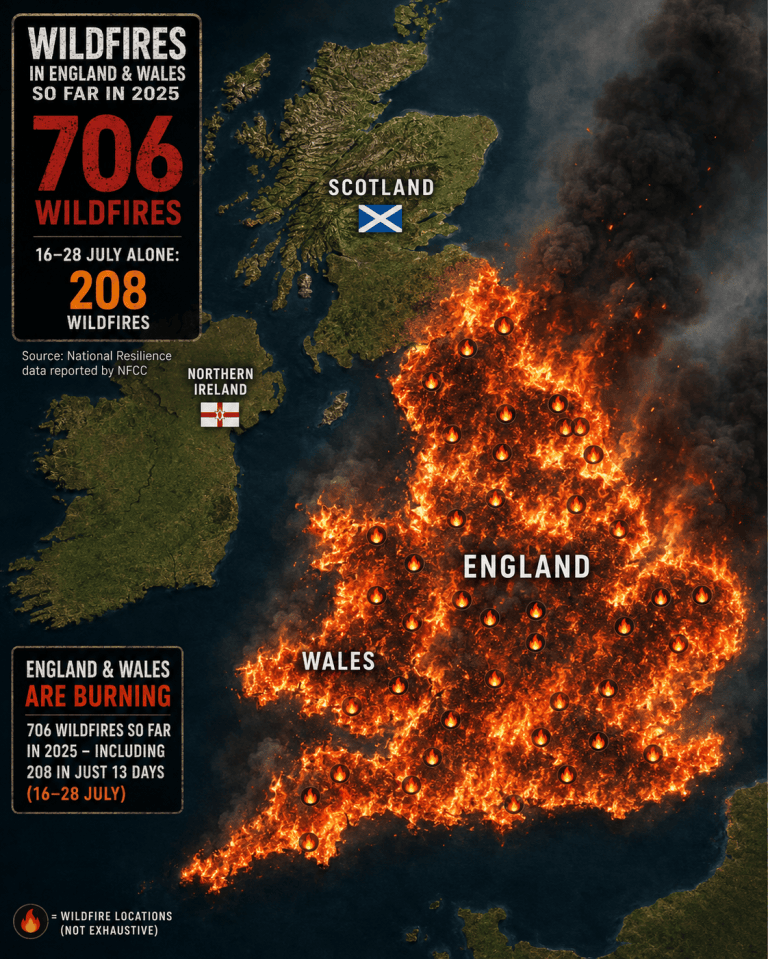
Above, the bigger picture for fire services in the UK, but the Scotsman today is platforming a trade union they used to habitually attack before they became useful for the Union:

The Scotsman above pushing the ill-informed scare story about fire service cuts in an evidence vaccuum.
Badly mixing my metaphors let me shine some light on that vacuum.
From Safer Communities and Justice Statistics Monthly Data Report: March 2026, the above and :
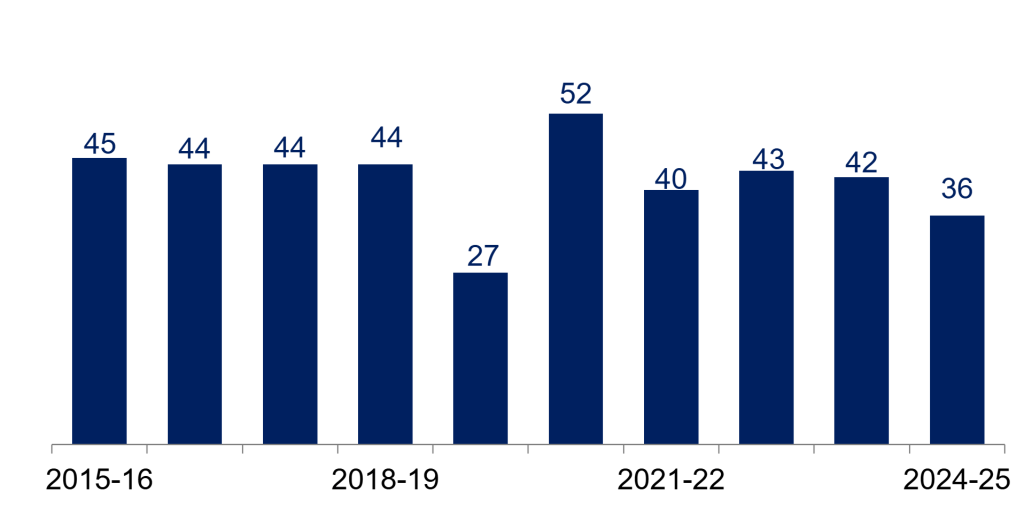
Number of fires fell 5% in the last year. In 2024-25, there were 22,925 fires in Scotland, down 5% on 2023-24 and the lowest in the last ten years. There were 36 fire fatalities in 2024-25, down from 42 in 2023-24 and the second lowest in the last decade.
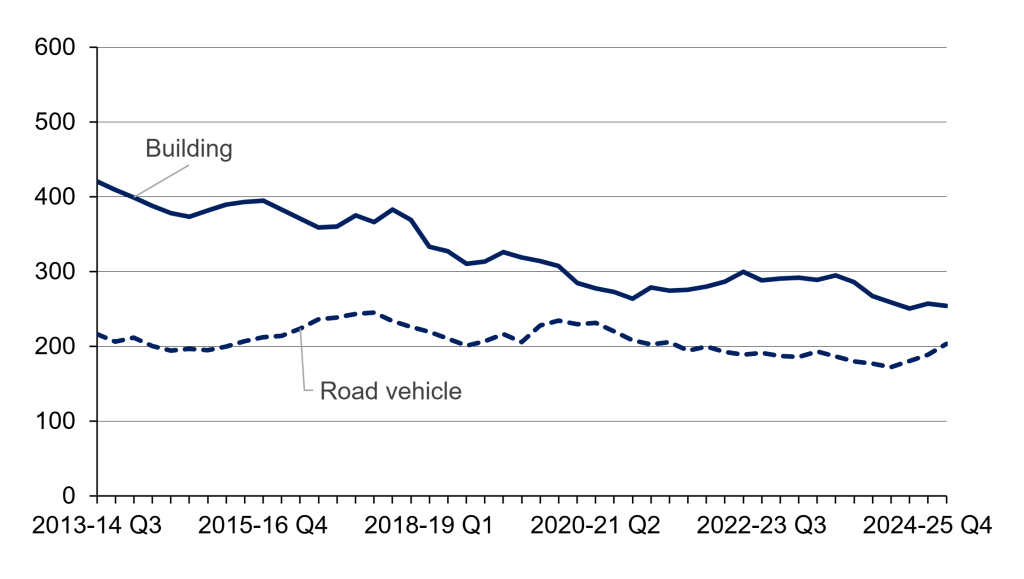
The number of deliberate building fires has fallen over the last year while the number of deliberate road vehicle fires increased over the same period. There were 290 deliberate building fires in 2025-26 Q1, down from 302 in 2024-25 Q1. There were 229 deliberate road vehicle fires in 2025-26 Q1, up from 170 in 2024-25 Q1.
From Safer Communities and Justice Statistics Monthly Data Report: August 2025:
Number of fires fell 10% in the last year. In 2023-24, there were 24,060 fires in Scotland, down 10% on 2022-23 and the lowest in the last ten years. There were 42 fire fatalities in 2023-24, down from 43 in 2022-23 and around the average for the last decade. https://www.gov.scot/publications/safer-communities-and-justice-statistics-monthly-data-report-august-2025/pages/statistics-on-community-safely/
Longer term, has the number of fires increased or decreased?
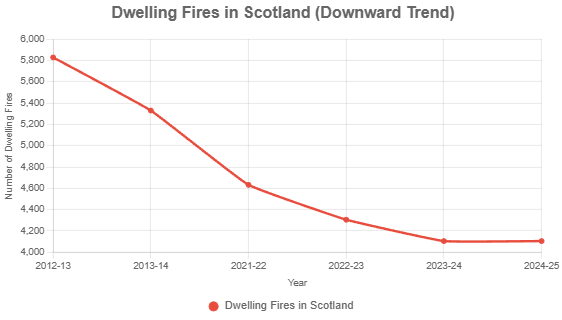
Domestic fires have plummeted by 50%in the last 2 years.
Non-domestic fires fell 34.7% in last 10 years.
Staffing trend?

An 18-20% staffing reduction set against a 50% reduction in domestic fires and a 35% reduction in non-domestic fires suggests a clear business case for fewer firefighters and one that the Herald would not have hesitated to make before 2007.
Here’s the Herald in 2003
Delegates of the Fire Brigades Union voted overwhelmingly to reject the offer to end their long-running dispute – probably leaving more members of the public feeling that the union wants to have its cake and eat it, too. Like the nurses (who nonetheless earn less), firefighters deserve more; not the 40% claim they submitted all those months ago, or a substantial deal of any kind that is not conditional on the adoption of flexible working and staffing arrangements. The FBU wisely decided yesterday not to strike before war with Iraq ends. Even then, if there is still no deal and more strike days are called, the FBU risks losing even more public support. The public will not want to see troops, who have been away from their families fighting a war, returning home to find leave cancelled or restricted so that Green Goddesses can be manned. https://www.heraldscotland.com/news/11903322.fire-fighters-should-settle-nurses-show-the-way-ahead-in-the-public-sector/
Discover more from Talking-up Scotland
Subscribe to get the latest posts sent to your email.


You are right to juxtapose the Scotsman’s piece today and the Herald article of around 20 years ago. It demonstrates the selectively cynical exploitation by right wing media and the unionist LibDems of reasonable arguments being advanced by the Fire Brigades Union about wages and conditions. If you read the FBU website their demands are much more nuanced than ‘the Scottish Government is crap’ paradigm of the unionists.
As your data shows, fires in homes and factories are decreasingly less common largely due to fewer open fires and better building techniques. The recent fires in Union St, Glasgow and Princes St, Edinburgh exemplify this. They are not typical, they are rare occurrences.
The ‘rescue’ aspect of the Fire and Rescue Service is becoming increasingly the main part of the work. With climate change and increasing wildfires mainly in rural areas in Scotland – despite the publicity given to the fire on Arthur’s Seat in Edinburgh – the locus of the work of the Fire snd Rescue Service is changing from the largely urban to the rural.
My late father-in-law was a retained firefighter with Perth and Kinross Council nearly fifty years ago. Apart from the occasional fire in a barn, much of the work entailed dealing with road accidents. But, with changes to agriculture and climate change and outdoor leisure pursuits perhaps the numbers of retained firefighters needs to be reduced to increase more permanent firefighters based in towns and cities like Perth to be able to be transported quickly to the more rural area in the case of wildfires or flooding. This would entail investment in helicopters, which are in very short supply all over the UK and not just the ‘fault’ of the Scottish Government. Perhaps, too, we need to base more military equipment in Scotland and to integrate the military with Fire and Rescue as is the case in a number of European countries.
Finally, given the proportion of rural land in private ownership, perhaps there should be a tax on owners of rural estates to be hypothecated to finance fire and rescue.
LikeLiked by 3 people
Thanks again for your supportive but always deepening comments.
John
LikeLike