

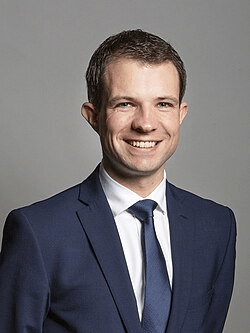
As the Cairngorm wildfire faces heavy rain tomorrow, local MP and Shadowy Secretary of State for Scotland said:
Increasing numbers of constituents had been getting in touch to express concern. In a letter, external to Scottish government minister Gillian Martin he claimed the SNP-led administration had “failed to treat the situation with the seriousness and attention that it deserves”. He singled out the Scottish Fire and Rescue Service’s (SFRS) lack of direct access to helicopter support. Currently it calls in private companies with helicopters and specialist equipment when needed.
Do any of the UK’s fire service boards have their own helicopters?
No. UK fire and rescue services (and their governing boards/authorities) do not own or operate their own helicopters. They rely on contracted private commercial operators (such as Skyhook in Scotland), arrangements with bodies like Natural Resources Wales (which holds framework agreements for helicopter support with underslung water buckets), or occasional military/RAF assistance. This is especially true for wildfire response. https://www.bbc.co.uk/news/articles/cx25pgg440wo
Also, in the BBC Scotland report:
Richard Eccles and his wife Patricia run a guest house in the village. Eccles said on 22:00 on Friday night, police came to the door and gave them three options: stay, seek accommodation with family or friends elsewhere, or go to the emergency accommodation at the Macdonald hotel in Aviemore.
He said the Scottish government’s response had been “poor” and a major incident should have been declared earlier, with military assistance brought in to tackle the fire before it spread.
Can the Scottish Government call in the army for an emergency such as a wildfire?
No, the Scottish Government can request military assistance (including from the Army or other Armed Forces) for civil emergencies such as wildfires, via the established UK-wide Military Aid to the Civil Authorities (MACA) process. However, approval and deployment rest with the UK Government and Ministry of Defence (MOD), as defence is a reserved matter. https://www.gov.uk/government/publications/2015-to-2020-government-policy-military-aid-to-the-civil-authorities-for-activities-in-the-uk/2015-to-2020-government-policy-military-aid-to-the-civil-authorities-for-activities-in-the-uk
Why did the Scottish Government not request army assistance to put the fire out earlier?
The Scottish Fire and Rescue Service (SFRS) repeatedly described the response as “appropriately resourced” from the outset, involving large numbers of firefighters, ‘hundreds’ mobilised in total, specialist wildfire units, all-terrain vehicles, high-volume pumps and volunteers/gamekeepers). Private contracted helicopters for water-bombing arrived after an initial delay of roughly 1–2 days due to availability.
Why would the Scottish Government think the Fire chiefs were wrong and local cafe-owner, Richard Eccles, knew better?
How many firefighters does Scotland have?
More than 6 000. https://www.firescotland.gov.uk/news/latest-fire-safety-and-organisational-statistics/
So, more than 6 000 with only hundreds mobilised suggests no panic call for the army was necessary.
So, two deliberate misunderstandings, one on helicopters and one on the army, left un-checked by reporters – unprofessional at best.
Discover more from Talking-up Scotland
Subscribe to get the latest posts sent to your email.


I see Sandy McCook has been joined by a Mr John McGlinchey, an expert on wildfires. I assume he is an expert because the BBC quotes him at length complaining about the SFRS, the police and ultimately the Scottish government.
I do happen to know someone involved in wildfire planning but he has not heard of Mr McGlinchey. I trust the SFRS will make notes on how to respond to wildfires.
Cairngorm residents say wildfire response ‘too slow’ – BBC News
LikeLiked by 1 person
ALL EMERGENCY CALLOUTS SHOULD HAVE FULL LEGAL RIGHTS
TO ALL EMERGENCY SERVICES
LikeLike
Scotland pays too much for the military. £5Billion+. Paying for Trident and redundant weaponry. Procurement and never delivered.
180,000 military personnel. 10,000 based in Scotland.
If Independent Scotland could afford a few helicopters. Instead of air carriers without planes.
LikeLike
so many “experts” who know SFA.
Good enough for the tabloids though.
John Lawson.
LikeLike
Tell Andrew Bowie that his Tory party leader, Kemi Badenoch, has now stated that she wants to abandon the former (2019) Tory pledge of reaching the Net Zero target by 2050, repeal the Climate change Act and she also declared that all future Tory candidates must support abandoning net zero policies as instead she wants her , and Andrew’s UK, to drill drill drill.
Thus she , like Reform UK, would make it even worse for areas in Scotland as far as there being even more wildfires.
So instead of some residents in these areas, who are currently being impacted by these wildfires , criticising the Scottish government, they maybe should be venting their anger at the likes of Tory MP Andrew Bowie and his Tory HQ party.
As the future Tory party intentions on abandoning Net zero targets would make what these residents in the Cairngorms are experiencing just now most certainly then be a regular occurrence in the summer months in the future within their area.
Tory Andrew Bowie is yet another hypocrite and liar , especially in this matter , that is , he is one who says something that he thinks makes him look good and also , he hopes, makes others (SNP) look bad , while knowing full well that his own Tory party are intending to do the very thing that will have an even more destructive impact on both the environment and communities (like those in the Cairngorms) living within Scotland.
(Perhaps someone should also call out the Tory’s (including Andrew Bowie’s) claim that developing the Jackdaw North Sea gas field would create 880 jobs. However, The National newspaper reported in July of this year that “environmental impact assessments filed by the project’s owners indicated the actual number of new full-time roles is only 27“).
Meanwhile renewable jobs are currently far exceeding jobs in the Oil industry , but the Tories want to scale back on the Green policy, that’s because many of their Tory donors are linked to high-pollution industries, via their investments etc, so as Tory donors they want the UK State to continue with oil and gas extraction ( and so they, Tory donors, are those who are dictating the Tory party’s future UK policy on Energy and not Kemi Badenoch).
Now if the new Labour PM, Andy Burnham , does indeed give the ‘Green’ light (pun intended) for new oil and gas drilling in the North Sea , then that will further verify the (known) fact that Labour’s GB Energy company was indeed nothing more than (another) Big Labour Con ( a con which coincidentally also failed to generate the numbers of jobs that they, Labour, originally promised us that it, as a Labour policy, would generate within Scotland).
So both the Labour party and the Tories really really need to reflect within, as opposed to them both, as parties, projecting onto others (the SNP) all of the blame and criticism (indeed both Labour and the Tories should be shouldering all of the blame for what has and still is happening within their UK State).
Surely as each day passes and also as evidence grows there then must be far far more people within Scotland who are now far far more convinced that an independent Scotland could surely do far far better as a country , compared to what is happening now with Scotland still being a part of the failed and dysfunctional UK State.
One lives in hope.
Liz S
LikeLiked by 1 person