

While AI has often been taught to favour broadly establishment positions, reinforced by their dominance of the media landscape it relies upon, I have found that, if you keep your wits about you and counter those positions with evidence you have, it will often come to offer a more independent evidence-based answer than you will get from even the most respected but all-too-human academic, like me.
Based on the evidence from the time such as the lack of a formal act of union, the unbroken, largely unchanged continuation of the parliament in London and the end of such in Scotland and other factors such as rioting in Scotland, bribery of Scottish parliamentarians and of military threat, that Scotland became a colony rather than a partner in a union?
No, Scotland did not become a colony after 1707; it entered into a political incorporating union with England to form the Kingdom of Great Britain. While the process was deeply controversial, involved real pressure and inducements, and faced strong popular opposition, the legal and constitutional outcome was a merger of two sovereign kingdoms into one state—not colonial subjugation.
Are there prominent activists in Scotland who challenge this and who have taken the claim to the United nations?
Yes, there are prominent activists and campaign groups in Scotland (and supporters abroad) who challenge the mainstream historical and constitutional view. They argue that the 1707 Acts did not create a true incorporating union of equals but instead amounted to annexation or colonial absorption of Scotland into a continuing English/British state. They seek recognition of Scotland as a Non-Self-Governing Territory (NSGT)—i.e., a colony—under UN decolonisation frameworks (primarily UN General Assembly Resolutions 1514 and 1541, and the work of the Special Committee on Decolonization, known as C-24). The most active organisation is Liberation Scotland, working with Justice pour Tous Internationale (JPTi), an international legal/pro bono group.
I have read the above document. Tremendously well-written, I agree with every word. It articulates well a view I already held.
It does not mention Scotland’s largest pro-independence party and for nearly two decades, devolved government, the SNP.
Readers will know that, leaving aside my serious concerns that a form of Atlanticism, uncritical acceptance of US foreign policy, has infected elements in the SNP, including the former First Minister as revealed in her admiration for the dread Hilary Clinton, my anger at Angus Robertson’s meeting with the Israeli depute ambassador and my own preferences for a more socialist position on the economy and welfare, I repeatedly write here to reveal and to recognise its achievements across a range of public service areas.
Scotland has less poverty, lower crime, better education, a stronger NHS and, across the board better public services than the other parts of the UK after nearly two decades of a centre-left party protecting it to the extent it can. Were it the opposite, the SNP would get the blame, so they deserve much of the credit for their now long-term, determined efforts making lives better and often saving them.
I think we all owe the SNP leadership and all their people in government, gratitude and respect for what they have done in government.
What does Liberation Scotland think of the SNP Government?
Liberation Scotland is sharply critical of the SNP-led Scottish Government. They view it as operating within a flawed “constitutional blind alley” that perpetuates dependence on Westminster rather than pursuing genuine liberation.
Key Criticisms
Reliance on Westminster permission: They argue SNP administrations have focused almost exclusively on seeking UK government agreement for a second independence referendum. They call this approach ineffective and untrue in claiming no other pathways exist. Liberation Scotland promotes an alternative route via international law and the UN decolonisation process (recognising Scotland as a Non-Self-Governing Territory).
Devolution as assimilation: They see the devolved Scottish Government (under SNP leadership) as part of mechanisms of “colonial sovereignty” or structural inequality. Devolution is not true self-governance but a tool that maintains the status quo and fails to assert Scotland’s popular sovereignty or Claim of Right.
Failure to advance independence: They accuse the SNP of accommodation with the union framework, elite capture, and lacking urgency or innovation. Some materials frame the party through a postcolonial lens, suggesting its strategy leads to fatigue and inaction rather than radical change.
Has the SNP responded to these accusations?
No prominent or official response from the SNP leadership or the Scottish Government to Liberation Scotland’s specific accusations has been widely reported. The SNP and Scottish Government generally maintain their established position: they pursue independence through democratic mandates (e.g., winning elections on a pro-referendum platform) and negotiations with the UK Government, while rejecting the idea that Scotland is a “colony” or that a UN decolonisation process is a viable or necessary route.
Liberation Scotland operates as a more radical/niche campaign within the broader Yes movement. The SNP has not elevated it with official rebuttals, likely treating it as a fringe view rather than a major challenge requiring response. Some pro-independence commentators have criticised the decolonisation approach as unhelpful or a “dead-end” that damages the movement, aligning indirectly with the SNP’s strategy.
I don’t entirely disagree with the Liberation Scotland (LS) thesis here. Radical movements, as time passes and as their leadership gets a taste for office, can soften. However, the referendum-based strategy remains viable especially as Reform UK, the sympathetic UK Greens, Welsh nationalism’s surge, Labour’s crisis and sense of inevitability in the re-union of Ireland, are seriously destabilising the Union.
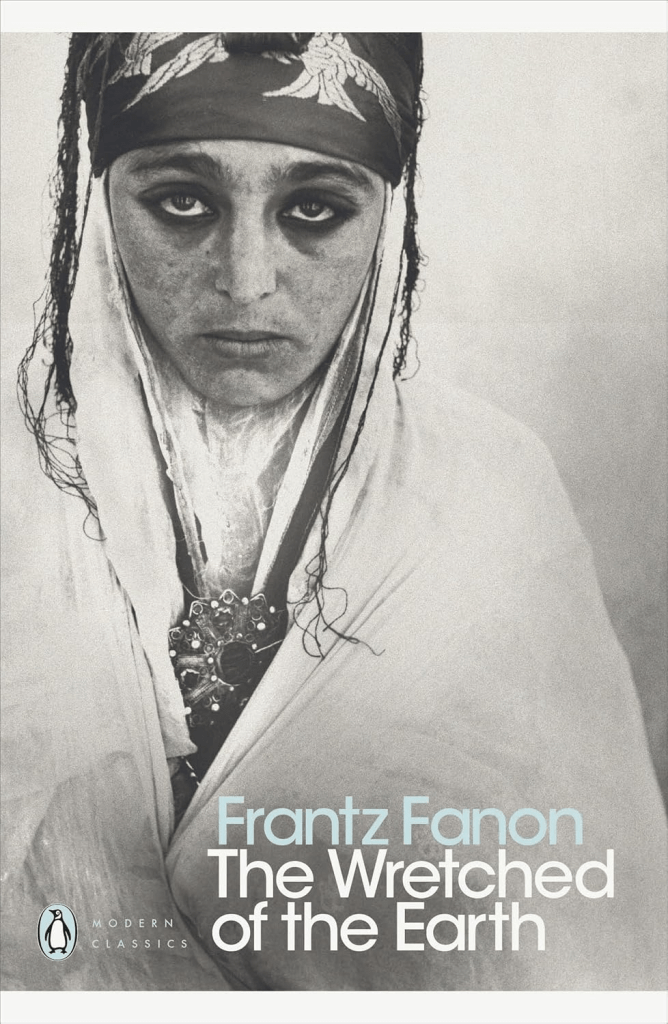
What bothers me about LS is the term elite capture as applied to the SNP leadership. It triggered memories. Memories of my 1970s Sociology degree and the book we all read – Franz Fanon’s The Wretched of the Earth.
What are the origins of Fanon’s ideas?
The Wretched of the Earth (1961, originally Les Damnés de la Terre), is primarily based on his direct personal and professional experiences during the Algerian War of Independence (1954–1962), combined with his psychiatric training, observations of colonial societies, and broader reflections on anti-colonial struggles.
The Algerian War of Independence (1954–1962) was a brutal, horrific, genocidal conflict and Fanon found in the behaviour of some in the independence movement, failures in principle comparable to those LS throws at the SNP. See the list above. While I recognise that LS moderates Fanon’s ideas for the 21st Century in Scotland, I struggle to see its usefulness given its inevitable negativity about the motivations of SNP leaders if it retains concepts like elite capture, underpinned by frankly irrational psychiatric ideas long debunked, and what that means for considering someone like John Swinney. It’s not just plain daft it’s weird and offensive.
How can we take such folk seriously if they believe anything like elite capture is happening in the SNP leadership.
Liberation Scotland accuses the SNP elite of effectively not prioritising or actively pursuing genuine independence, often framing their strategy as one of accommodation, delay, and self-interest that serves to maintain the status quo rather than achieve liberation. They stop short of claiming the SNP secretly opposes independence as a goal, but argue that the party’s actions (or inactions) amount to the same outcome.
I’m biased. I’m a member. I’ve worked for an SNP MP. I know hundreds of members including MPs and MSPs. I have never sensed that kind of self-interest over the ultimate aim in anyone, at any level. They believe we’ll get another referendum and having demonstrated fitness to govern, the electorate will say Yes. I believe that too and so LS seem to me infected with a kind of paranoia mixed with a child-like impatience and resentment at being excluded from the centre of power and influence. In this, they remind us of Common Weal’s spurned, now huffy, prophet Robin MacAlpine and Wings over Scotland’s also spurned, Gollum-like, bitter genius, Stuart Campbell.
Discover more from Talking-up Scotland
Subscribe to get the latest posts sent to your email.


No liberation movement in history (in my opinion) can be entirely free of unsocial and/or violent behaviour…even to the extent of breeching the social/political rights of others as you try to claim your own. It goes with the territory and those who oppress will not hesitate to lie, cheat and use the power of the State to continue that oppression.
It is interesting that the description Non-Self-Governing Territory for those seeking Decolonisation, is used by the UN……….as “the Territories” was the common term used by the last Tory imperial regime to describe Scotland, Wales and Northern Ireland……i.e. the bits that weren’t England!
gavinochiltree
LikeLiked by 4 people
Good comment. So does devolution cancel out the status as a ‘non-self governing territory’? Without full control over your purse strings, and with another country controlling your economy, that’s close to being a ‘non self governing territory’ surely.
What I have read is that Scotland does not fit the description of colony because it’s allowed to send a few folks down to WM as MP’s. Again, given that many or even most of those MP’s right now are simply operating out of branch offices of parties Headquarted in England, that can be challenged.
LikeLiked by 2 people
I think LS have a point and I support their effort to expose the hollowness of the illusion that we operate in a union of equals – and do something about it.
I think the “incorporating” union was insisted on by Queen Anne and her advisers because it was the only means of ensuring that Scotland would cease to exist as a sovereign state. Queen Anne was childless and to protect the Glorious Revolution and ensure no Catholic could succeed, the Protestant Sophia of Hanover was chosen as heir. This would end the Union of the Crowns. An incorporating union was anathema in Scotland since it bound Scotland to a Hanoverian succession which was unpopular.
However, Queensberry and the Duke of Argyll wanted an incorporating union so long as they could become compradors and retain patronage. Their duplicity is well recorded by Robert Burns or James Hogg’s “Such a Parcel of Roges in a Nation”.
Such a Parcel of Rogues in a Nation – Wikipedia
Good explanation of the background to the Union in chapters 10 and 11 of “Scotland’s Relation with England – A Survey to 1707” by William Ferguson 1977, published by the Saltire Society 1994.
Good version of Parcel of Rogues written not long after the events
Such a Parcel O’ Rogues in a Nation – YouTube
LikeLiked by 2 people
Scotland’s colonial ‘condition’ is not that difficult to figure out, especially when applying postcolonial theory to aid any analysis. A failure to do so is arguably the reason the dominant national party elite and much of the movement’s understanding of independence remains, as Fanon put it, ‘rudimentary’.
Bing Videos
LikeLike
I agree Scotland is a colony. I don’t agree with the paranoia about SNP betrayal
LikeLiked by 1 person
John, it is perhaps worth noting here that many if not most of the 20,000 members of Liberation Scotland, which is barely 3 years old, comprise former SNP members and activists, including myself.
Since you mention Fanon, the latter indicated that a national party that has been ‘co-opted by colonialism’ loses the trust of the movement and ‘disintegrates’, which is arguably what we see.
AB
LikeLike