

In the Guardian today:
One person a week dies with undiagnosed and therefore untreated tuberculosis in England, a study has found.
British-born, older men were among those most likely to have TB diagnosed only after death, researchers said, suggesting healthcare workers could be overlooking the possibility of the disease in these patients.
Being diagnosed with TB postmortem should be considered a “never event” that prompts urgent investigations, they said, describing it as “the ultimate diagnostic delay”.
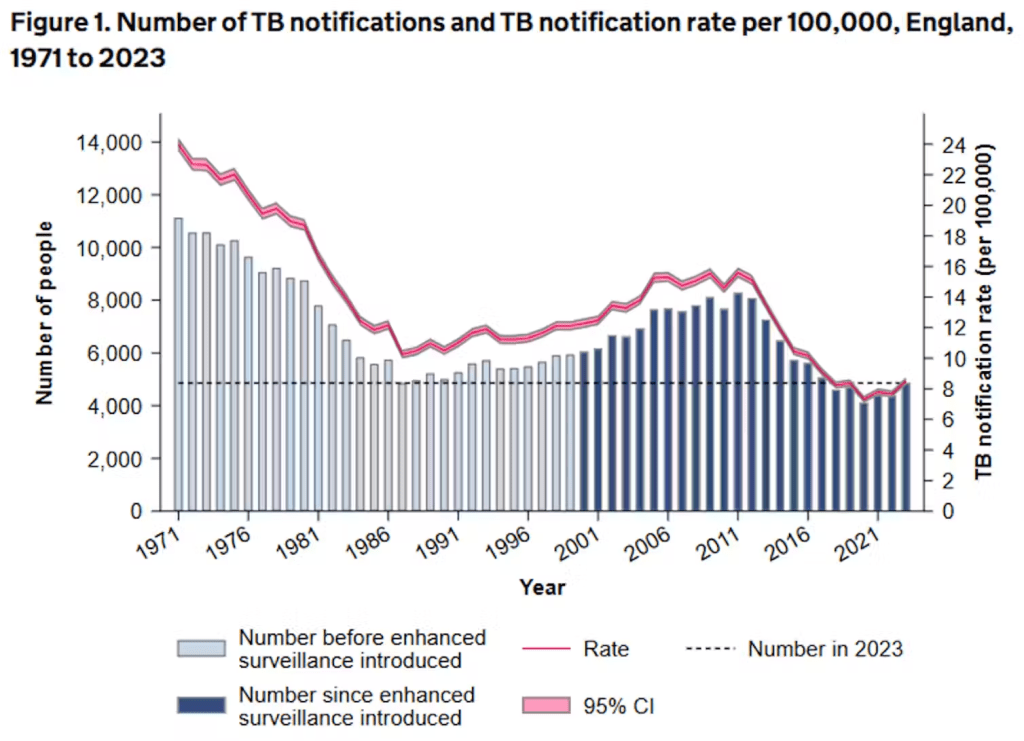
Tuberculosis rates in England are at a 10-year high, with 9.4 cases per 100,000 people in 2024. The rate is only just below the World Health Organization’s “low incidence country” threshold of 10 cases per 100,000 – a level expected to be breached when 2025 figures are published.
https://www.theguardian.com/society/2026/jun/29/england-undiagnosed-tuberculosis-tb
The TB rate in Scotland is 4.8 per 100 000, just over the half the rate.
Why?
Greater social deprivation and inequality: TB is strongly linked to poverty. In England, rates are about 5 times higher in the most deprived areas compared to the least deprived. Factors like overcrowding, poor housing, undernutrition, homelessness, substance use, and limited healthcare access increase both infection risk and progression from latent to active TB.
Scotland has lower adult poverty, more affordable/social housing supply and greater GP access. These contribute to its lower tuberculosis (TB) incidence by reducing key risk factors: overcrowding and poor living conditions (which aid TB transmission and weaken immunity), delayed diagnosis/treatment, and overall socio-economic vulnerabilities.
As always you can search this blog (in the magnifying glass icon above) for hard evidence of the truth of the above claims.
Discover more from Talking-up Scotland
Subscribe to get the latest posts sent to your email.


One thought on “Scotland has only half the TB rate due to lower poverty, more affordable housing and better GP access”