

In the Guardian today:
Britons [sic] are facing some of the “most severe” shortages of NHS medicines on record including common painkillers, epilepsy drugs and HRT, health leaders have warned, even forcing some patients with impaired digestive systems to skip meals.
The National Pharmacy Association (NPA) has warned that medicine shortages pose a “serious risk to patient safety”.
The Royal College of GPs has also raised concerns about the impact medicine shortages have on patients, GPs and pharmacists.
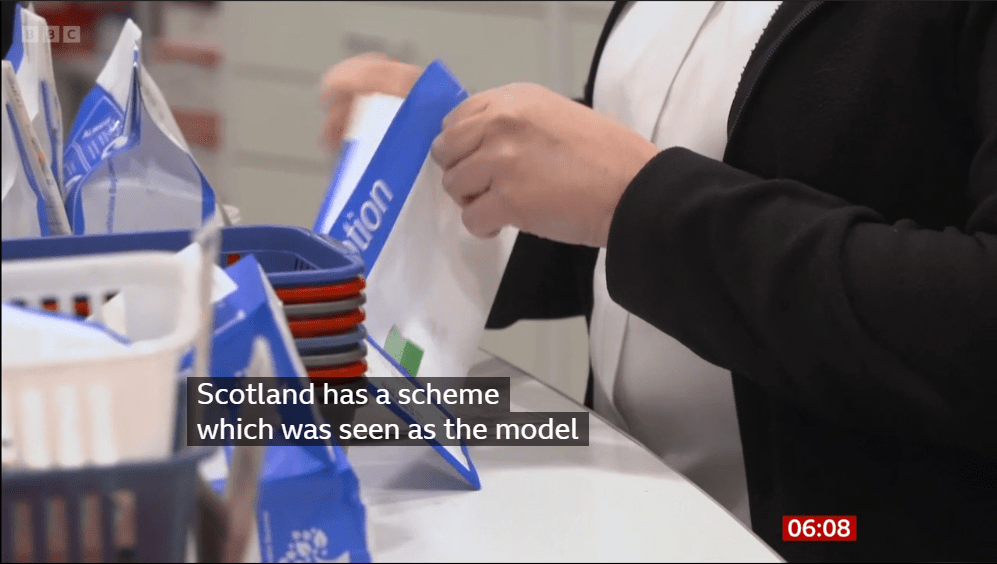
BBC Breakfast 29 May 2026 told us the Scottish Government has long put in place a better model for pharmacies, repeatedly covered here but never in the MSM operating in Scotland.
What’s it all about?
In the Chemist and Druggist of April 10th 2024
Pharmacists in hospital, and in community pharmacies in Scotland, already routinely alter prescriptions for the benefit of patients. https://www.chemistanddruggist.co.uk/CD138095/One-slight-alteration-could-avert-a-crisis-as-medicine-shortages-deepen
In the same journal in August that year:
Scotland’s model for pharmacy offers lessons for England’s future
As pharmacies in Scotland receive renewed government backing, Steve Anderson takes a look at the future of English pharmacy against the backdrop of a damning new report.
I must commend Scotland’s Pharmacy First model, which has set the standard for the delivery of patient services through pharmacies. With PHOENIX’s presence in 29 European countries, I can see that Scotland’s approach stands out for its reach and ambition. The key, however, to its success has been borne out of years of government investment and commitment to maintain a financially viable network based upon sustainable long-term funding.
Unlike in England, where community pharmacies have faced cumulative funding cuts of more than £750 million per year, Scotland’s investment has allowed pharmacies to focus on patient care without the constant financial pressures. Community pharmacies should not be viewed as disposable figures on a spreadsheet. Our pharmacy teams provide vital care in our communities, improving healthcare outcomes and helping to manage long-term conditions.
If England wishes to develop its own Pharmacy First approach, that is a key lesson it must learn. If Scotland had failed to offer a fair funding commitment to pharmacy, politicians in England would have been forgiven for thinking they could get away with a cut-price Pharmacy First model from a steadily shrinking number of pharmacies.
In Scotland, the outlook on community pharmacy is that it plays a crucial role in enhancinghealthcare outcomes and increasing patient access to essential care. Community pharmacies are an important part of the overall system, but one that clearly differs from that of a GP or hospital.
Community pharmacies do have the potential to reduce pressures on the NHS, particularly as healthcare demands increase, but further action is essential to enable community pharmacy to play an enhanced role delivering more patient care services. While funding is vital, the issue is not exclusively based on money.
The lesson from Scotland could not be clearer: invest in a robust and sustainable pharmacy network that increases patient access to essential NHS care. This in turn will reduce cost and demand pressures on other parts of the NHS, improving patient satisfaction and health outcomes.https://www.chemistanddruggist.co.uk/CD137204/Scotlands-model-for-pharmacy-offers-lessons-for-Englands-future
Imagine Reporting Scotland wondering what they can make of the above?
Discover more from Talking-up Scotland
Subscribe to get the latest posts sent to your email.


I wonder if this is another initiative supported by Nicola Sturgeon?
LikeLiked by 1 person
Community Pharmacy in Scotland (and rUK) is but one example of multinational equity milking public sector (via the prescribing system in this case) finance dry. A clear cut example is provided by the recent history of Boots UK Ltd https://en.wikipedia.org/wiki/Boots_(company). More obscure is the 2021 acquisition of McKesson UK from US healthcare company McKesson Corporation, Irving, Texas by Aurelius investor group for £477million https://www.aurelius-group.com/in-its-biggest-deal-in-history-aurelius-acquires-mckesson-uk. This involved LloydsPharmacy https://en.wikipedia.org/wiki/LloydsPharmacy (since liquidated) and AAH Pharmaceuticals (intermittently up for sale). Try navigating the buying and selling of hundreds of pharmacy units since via Companies House! The community pharmacy system is in danger of collapsing and the rest of the state healthcare sector of following in like manner.
LikeLike
Community Pharmacy in Scotland (and rUK) is but one example of multinational equity milking public sector (via the prescribing system in this case) finance dry. A clear cut example is provided by the recent history of Boots UK Ltd. More obscure is the 2021 acquisition of McKesson UK from US healthcare company McKesson Corporation, Irving, Texas by Aurelius investor group for £477million. This involved LloydsPharmacy (since liquidated) and AAH Pharmaceuticals (intermittently up for sale). Try navigating the buying and selling of hundreds of pharmacy units since via Companies House! One local outcome is the entry into administration of Amiry & Gilbride Healthcare Limited (AGH), formed from the LloydsPharmacy fallout by two pre-existing small community pharmacy businesses. The community pharmacy system is in danger of collapsing.
LikeLike