


In London Daily today, the above and:
Keir Starmer, leader of the UK Labour Party, has proposed an ambitious initiative to increase the development of nuclear power in the United Kingdom, emphasizing the construction of small modular reactors (SMRs).
One of the biggest problems for these SMRs is:
The study shows that SMRs could generate two to thirty times more spent fuel per unit of energy than today’s large reactors. Their smaller cores leak more neutrons, which activates surrounding steel and creates more long-lived radioactive material. Some designs produce waste streams that have never been handled before, such as irradiated graphite or chemically reactive salts. These would require new packaging, licensing, and repository designs. Over the long term, some SMR fuels are projected to be about 50 percent more radiotoxic than conventional spent fuel after 10,000 years. This is not the story of simplified waste management that vendors have been telling.
Source: https://cleantechnica.com/2025/09/10/small-modular-reactors-and-the-big-questions-of-cost-waste/
That leads then to the problem of waster storage. Here are some ideas.
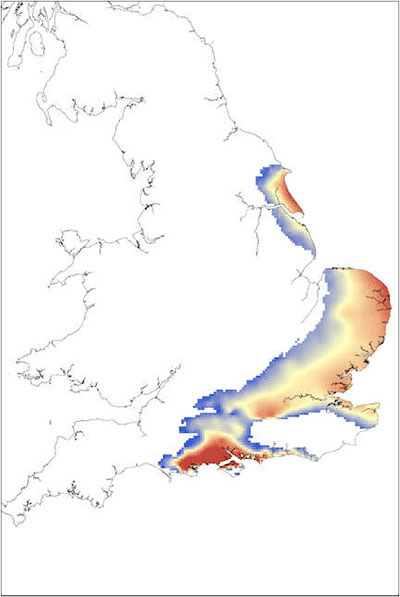
Research – the safest place by far to bury high-level nuclear waste is in the deep clay beds of the South-East around London
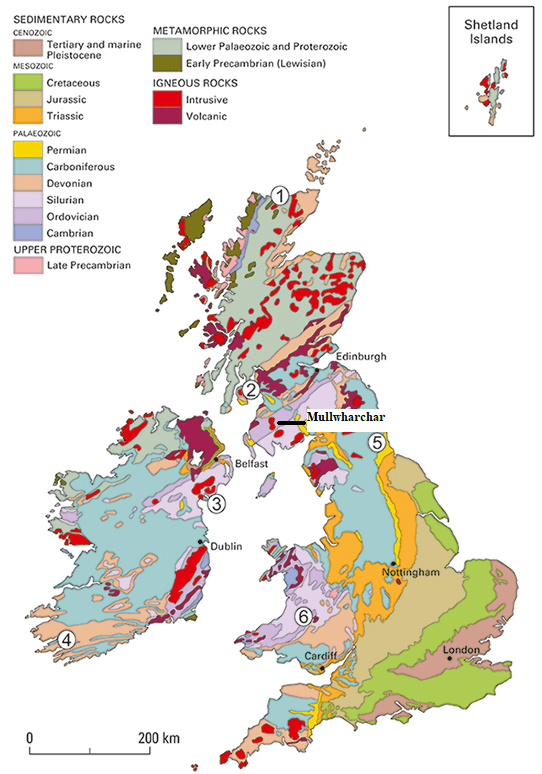
The location of Mullwharchar, the granite Scottish mountain where it was first planned to bury high-level nuclear waste in 1980 among the hard igneous rocks of the North of Britain and where successive governments have tried to do so repeatedly.
Earlier posts here have drawn attention to Scottish Labour’s complicity with the idea of reintroducing nuclear power stations into Scotland and their implicit acceptance of consequent cancer risks from their emissions directly and indirectly from the poorly stored waste in places like Sellafield, close to the Scottish border.
I had not known, until reader Gavin wrote that he had seen research suggesting that these northern igneous/granite locations are actually less safe than deep clay beds. I did a quick AI search and he’s correct:
Are deep clay beds safer for nuclear waste burial?
Yes, deep clay beds are generally considered among the safest geological formations for burying high-level nuclear waste, based on extensive scientific evaluation by organizations like the IAEA, OECD-NEA, and national programs (e.g., Belgium’s ONDRAF/NIRAS, France’s ANDRA, Switzerland’s NAGRA).
Yes, deep plastic clay beds are generally safer than granite for high-level nuclear waste disposal, according to consensus safety assessments by the IAEA, OECD-NEA, and national programs (Belgium, France, Switzerland, Finland, Sweden). The difference isn’t close in most scenarios.
Bottom Line
| Safer? | Yes — clay is significantly safer than granite |
|---|---|
| Why? | No fast flow paths, self-sealing, superior sorption |
| Exception? | Only if granite site has zero connected fractures (rare) |
Clay doesn’t need perfect canisters. Granite does.
That’s why Belgium, France, and Switzerland chose clay — and why granite programs invest billions in fracture mapping.
Sources:
https://www2.bgs.ac.uk/groundwater/shaleGas/aquifersAndShales/maps/home.html
https://www.eurare.org/countries/britishIsles.html
https://www.oecd-nea.org/jcms/pl_19079
https://www-pub.iaea.org/MTCD/Publications/PDF/Pub1553_web.pdf
Discover more from Talking-up Scotland
Subscribe to get the latest posts sent to your email.


The problem is self-evident. Clay beds are near London and SE England whereas granite is far far away in remote Scotland where England is accustomed to dump their toxic waste.
LikeLiked by 1 person
The government has stated that promoting nuclear power, especially SMR’s, is to revitalise industry in the English Midlands. Scotland should use its funding to purchase several of these SMRs, and then export the electricity south. We would pay they would gain.
Nuke waste would go to where the impact would affect fewest people. Scotland for example.
This is opposite to long running State investment programs designed to benefit regions where populations are densest—its why Scotland got so little State investment over the last century, and the south of England got the most. Subsidising the wealthiest.
Its happening still, with huge sums of State subsidy going to “British Steel”, the car industry, carbon capture–all in England.
“British” Energy (Manchester).
A.I. is to get £billions…where? Oxford/Cambridge Growth Corridor.
There is (not) to be substantial investment in defence. Scotland get 4% of existing defence spending. Wee Dougie? Where is he? Ask Mandy.
gavinochiltree
LikeLiked by 2 people
Also. I suspect it’s a lot easier to tunnel in London Clay.
LikeLiked by 2 people
They will sink into the sea. London S/E flooded into the sea.
Nuclear should be banned.
The Oil industry has been run down. Importing Oil.
LikeLike