

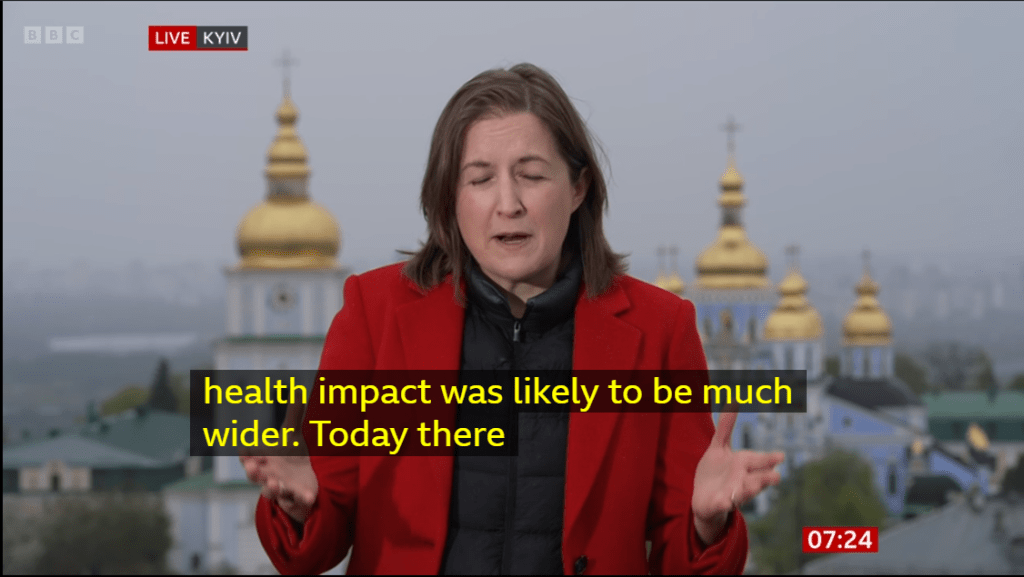
On the 40th anniversary of Chernobyl, today, BBC Breakfast visit the site and remind us that while the official death toll was just 31, according to ‘studies’, the wider health impact was likely to be much wider.
Studies?
Well, here’s just one. According to the UN Scientific Committee on the Effects of Atomic Radiation
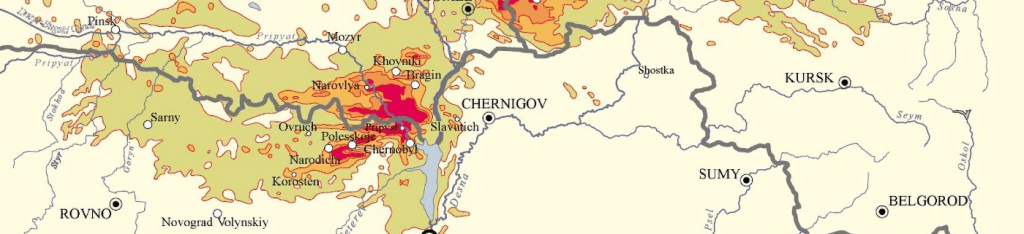
The most significant wider impact was a sharp rise in thyroid cancer among children and adolescents exposed in 1986 in Belarus, Ukraine, and Russia. By 2005, more than 6,000 cases had been diagnosed in this age group. Later data (up to ~2015) put the total closer to 20,000 cases among those under 18 in 1986. A large fraction of these (especially the early cases) is attributable to Chernobyl radiation. Incidence peaked in the 1990s–2000s but is expected to continue at lower levels for decades. https://www.unscear.org/unscear/en/chernobyl.html
Even 1 376 miles away, in the UK, there was also, a statistically significant post-1986 reported increase in differentiated thyroid cancer among young people (<25 years), with a particularly large apparent rise in Cumbria (rate ratio up to ~12 in some analyses) just over the border with Scotland. https://pubmed.ncbi.nlm.nih.gov/11334728/
What is the position of Scottish Labour on new nuclear power stations in Scotland?
Sarwar backs lifting the block on new nuclear power stations
 Kirsten Campbell
BBC Scotland political correspondent
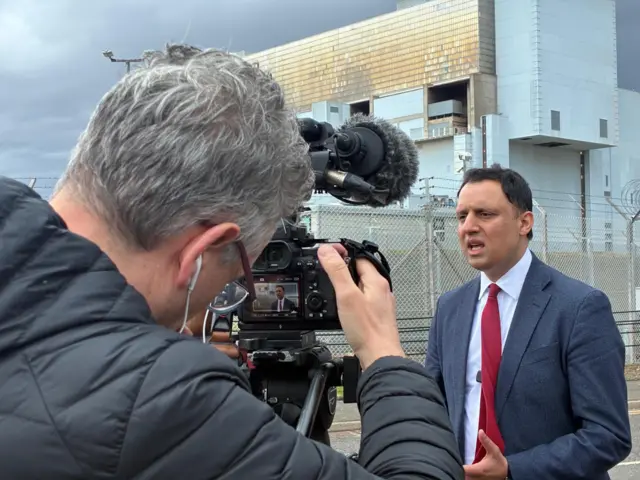
Labour is promising to begin the process of securing sites for new nuclear power stations from day one of a new Scottish government. The party’s leader Anas Sarwar believes Scotland can’t afford to turn its back on a major source of clean, secure power. https://www.bbc.co.uk/news/live/c705679e3kxt
How safe are Labour’s plans for small modular reactors in Scotland?
From the Centre for Emerging Technology and Security, 13 January 2025:
The national security of the UK’s nuclear power programme could scarcely be more important. This became clearer than ever in 2024, as the country’s energy sector bore the brunt of cyberattacks in Europe and its vulnerability to sabotage by nation states drove a change in priorities at MI5.
As one of 31 signatories to the Declaration to Triple Nuclear Energy, the UK plans to refocus its energy strategy on the swift construction of small modular reactors (SMRs) in populated areas by 2050, moving away from large nuclear plants in locations that are geographically and societally remote. Internationally, a proliferation of fast-built reactors seems increasingly important to the success of the world’s climate and energy ambitions. The international safety and security implications of this shift in global policy (such as its radiological impact and effects on energy supply) are well documented, but it will present an existential challenge for local policing and resilience partnerships in the UK. If left unaddressed, these issues may well prevent the country from fulfilling its energy ambitions.
Source: https://cetas.turing.ac.uk/publications/national-security-local-jeopardy
Discover more from Talking-up Scotland
Subscribe to get the latest posts sent to your email.
 Talking-up Scotland
I have not heard a plausible justification for the siting of new nuclear power stations in Scotland.
More than enough energy is generated from renewable sources for all of Scotland’s energy needs, with a substantial amount being exported to England. There is scope for the development of more from renewable sources, especially with recent improvements in solar technology.
The other side of this is to reduce energy demands, particularly in housing. New build housing incorporates most of the best energy demand reduction approaches and often incorporate air source heat pumps. However, a very large proportion of the population, especially in urban areas live in pre-1919 tenements. These need to be retrofitted to make them more energy efficient. That is where funding should go rather than to nuclear generation.
LikeLiked by 2 people