

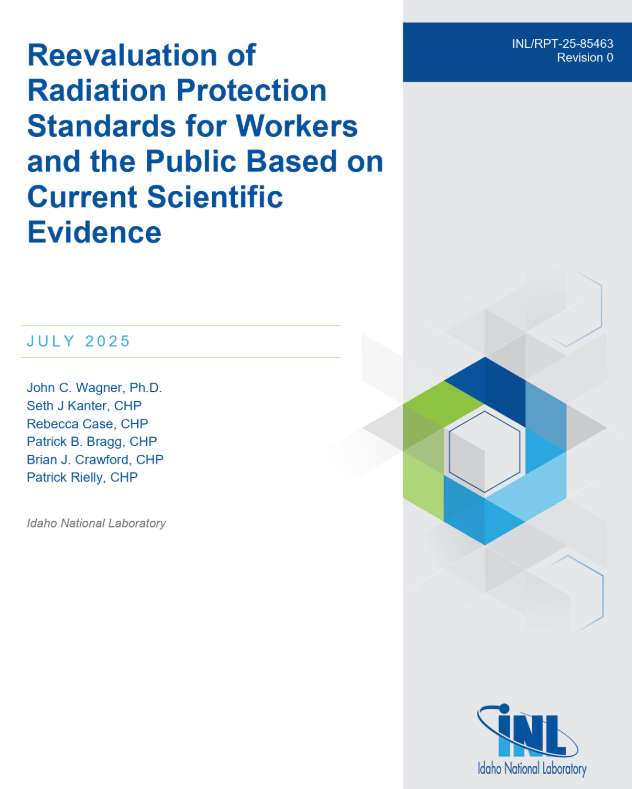
In Futurism, yesterday:
It isn’t just the guys handling plutonium who need to worry about radiation — every US nuclear worker, from the plumbers patching leaks to the janitors mopping floors, has a reason to be on guard.
New reporting by High Country News detailed the startling impact the Trump administration is having on the safety of nuclear energy workers. As part of the administration’s “nuclear renaissance,” the US Department of Energy (DOE) has begun stripping back effective safety regulations that had previously limited workers’ exposure to deadly radiation. “They’re pulling away from what’s kept us safe all these years,” Bradley Clawson, a former nuclear energy worker at Idaho National Laboratory, told HCN. “In the long run it helped us as workers. It was keeping us from getting a higher dose.”
Following four executive orders aimed at nuclear deregulation, both the DOE and the Nuclear Regulatory Commission (NRC) have taken an increasingly lax view of safety at both federal nuclear projects like labs and cleanup sites, as well as commercial energy facilities. Under Trump, these agencies no longer seem to operate on the long-held assumption that even a small amount of radiation exposure is bad for human health. Instead, speed is the name of the game.
The language in one May 2025 executive order makes its deregulatory intent clear in no uncertain terms: “In particular, the NRC shall reconsider reliance on the linear no-threshold (LNT) model for radiation exposure and the ‘as low as reasonably achievable’ standard, which is predicated on LNT,” the order read.
The last point on the LNT is crucial in reveal the threat to workers’ lives
What is the current UK position?
The UK Government’s Building our nuclear nation, commits it to reforms like:
- An independent expert panel (by June 2026) to examine the Tolerability of Risk framework’s application in the nuclear sector (comparing to other UK hazards) and clarify terms for proportionality.
- ONR/Environment Agency reviews of numerical guidance (Safety Assessment Principles, etc.) by December 2026.
- Legislative clarification of “grossly disproportionate” and incentives for balanced risk management.
- However, it states explicitly: “This does not mean revising the LNT model, which is the international standard… nor are we reviewing the legal dose limits that are set out in the Ionising Radiation Regulations 2017.”
The last point, again, might seem to differentiate UK plans from more risky US ones, for the moment, but the demands of the previous three intentions plus spiralling costs or stalled rollout might drive up the current proportionality push – a government-led initiative to address what the Nuclear Regulatory Taskforce (2025) described as excessive risk aversion, over-conservative application of safety and environmental rules, and disproportionate costs/delays in nuclear projects.
Further, we already see unacceptable risks for nuclear worker, with the existing regulations and not just the LNT.
On October 5th 2024 from the University of California in Irvine, USA:
Latest University of California research with 300 000 nuclear workers reinforces fears of positive link with leukemia, Hodgkin and non-Hodgkin lymphomas, and multiple myeloma as in WHO study and research in Germany and Scotland
A major update was made to the International Nuclear Workers Study (INWORKS), an international epidemiological study of workers in the nuclear sector to assess their risks of cancer and non-cancerous diseases.The researchers assembled a cohort of more than 300,000 radiation-monitored workers from France, the United Kingdom and the United States, employed at nuclear facilities between 1944 and 2016.
The study revealed a positive association between prolonged low-dose exposure to ionizing radiation and mortality from these haematological cancers. https://www.newswise.com/articles/new-uc-irvine-study-provides-crucial-insights-into-radiation-exposure-s-impact-on-cancer-risk
The University then tries to play down the risk, presumably using measures of statistical significance but these are no comfort to the many who died and their families. We’ve seen the same insensitivity in UK studies.
However, first, this new research follows on from another by the World Health Organisation, published only one month ago:
In a new article, researchers from the International Agency for Research on Cancer (IARC) and partner institutions in France, Spain, the United Kingdom, and the USA who are studying the effects of persistent exposure to low doses of ionizing radiation on workers in nuclear facilities report an increase in mortality due to haematological neoplasms. The findings were published in The Lancet Haematology.The scientists found a positive association between long-term low-dose exposure to ionizing radiation and mortality due to leukaemia (excluding chronic lymphocytic leukaemia [CLL]), chronic myeloid leukaemia, acute myeloid leukaemia, myelodysplastic syndrome, and multiple myeloma.
The scientists estimated that the mortality rate due to leukaemia increased by more than 250%. https://www.iarc.who.int/news-events/leukaemia-lymphoma-and-multiple-myeloma-mortality-after-low-level-exposure-to-ionising-radiation-in-nuclear-workers-inworks/
From Anas Sarwar in 2023:
The Scottish Government’s attitude towards nuclear power has been condemned as “short-sighted” and “unambitious” by Anas Sarwar during a visit to Wick. Labour’s Scottish leader insisted nuclear energy had to be seen as part of the mix and said his party is supportive of it. https://www.iarc.who.int/news-events/leukaemia-lymphoma-and-multiple-myeloma-mortality-after-low-level-exposure-to-ionising-radiation-in-nuclear-workers-inworks/
Thyroid cancer in Scotland, upstream from Sellafield, ‘the most toxic plant in Europe’ and host to several nuclear reactors and their waste since the 1950s and 1960s, has been steadily increasing:
Thyroid cancer was three times more common in females than in males and was more common in older than younger age groups. Between 1960 and 2000, the annual EASR of thyroid cancer increased from 1.76 to 3.54 per 100,000 for females (P < 0.001) and from 0.83 to 1.25 per 100,000 in males (P < 0.001). https://pubmed.ncbi.nlm.nih.gov/15670190/
Remember the onus is not upon us to prove nuclear power is dangerous but upon the industry, university researchers and politicians to prove it is not.
Can we trust them?
On 30th June 2011, the German Bundestag voted to phase out nuclear energy.
Why?
Safety was a paramount concern in the decision to phase out nuclear power: the use of nuclear energy causes highly dangerous radioactive radiation for humans and the environment and leaves behind highly toxic waste. High safety precautions must be taken throughout the entire life cycle – from the extraction of the raw material uranium to the production of the fuel, the operation of nuclear power plants and final disposal. This is the only way to reduce risks to humans and the environment, and to prevent misuse.
Yet, in the past, there have been several serious accidents that had catastrophic consequences for society and the environment affected. This is why the German society concluded that the risks of this technology exceeded the benefits, and subsequently decided to phase-out the use of nuclear energy. 1
What was the research evidence upon which they made this momentous decision?
This research from Germany published in October 2008 in Deutsches Ärzteblatt International:
An association was found between the nearness of residence to nuclear power plants and the risk of leukemia (593 cases, 1766 controls). Within the 5-km zone, the OR for the development of leukemia in children under 5 years of age was 2.19 compared to the rest of the region, and this elevation of the OR was statistically significant. The incidence of leukemia in the overall study region was the same as that in Germany as a whole (SIR=0.99; 95% confidence interval 0.92–1.07). 2
The authors held back from directly attributing the leukemia cases to radiation from the plants, as impartial researchers must, and UK Government commentary in March 2010 attempted to dismiss its findings as an outlier 3, but in Environmental Health, September 2009, a Commentary noted:
In 2008, the KiKK study in Germany reported a 1.6-fold increase in solid cancers and a 2.2-fold increase in leukemias among children living within 5 km of all German nuclear power stations. The study has triggered debates as to the cause(s) of these increased cancers. This article reports on the findings of the KiKK study; discusses past and more recent epidemiological studies of leukemias near nuclear installations around the world and outlines a possible biological mechanism to explain the increased cancers. This suggests that the observed high rates of infant leukemias may be a teratogenic effect from incorporated radionuclides. Doses from environmental emissions from nuclear reactors to embryos and fetuses in pregnant women near nuclear power stations may be larger than suspected. Hematopoietic tissues appear to be considerably more radiosensitive in embryos/fetuses than in newborn babies. 4
So, one of the most advanced nations in the world, Germany, decides to phase out nuclear power on health risk grounds after research finds higher rates of childhood leukemia near every one of their 17 nuclear power stations. The UK MSM ignore the report and the UK Labour Government of Gordon Brown, long wedded to nuclear power and weapons, funded by the GMB, commissions a report to debunk it, finding no causal link between the power plants and the disease?
The commentary in Environmental Health offers a possible mechanism to explain the clear and strong correlation for the under 5’s living 5km or less from the plants but, actually, we don’t even need that.
The onus is not upon us, to prove that the radiation around nuclear plants is safe but is upon the industry and our government to prove that it is not dangerous and to use genuinely independent researchers, not those working for government departments or in university research groups dependent on grants from government or the industry to show that it is not.
The much vaunted, by scientists, precautionary principle applies here. No potentially dangerous technology should be implemented until it is proven to be safe for all of us, from conception to the grave.
In the July 4th 2024 UK General Election, Scottish Labour and the Scottish Conservatives backed new nuclear power stations in Scotland.
2. https://www.ncbi.nlm.nih.gov/pmc/articles/PMC2696975/
3. https://assets.publishing.service.gov.uk/media/5a7e0ccd40f0b62305b80788/HPA-RPD-066_for_website2.pdf
4. https://ehjournal.biomedcentral.com/articles/10.1186/1476-069X-8-43
In Scotland:
In 2021, the rate, or risk, of new cancers also increased to 644 per 100,000 [around 700 for men and 600 for women (an increase of 3.1% compared with 2019).
In England, in 2020, the rate for men was 590 and for women, 487.
These are significant differences.
There are several explanatory factors including smoking (England lowest 13%, Scotland next at 13.9%, N Ireland at 14% and Wales at 14.1%) and better NHS detection services but you have to wonder about the Sellafield reprocessing plant, the most toxic nuclear plant in Europe, seeping pollutants around our coast for 70 years now, the nuclear submarines in the Clyde and munitions on the roads and rail, the waste travelling to Sellafield, the rotting nuclear hulks in Rosyth, as well as the power stations, only recently shut down.
Sources:
Most official research into the health effects of living near Hunterston A and B has found, according to the researchers, no significant risks and, in particular no evidence of unusual levels of cancers.
For example, research by Aberdeen University in 1999 did find that more tumours (14%) of the nervous system were observed than expected within 25km of Hunterston but this was considered to be not statistically significant.[vii]
However, in 1987 the British Medical Journal reported on childhood leukaemia in West Berkshire and North Hampshire, within 10km of the Atomic Weapons Research Establishment at Aldermaston and the nearby Royal Ordnance factory, finding 29 cases among 0–4-year-olds when only 14.4 were expected based on national levels and 41 cases among 0–14-year-olds when only 28.6 were expected. [viii]
Then, in 1989, research by Southampton General Hospital found that the suggestion of raised cancer levels among young people around the Sellafield ‘has been supported by the findings’ [ix]. Contaminated effluent from the Sellafield reprocessing plant in Cumbria, described as ‘Europe’s most hazardous nuclear site’ [x], is carried by prevailing currents around the Ayrshire coast only a few miles away.
Much more dramatic, in 2002, the Guardian reported cancer rates in parts of Somerset, 5 miles downwind of the Hinkley Point plant, up to 6 times higher than the national average. [xi]
Then, in 2015, peer-reviewed research found breast cancer risks at up to 6 times higher than average around nuclear power stations in Wales and England. [xii]
The same researchers looked at breast cancer risk in Essex and found higher rates in disadvantaged areas than more affluent areas, near Bradwell power station.
Returning to the ‘official data’ recording levels of radioactivity in sediment, in soil or in life-forms, none can seriously doubt the accuracy of these but what we can legitimately do is question the safety of these levels of contamination. We can do this because they vary from country to country and over time so, by definition, are subjectively based, often influenced by economic priorities. The safe level for radioactivity in food in the EU is currently 370Bq/Kg for infants and for other foodstuff, it is 600. [xiii] In the UK, post Chernobyl it was 1 000 [xiv] and across the EU including Britain, post Fukushima for Japanese imports, it was 100 for general foods and 50 for infant products.[xv]
We have seen historically the scientific community fail to protect the public from the devastating effects of tobacco, asbestos, Thalidomide and, more recently, Primodos. The nuclear industry and the associated weapons development is an enormously powerful political and economic force. Scientists working in research centres and universities funded by government grants face powerful inhibitory pressures when it comes to doing any research that might undermine them. A powerful cultural predisposition against finding evidence of harm, against questioning the setting of ‘safe’ levels of exposure, overwhelms all but a very few and the latter do not last long.
The voters in Ayrshire and across Scotland needed to think about this before voting Labour. They clearly didn’t.
[i] https://www.gmb.org.uk/networks/politics/winning-for-working-people
[ii] https://www.gmb.org.uk/campaigns/voteyes/
[iii] https://en.wikipedia.org/wiki/Hunterston_A_nuclear_power_station
[iv] https://en.wikipedia.org/wiki/Hunterston_B_nuclear_power_station
[v] https://www.robedwards.com/2009/09/revealed-radioactive-waste-leak-from-hunterston.html
[vi] https://www.ayradvertiser.com/news/15546135.concern-at-nuclear-waste-on-south-ayrshire-railways/
[vii] https://www.jstor.org/stable/27731111
[viii] https://acrobat.adobe.com/id/urn:aaid:sc:EU:2936bac7-ec76-4120-a9af-0a1825b41a65
[ix] https://www.jstor.org/stable/2983129
[x] https://www.theguardian.com/business/2023/dec/05/sellafield-nuclear-site-leak-could-pose-risk-to-public#:~:text=Sellafield%2C%20Europe’s%20most%20hazardous%20nuclear,public%2C%20the%20Guardian%20can%20reveal.
[xi] https://www.theguardian.com/politics/2002/jul/14/greenpolitics.science
[xii]https://www.academia.edu/95797729/Breast_Cancer_Mortality_in_Estuary_Wards_near_Bradwell_Nuclear_Power_Station_Essex_UK_2001_1995?uc-sb-sw=83553679
[xiii] https://measurlabs.com/blog/eu-regulations-on-food-contaminants/#:~:text=Most%20meat%20products%2C%20fats%2C%20and,3%20mg%2Fkg%20in%20supplements.
[xiv] https://www.reading.ac.uk/foodlaw/news/uk-09047.htm
[xv] https://www.pref.fukushima.lg.jp/site/portal-english/en01-03.html
Discover more from Talking-up Scotland
Subscribe to get the latest posts sent to your email.
 Talking-up Scotland
Excellent analysis. The German research which informed their decision to stop using nuclear energy is an example of how science should influence decision making. Unfortunately, current self inflicted energy chaos and the refusal to use Russian energy means that enormous pressure will now be directed at reversing that decision. After all, you need the plutonium to build a nuclear bomb.
LikeLike
A good riposte to the assertions of those promoting SMRs for Scotland.
I do not think we need nuclear reactors, small, modular, efficitient
LikeLike