

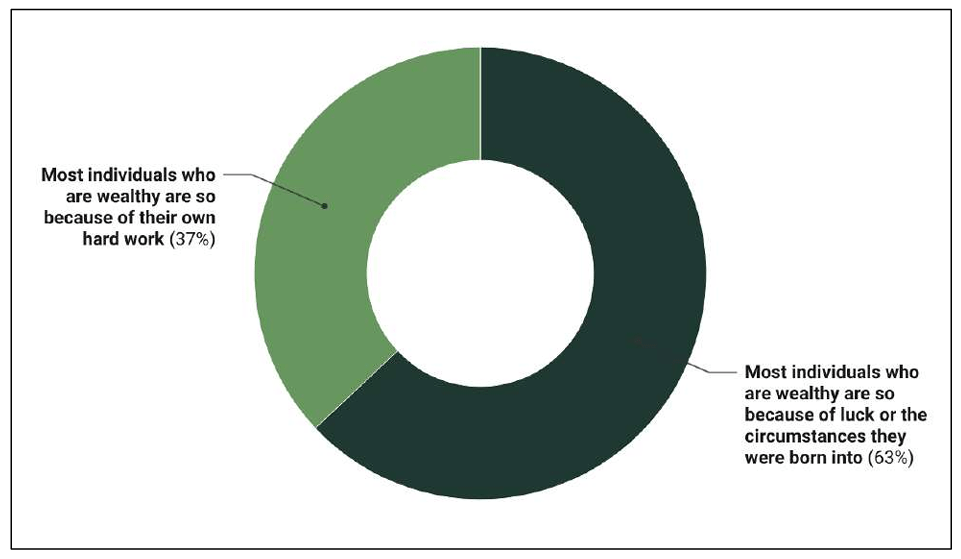
Just published, using a survey of 2 321 Scots, over 16 years of age and 6 focus groups, The Diffley Partnership attempted to measure attitudes to wealth inequality and support for redistributive policies.
First (above) on views of how wealth comes about, a majority of nearly two in three (63%) selected that most individuals are wealthy because of luck or the circumstances they were born into, while over one in three (37%) selected that most individuals are wealthy because of their own hard work. Page 12.
Second on views of how current levels of wealth inequality are good for or harmful to Scottish society:
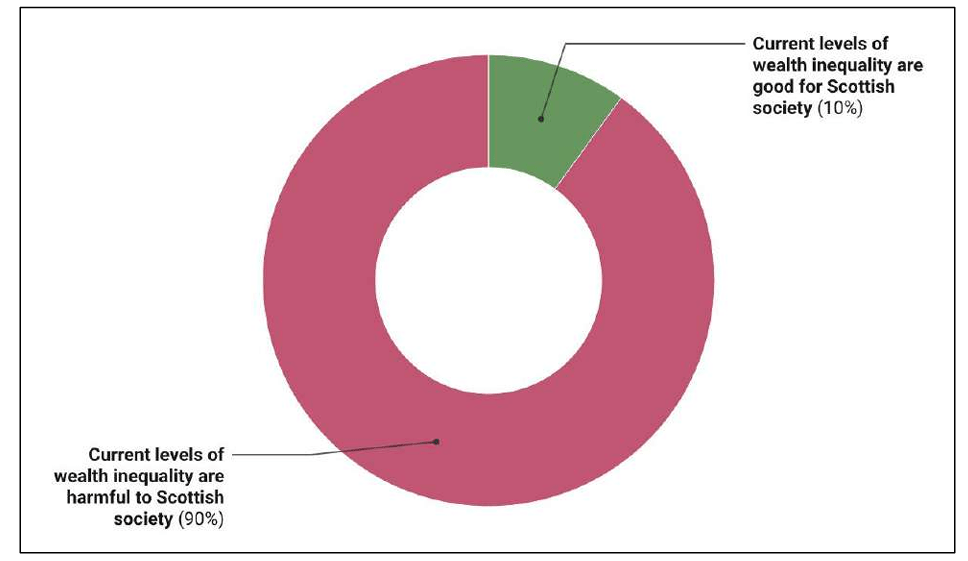
There’s a simple guide to election-winning policies?
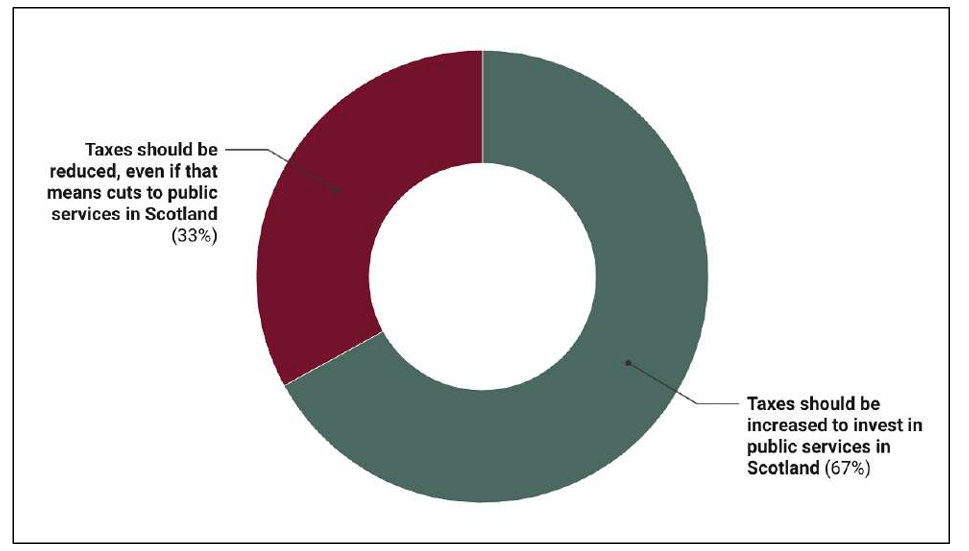
Third, in the light of the above certainty, should taxes be increased?
Finally, who should pay more?
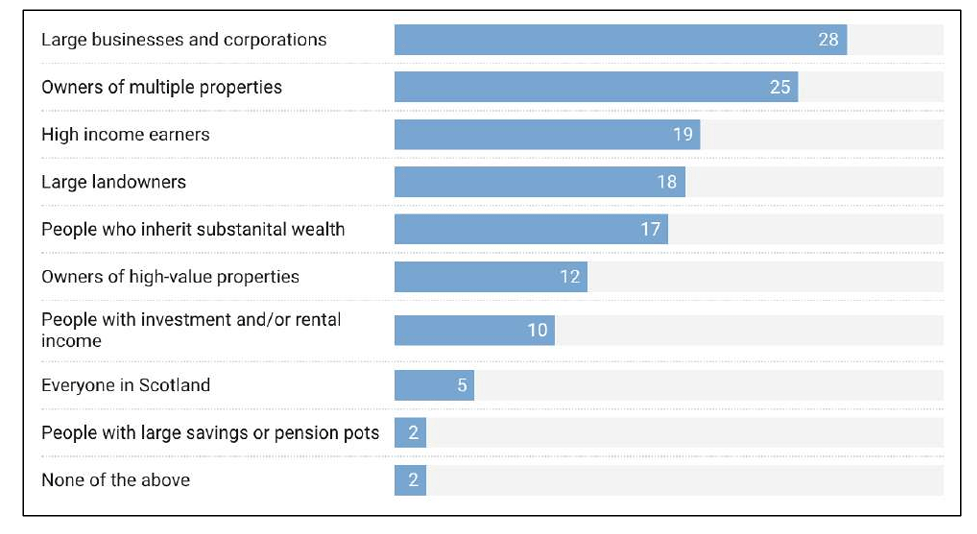
Most participants were supportive of large businesses and corporations paying more in taxes. Some said this was due to the “obscene” wealth accumulated by some organisations. (Group 5 – High wealth)
“I think my main one would be large businesses and corporations because you hear about it all the time, all these businesses making so many millions and billions in profit and it’s going to the shareholders in huge, huge pay rises or in bonuses when they’re already substantially wealthy. So, I do believe that they should contribute more to distributing the wealth.” (Group 4 – Medium wealth)
Others cited concerns about tax evasion and said they were aware these organisations were not paying the taxes they owe. Page 43.
Full report at source: https://diffleypartnership.co.uk/wp-content/uploads/2026/03/WeAll-Report-March-2026-FINAL.pdf
Discover more from Talking-up Scotland
Subscribe to get the latest posts sent to your email.


This is what the smug ex public schoolboys of Private Eye sneeringly and dismissively call ‘the politics of envy’.
LikeLiked by 1 person
The UK the most unequal place in the world.
More equal counties are healthier, happier and more cohesive.
LikeLike
Too many UK parties, including very much the rogue pretend party Reform UK, are still supporting that old chestnut that is ‘trickle down economics’ ?
The theory that tax cuts for the rich and businesses stimulate widespread growth.
Critics contend that it instead increases wealth concentration and raises budget deficits.
Trickle synonyms – dribble, drib, drizzle…..aka a small amount.
So basically wealth stays at the top- resulting then in the same inequality existing.
The London School of Economics wrote an article in January 2023 , based on research first published as a working paper in 2020 by Dr David Hope and Dr Julian Limberg of LSE’s International Inequalities Institute and King’s college London , the article that LSE wrote was entitled:
“Tax cuts for the wealthy only benefit the rich: debunking trickle-down economics”
Liz Truss aka the “Lettuce”, as the former Tory PM was mentioned in the article, but not in a positive or good way (Truss a former Tory PM , which as a position , was one that she held for a very , very short time, as in we are talking a duration of only 44 days ).
(Note that the stunt , the “Lettuce”, was apparently inspired by what was an Economist article comparing her political longevity to the shelf-life of a lettuce).
I also read this online in reference to Liz Truss aka Lettuce
“Liz Truss’s 2022 “mini-budget” aimed to jumpstart stagnant UK economic growth through “trickle-down” supply-side reforms—specifically major, unfunded tax cuts for corporations and high earners. The policy, aimed at encouraging investment, instead caused severe financial market turmoil, a falling pound, and widespread criticism, leading to her departure after just 44 days”.
You know there are so much negatives , as examples, connected to all of the UK parties (including the pretend one Reform UK) , that it defies belief that so many people still hold the misconception that somehow Ferries in Scotland are what the UK media and UK politicians cite as an apparent (but not) example of supposed (but not) case of SNP incompetence.
I mean where does one start with the list on UK political parties incompetence, corruption , failures, bad policies, wasted tax payers money, badly delayed UK government projects also with a huge overspends compared to what was their original budgets etc etc etc
(All amounting as examples, to almost being , in size, to that of infinity and beyond).
Liz S
LikeLike
SPOT
LikeLiked by 1 person