

Please Support Talking-up Scotland at:

https://www.crowdfunder.co.uk/p/support-talking-up-scotland

Click on the above.
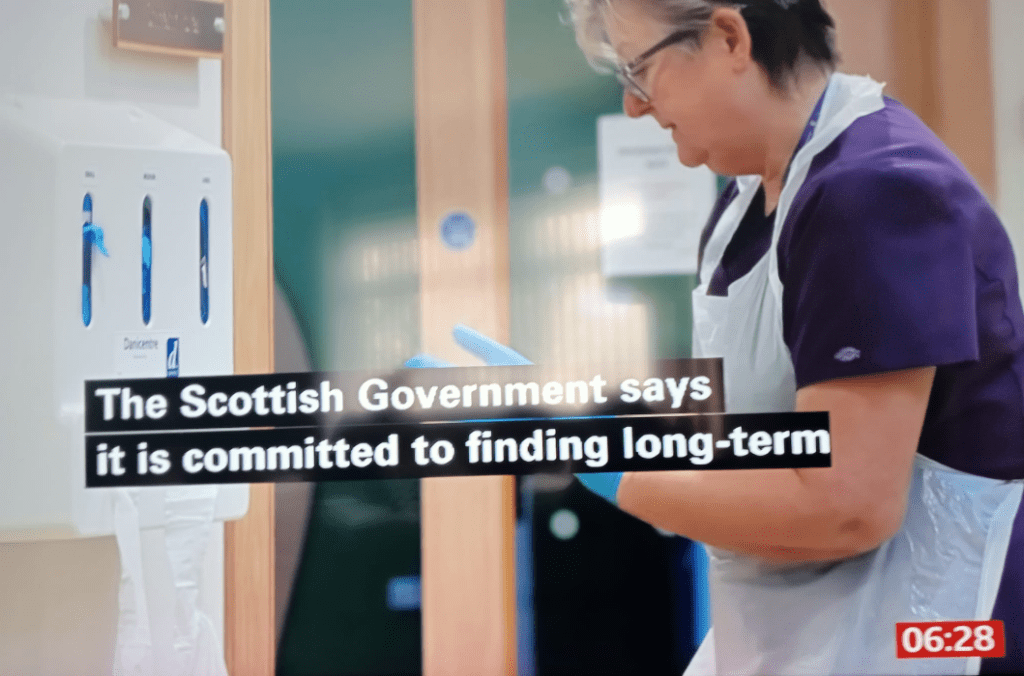
In BBC Scotland‘s short insert in BBC Breakfast, several times this morning:
Hospice leaders say Scotland must must address a severe shortage of end-of-life care for those living with terminal illnesses in rural communities. Next month MSPs face a final vote on assisted dying legislation but the debate has raised concerns that those without access to good palliative care might instead choose assisted death. The Scottish Government has…
For those of us regularly monitoring BBC Scotland, that linking of negative news to the Scottish Government is common and this is another of those cases where the problem identified in the report is a consequence only of the actions of the UK Government.
What are those?
Well, BBC Scotland’s close friends at the Herald have them:
New immigration rules could have the knock on effect of exacerbating depopulation in Highland communities, according to an expert in demographics. In May last year Prime Minister Keir Starmer announced a significant tightening of UK immigration policy, aiming to reduce net migration by 100,000 annually by 2029.
How will this affect highland communities and their ability of offer palliative care services?

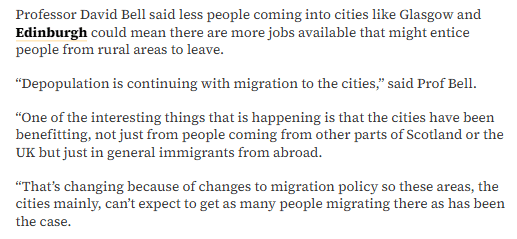
So, entirely clear then? Labour Government’s immigration policy reduces workers available for city employers and they then attract highland workers for better wages leaving Highland employers such as hospices, short staffed, and it’s somehow the Scottish Government’s responsibility?
Please Support Talking-up Scotland at:

https://www.crowdfunder.co.uk/p/support-talking-up-scotland

Click on the above.
Discover more from Talking-up Scotland
Subscribe to get the latest posts sent to your email.
 Talking-up Scotland
check out the Guardian story from Saturday on the vaginal mesh implants. T was all settled in Scotland yers ago in a single class action.
gerry
LikeLike
‘the problem identified in the report is a consequence only of the actions of the UK Government’
And problems with nursing and social care staff recruitment and retention more generally are being linked to the policies of governments in Westminster: this is widely acknowledged even if not by the gaslighting BBC Scotland.
From a Royal College of Nursing (RCN) press release (May 12, 2025)‘Nursing leader condemns government immigration measures in major speech.‘
‘The leader of the UK’s largest nursing union … has condemned the government’s proposed immigration measures as ‘pandering and scapegoating’. (my emphasis)
‘In her conference speech, RCN General Secretary and Chief Executive Professor Nicola Ranger said: “Many of you in this hall today started your nursing journey far away. So let me say again: you are more than welcome in the UK. Thank you for bringing your skills to this country and bringing your lives here. You know, more than I ever will, the obstacles, costs and the hostility.
“But look at the Home Secretary and Prime Minister. The UK is so reliant on overseas colleagues, especially in social care. The government has no plan to grow a domestic workforce. This is about politics – pandering and scapegoating. It should be about people.
“We need an immigration system that works for care staff, nurses and the people who rely on them. Drop the policy of no recourse to public funds and grant indefinite leave to remain to all nursing staff without delay. Measures like this will give people the security, respect and stability they need.”
See also RCN (2025) Unreciprocated Care: why internationally educated nursing staff are leaving the UK (https://www.rcn.org.uk/magazines/sitecore/content/RCN/Home/Professional-Development/publications/rcn-unreciprocated-care-why-internationally-educated-nursing-staff-are-leaving-uk-pub-012-109)
‘… in recent years, half of all new nurses joining the UK register for the first time were educated overseas (Nursing and Midwifery Council, 2024a). However, this trend is slowing and increasing numbers of our international colleagues are now leaving the NMC register altogether. We know that of the estimated 29 million nurses worldwide, 1 in 8 are practising in a country other than that in which they trained or were born. So politicians everywhere should heed the warning of our findings that 42% of internationally educated nursing staff surveyed intend to leave the UK.
‘That a majority of these staff are looking to move on to new country rather than the one they were educated in is a sign that the UK is becoming a much less attractive place to be a nurse.
‘The RCN’s goal is for UK government and employers across the country to enact policies which are aimed at retaining our valued internationally educated colleagues. This must include a significant overhaul of the UK’s immigration system, which continues to make staff vulnerable to exploitative employment situations, restricts access to permanent settlement and social safety nets, and keeps families separated.’
LikeLiked by 1 person
And on recruitment/retention in the private care sector, from November 21, 2025 in a press statement from Scottish Care: Scottish Care Warns Immigration Proposals Threaten Scotland’s Care Sector (https://scottishcare.org/media-statement-scottish-care-immigration-nov-2025/ )
‘Scottish Care is deeply concerned by the Home Secretary’s proposals to extend the qualifying period for settlement for legal migrants, particularly the increase from five to fifteen years for those on health and social care visas. These changes will have a profoundly negative impact on the sustainability and quality of care and support services across Scotland.
‘Scotland’s care sector is already facing acute workforce shortages, with international colleagues playing a vital role in supporting older and vulnerable citizens. Forcing dedicated care workers to wait up to fifteen years for settlement, and tying their future to restrictive criteria, will deter much-needed talent from staying in Scotland and undermine the sense of security and belonging for all those already here.
‘…. Such measures risk destabilising care provision, increasing turnover, and placing additional strain on already stretched services.’
And note: ‘Their impact especially in Scotland’s remote and rural communities is incalculable. They also send a damaging message that the invaluable contributions of migrant care workers are not fully recognised or valued.
‘Scottish Care urges the UK Government to reconsider these proposals and to work with devolved administrations to ensure immigration policy supports, rather than hinders, the future of care in Scotland.’
And finally, and interestingly: ‘We also urgently need Scottish Labour to come to challenge these proposals because they are insensitive to Scotland’s distinct needs and are a fundamental threat to our social care and health systems.‘
What has the British Labour Party in Scotland responded? It says a lot for Scotland’s democracy and our agency that Scottish Care feels the need to call on the third ranked political party in Holyrood to influence a Westminster government damaging health and social care in Scotland!
LikeLiked by 1 person