

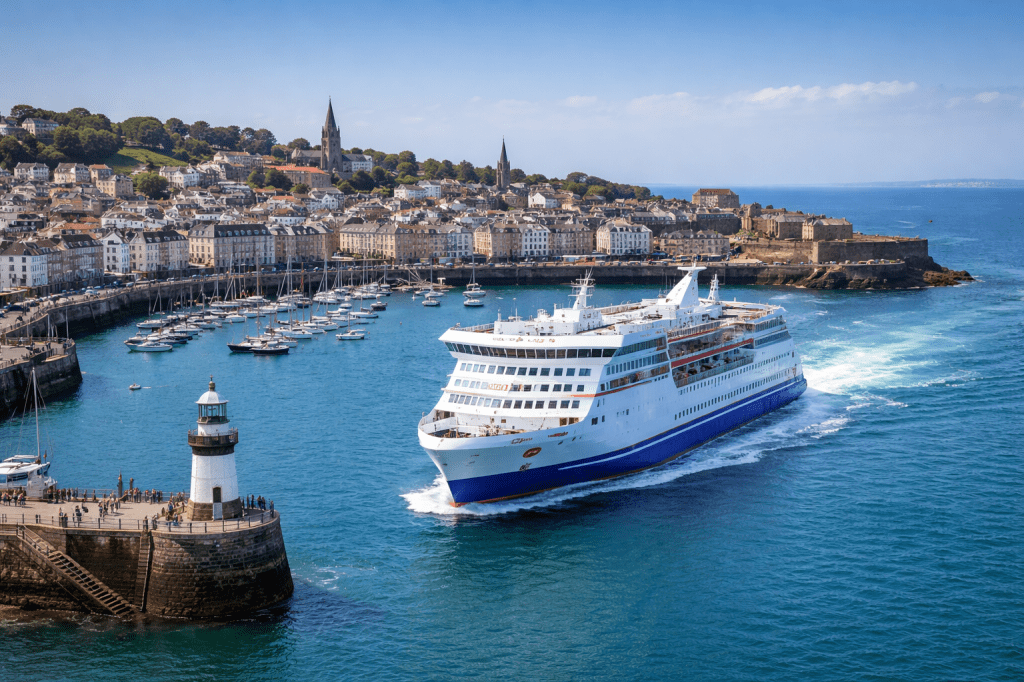
From the Jersey Evening Post on 5 January 2025:
THE firm that runs M&S stores in Jersey says that its prices on the shelves will have to go up next month when DFDS starts to add harbour dues levied by Ports of Jersey on to its bills.
No actual figures are as yet available but imagine that was on a Scottish island served by CalMac. Imagine the media coverage, the opposition partys’ faux fury.
Why will this not happen here?
Shops on Scottish islands do not specifically have to charge more because of harbour dues or levies charged by port owners in the way you might be thinking. Harbour dues (also called port dues or charges) are fees levied on ships or ferries for using harbours, covering maintenance, operations, and infrastructure. In Scotland, many island ferry ports are owned and operated by public bodies like Caledonian Maritime Assets Ltd (CMAL) (a Scottish Government-owned company) or local councils (e.g., Orkney Islands Council, Shetland Islands Council). These dues primarily apply to the ferry operators (like CalMac) rather than directly to the cargo or shops.
There’s another reason:
CalMac fares (for Scotland’s islands) are generally much lower per nautical mile than those on Condor Ferries services to the Channel Islands from England. This is largely because CalMac operates heavily subsidised “lifeline” services under Scottish Government contracts, keeping passenger fares affordable for residents, tourists, and island communities. In contrast, Condor Ferries runs commercial operations with higher market-driven fares, especially for longer open-sea crossings.Key Route Examples and Comparisons (as of early 2026 data)Here are representative examples using typical adult foot passenger single/return fares (prices can vary seasonally, with peak/off-peak, and exact figures fluctuate; these draw from recent timetables and booking sites):
- CalMac example: Oban to Craignure (Isle of Mull)
Distance: ~14 nautical miles
Typical adult fare: Around £5–£7 single (return ~£10)
Cost per nautical mile: Roughly £0.35–£0.50 (very low due to subsidies and short, high-frequency route). - CalMac longer example: Ullapool to Stornoway (Lewis) or similar major routes
Distance: Often 50–80+ nautical miles
Fares: Typically £20–£50 single for foot passengers on longer routes
Cost per nautical mile: Still usually £0.30–£0.80, remaining affordable thanks to government support (e.g., RET scheme influences some pricing, though not all routes). - Condor Ferries example: Poole to Guernsey
Distance: ~82 nautical miles
Typical adult foot passenger fare: Often £40–£100+ single (return higher; day returns can be ~£38–£80 off-peak)
Cost per nautical mile: Roughly £0.50–£1.20+ (higher for high-speed fast ferries). - Condor Ferries example: Poole to Jersey (St Helier)
Distance: ~92 nautical miles
Typical adult foot passenger fare: Often £50–£160+ single (longer high-speed crossings)
Cost per nautical mile: Roughly £0.55–£1.75+ (commercial pricing, especially peak season).
Summary of the Comparison
- CalMac fares per nautical mile are typically 2–5 times lower (or more on shorter routes) than Condor Ferries equivalents.
- Scottish routes benefit from public subsidy to support remote communities, while Channel Islands crossings are unsubsidised commercial services with higher operational costs (e.g., faster vessels, open Channel weather).
- Note: Vehicle fares follow a similar pattern — CalMac car + driver fares are often far cheaper per mile than Condor equivalents.
Source: https://x.com/i/grok?conversation=2009996050539405327
Discover more from Talking-up Scotland
Subscribe to get the latest posts sent to your email.
 Talking-up Scotland
Off topic.
According to Google AI
Economic Ranking as an EU Member (2026)
If Scotland were an independent EU member state in 2026, its GDP per capita would place it in the upper-middle tier of the bloc:
LikeLiked by 1 person