

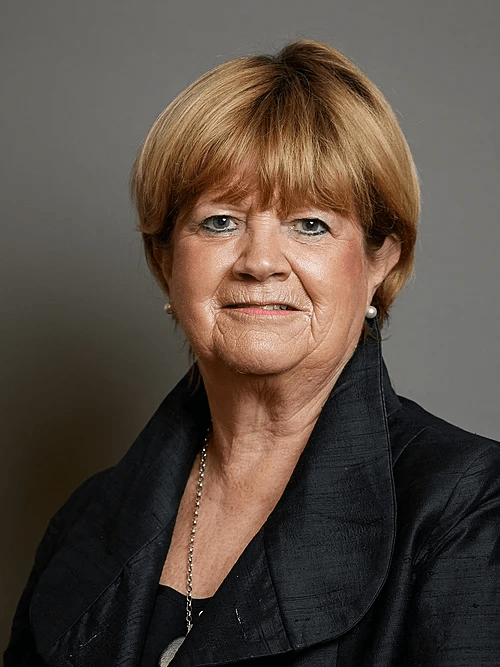
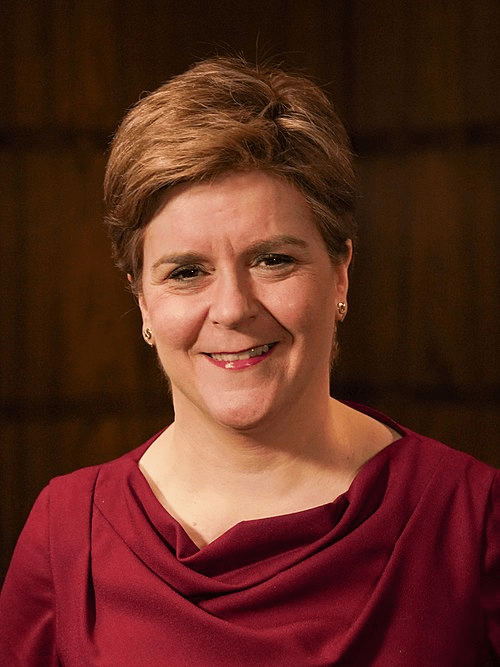
Nicola Sturgeon SNP Leader 2014-2023
Professor John Robertson OBA
In tonight’s BBC Scotland report, Baroness Hallett, appointed by PM Theresa May in 2019, made comments designed to ensure no one thinks the Scottish First Minister or her colleagues did any better than Boris Johnson PM and his ‘team’.
It’s a remarkable and jaundiced account, factually and selectively biased.
First, nowhere mentioned, bias by omission, the inquiry did not hear of that most poignant and significant of facts. The mortality rate resulting from the decision made in each nation, was 3.9% in Scotland, 4.9% (25% worse) in Wales and 6.5% (almost twice as bad) in England. Percentage differences contain within them many thousands of deaths in England that might have been avoided had Nicola Surgeon been in charge there.1 Had this been the other way round, you know who’d be blamed so, the FM must get credit for this huge achievement.
Second, this:
The UK Covid-19 Inquiry praised the former first minister as a “serious and diligent leader”, but said she “often excluded” some government ministers and advisers from key discussions.
Had she consulted more and inevitably acted later, she’d have been condemned for acting too slowly to save lives. Hallett, incoherently, does just that at another point.
It concluded that the response of all four governments in the UK to the virus “repeatedly amounted to a case of ‘too little, too late'”.
This is an astonishingly ill-informed, maybe just biased, claim. Why? See these:
- The World Health Organisation had pressed the panic button warning national governments to act on the 30th of January 2020.2
- Throughout February and March PM Johnson missed five Cobra meetings which discussed the need for a response.3 Pandemic response was still a reserved matter to the UK Government.
- In the first week of March, FM Sturgeon called for an immediate lockdown but PM Johnson refused in the interests of business.4
- PM Johnson reluctantly called the first UK lockdown on 23 March 2020.5
- The pandemic response strategy was devolved to Scotland on 25 March 2020. 6
Third, this:
She added that strict lockdowns could have been avoided had voluntary restrictions and social distancing been introduced earlier – and that thousands of lives could have been saved by faster action.
Social distancing appears to have been more effective in Scotland than in England, as evidenced by lower per capita COVID-19 deaths, hospitalizations, and case peaks during 2020–2021. This aligns with Scotland’s higher policy stringency and structural advantages (e.g., density), which better suppressed transmission.7
Sources
- https://t.co/vHHPbEUoY3
- ttps://www.who.int/news/item/27-04-2020-who-timeline—covid-19
- https://www.theguardian.com/world/2020/apr/19/michael-gove-fails-to-deny-pm-missed-five-coronavirus-cobra-meetings
- https://x.com/pjwoodside/status/1271449299721883649
- https://www.gov.uk/government/publications/the-impact-of-covid-19-lockdowns-on-crime-demand-and-charge-volumes/the-impact-of-covid-19-lockdowns-on-crime-demand-and-charge-volumes-in-england-and-wales#:~:text=23%2F03%2F2020,buying%20food%20or%20medical%20reasons).
- https://www.instituteforgovernment.org.uk/article/explainer/coronavirus-act-2020
- https://x.com/i/grok?conversation=1991601568509243894
Finally, other factors contributing to Scotland’s lower and evidencing the First Minister’s key role:
Finally, equality:
Moreover, the mortality rates in ALL quintiles in Scotland were substantially lower than the equivalent areas in ALL the other UK nations. Indeed, the chart shows that the mortality rates in England, Wales and NI for their LEAST deprived three quintiles (3, 4 and 5) were also higher than the mid-level, Quintile 3 in Scotland.
The JRF report focuses on the relatively higher difference between the rate for Quintile 1 and Quintile 5 in Scotland. Although true, it is of course hard to understate the crucial importance of the mortality rates in every quintile in Scotland being much lower than the rates for equivalent levels of deprivation elsewhere.
Given that Scotland’s population health is generally reported as being poorer than elsewhere in the UK, these substantially lower Covid-19 mortality rates across the board in Scotland are all the more remarkable!
https://www.jrf.org.uk/report/uk-poverty-2023
Discover more from Talking-up Scotland
Subscribe to get the latest posts sent to your email.


Thank you
LikeLike
I see only the BBC Scotland web page headline names a politician within a negative framing, in Wales & N Ireland headlines are negative but no names initially, the England page has no story and the UK page headline has already moved on to how things could have been handled differently, letting them balance out the criticism of Boris Johnston’s government with the message that all 4 governments messed up. I’m sure when I muster the energy to read the full report there will be more nuance but a glance at the key findings summary (covid19.public-inquiry.uk/documents/module-2-in-brief-report/) it appears flawed. For example, in saying all 4 nations failed to act quickly enough and that health is a devolved issue surely the report ignores the financial restrictions on the devolved governments, their inability to borrow or make decisions to close borders etc. Of course this makes them “too reliant” on the UK, an argument for independence if ever I saw one.
From memory I believe that many individuals in public roles (health advisers, police, trade unions etc) spoke positively about the way the Scottish Government worked with them to plan responses – not an indication of a power hungry dictator keen to make all the decisions within a tightly controlled cabal. She also spoke almost daily to the nation to explain decisions, answer questions and to share info & advice. Phil Sim addressed this point in the BBC article saying “It also nods to the fact Sturgeon fronted 98% of Scottish government briefings broadcast to the public, suggesting that sharing the burden of communications would “reduce the risk of polarisation among members of the public”, no credit given for clear & consistent communication or the sheer hard work involved in researching, understanding and breaking down the info for the benefit of the public.
The BBC Scotland article states “There were frequent political spats between the Scottish and UK administrations during the pandemic, with both sides claiming the other was trying to further political arguments. Former Chancellor to the Duchy of Lancaster Michael Gove claimed that Scottish ministers occasionally viewed decisions “through a political lens” as to whether divergence from the UK approach would further the case for independence” but only N Ireland is singled out for decision making married by political disputes. Given this point was heavily pushed in the inquiry hearings by Gove, Jack etc al it would have been good to see the BBC highlighting what was said instead of this interpretation “The inquiry said it had found no evidence that either government “allowed political considerations to affect their pandemic-related decision-making”. However it said the relationship between Sturgeon and her UK counterparts was “poor”, and that neither side had done anything to improve it. It said the perception of political manoeuvring “hindered intergovernmental relations at a time when trust between the administrations was paramount”.
Also in the report summary we get “The complexity of regulations, localised restrictions and variations in rules across the four nations made it difficult for the public to understand what rules applied” Other countries with federal states managed this, possibly because they didn’t have to rely on a media which at times seemed hell bent on creating confusion and blurring distinctions. Maybe no-one can remember what FACTS stood for because it was criticised and mocked rather than being presented neutrally and reinforced by a responsible press keen to play their part in getting us through the pandemic. I think it was only in Scotland that opposition parties were regularly invited on to critique the Scottish Govt’s decisions, and eventually got the daily briefing stopped.
LikeLiked by 1 person
Appalling that this in-depth parsing of every British Government pronouncement is necessary. You might think that in a field as vital as health and pandemic capacity an objective assessment is essential.
LikeLike