


Professor John Robertson OBA
There was little chance that the Sunday Daily Record would report this honestly as their Holyrood 2026 campaign in support of Anas Sarwar kicks on.
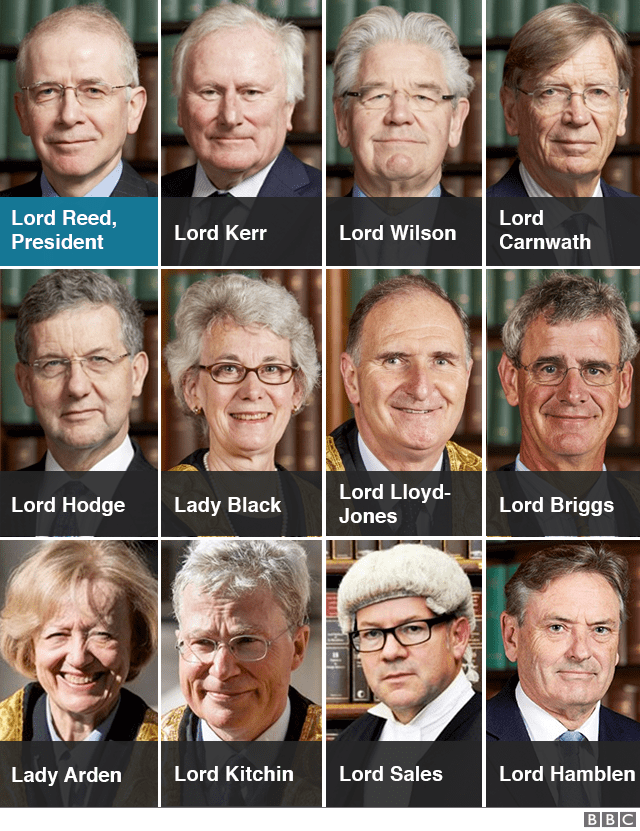
The above victim’s mother is concerned about a recent decision by the Supreme Court in London, which though not competent in Scots Law is, in the context of the Union, superior to the highest courts in Scotland and can exert considerable pressure on them, even over-turn their verdicts, such as in the case of Nat Fraser’s murder conviction which it quashed in 2011.
The Victims, Witnesses, and Justice Reform (Scotland) Act 2024 (passed in late 2024/early 2025) was designed to protect rape victims from often humiliating revelations about their previous sexual history being presented to jurors after aggressive questioning by lawyers representing the accused. The Supreme Court in London ruled in favour of the accused insisting that these protections in Scotland were too restrictive and should be relaxed to ensure the accused gets a fair trial.
Was the Supreme Court decision correct?
No – Legislation like Scotland’s Victims, Witnesses, and Justice Reform (Scotland) Act 2024 can harm, but rarely and manageably: The restriction risks unfairness if relevant evidence is blocked, violating the accused’s rights. However, the UK’s gatekept approach (judge-approved, exception-based) minimizes this while preventing abuse. Net effect: It enhances overall fairness by encouraging reporting, reducing bias, and focusing on facts.
Was the Supreme Court decision based soundly on research evidence?
No, it seems to have ignored:
1. Risk of Harm to Fair Trial Rights (but only if relevant evidence blocked)
- R v A (No 2) [2001] UKHL 25 (House of Lords/Supreme Court landmark)
Lord Steyn (leading judgment): Recognised that a rigid exclusion of previous sexual history evidence “might result in the exclusion of evidence which is relevant… and would endanger the fairness of the trial under Article 6”. The court used s.3 Human Rights Act 1998 to read an implied proviso into s.41 allowing admission where exclusion would violate fair trial rights. This directly acknowledges the potential harm but resolves it via flexible interpretation rather than striking down the law.
Full judgment: https://www.bailii.org/uk/cases/UKHL/2001/25.html (paras 27–46 especially). - Gudrun Young, ‘The Sexual History Provisions in the Youth Justice and Criminal Evidence Act 1999: A Violation of the Right to a Fair Trial?’ (2001) 41 Medicine, Science and the Law 217
Pre-R v A article arguing the original strict wording risked Article 6 breaches by excluding genuinely relevant material (e.g., recent prior consensual sex with the accused). Post-R v A, this risk is cited as having been mitigated by judicial “reading down”.
2. The Gatekept/Judge-Approved Approach Minimises Harm and Prevents Abuse
- Government Review: Limiting the Use of Complainants’ Sexual History Evidence (Ministry of Justice, 2017)
Analysed 309 finalised rape flagged cases in 2016:
– s.41 applications made in only 13% of cases.
– Judges refused permission in 92% of applications overall (i.e., evidence almost never admitted inappropriately).
Conclusion: “The law is operating as Parliament intended and strikes a careful balance between the need to protect complainants and ensuring that defendants receive a fair trial.”
https://www.gov.uk/government/publications/limiting-the-use-of-complainants-sexual-history-in-sexual-offence-cases - Written Ministerial Statement (14 December 2017, HCWS349)
Then-Justice Minister Dominic Raab: The 2017 review “strongly indicate[s] that the law is working as it should, and strikes a careful balance… consistent with the common law and Article 6”.
https://questions-statements.parliament.uk/written-statements/detail/2017-12-14/HCWS349 - R v Evans [2016] EWCA Crim 452 (Ched Evans retrial appeal)
Rare example where s.41 evidence (complainant’s sexual behaviour with third parties) was admitted because it was “so similar” to the alleged incident that exclusion would be unfair. Demonstrates exceptions work in genuine cases without opening floodgates.
https://www.bailii.org/ew/cases/EWCA/Crim/2016/452.html
3. Net Effect: Enhances Overall Fairness (Encourages Reporting, Reduces Bias, Focuses on Facts)
- Home Office Research Study 293 (Kelly, Lovett & Regan, 2005) – “A gap or a chasm?”
Found ~75% of complainants feared sexual-history cross-examination as a barrier to proceeding; strict controls correlated with higher willingness to report/support prosecution.
https://webarchive.nationalarchives.gov.uk/ukgwa/20110314171826/http://rds.homeoffice.gov.uk/rds/pdfs05/hors293.pdf - CPS Violence Against Women and Girls (VAWG) Reports (annual)
Post-1999 reporting of rape has risen dramatically (from ~12,000–15,000 recorded in early 2000s to 60,000–70,000+ annually by 2020s) while trial conviction rates remain ~60–70% (higher than many serious crimes), indicating protections encourage cases without crippling defences. Latest (2023–2024) confirms no evidence of systemic unfairness to defendants from s.41 restrictions.
https://www.cps.gov.uk/publication/violence-against-women-and-girls-report - Law Commission Final Report: Evidence in Sexual Offences Prosecutions (2025)
Concludes that while the system is “flawed”, s.41-style restrictions are essential to minimise rape myths/jury bias and protect complainant privacy, while fair trial rights are adequately safeguarded via exceptions. Recommends retention with tweaks, not relaxation.
https://lawcom.gov.uk/project/evidence-in-sexual-offence-prosecutions/
Discover more from Talking-up Scotland
Subscribe to get the latest posts sent to your email.
 Talking-up Scotland
Its ever so England will overrule Scotland in Courts,Parliament when it ever suits them only Independence will solve it.
LikeLiked by 4 people
The Mother of Colonial Justice wins again.
The recently (Oct 2009) imposed Supreme Court is doing what it was designed to do.
Dae whit yer telt, Jock!
gavinochiltree
LikeLiked by 1 person
How despicable. What do those employed in and involved in Scots Law, think about that, do they care.
LikeLiked by 1 person
Blair the murderer should be at The Hague. Supreme Court an abuse of International Law
LikeLike