

Professor John Robertson OBA
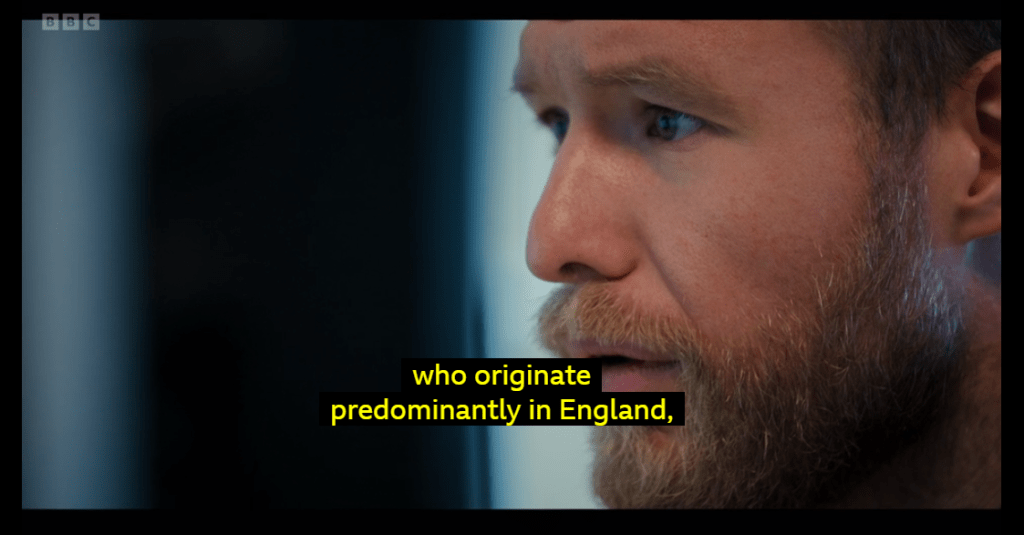
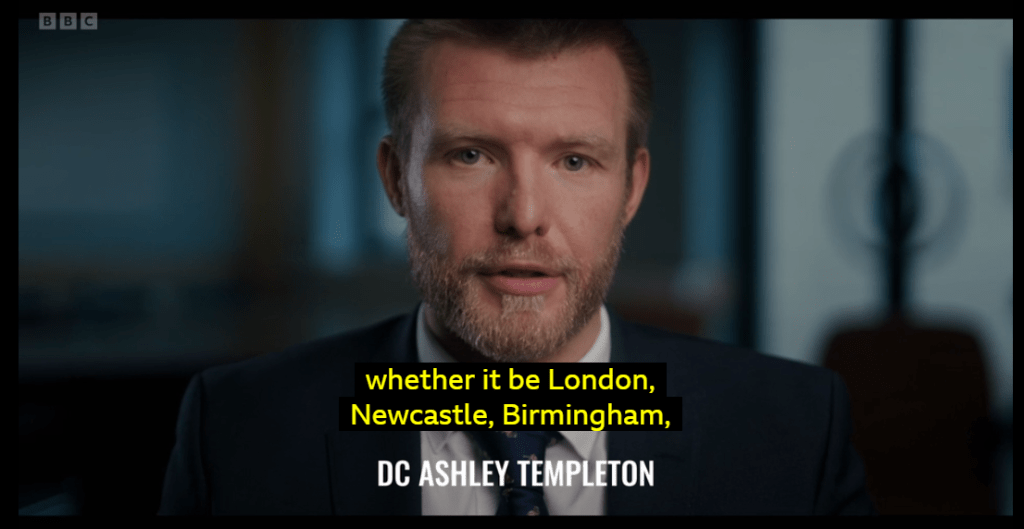
That’s an Inverness-based police inspector telling us on BBC Highland Cops in S3, E4, that the drugs will be ‘brought to Inverness by organised crime groups who originate predominantly in England, whether it be London, Newcastle, Birmingham, any big city. He missed out Liverpool which featured in Series 1 and 2.
No one has ever, ever, in now at least six years since these gangs moved in, said anything like that on BBC Reporting Scotland or Good Mourning Scotland.
These local, not BBC, producers of the series and the local cops are political naives. They don’t know that saying these things might be bad for the image of the Union. The Union’s wider shoulders are now concealing deadly new drugs, guns, zombie knives, XL Bully dogs and are being worn by ruthless killers.
In August 2025 on Scotcast, ‘a leading detective tells Martin Geissler how English drugs gangs are targeting the Highlands.’
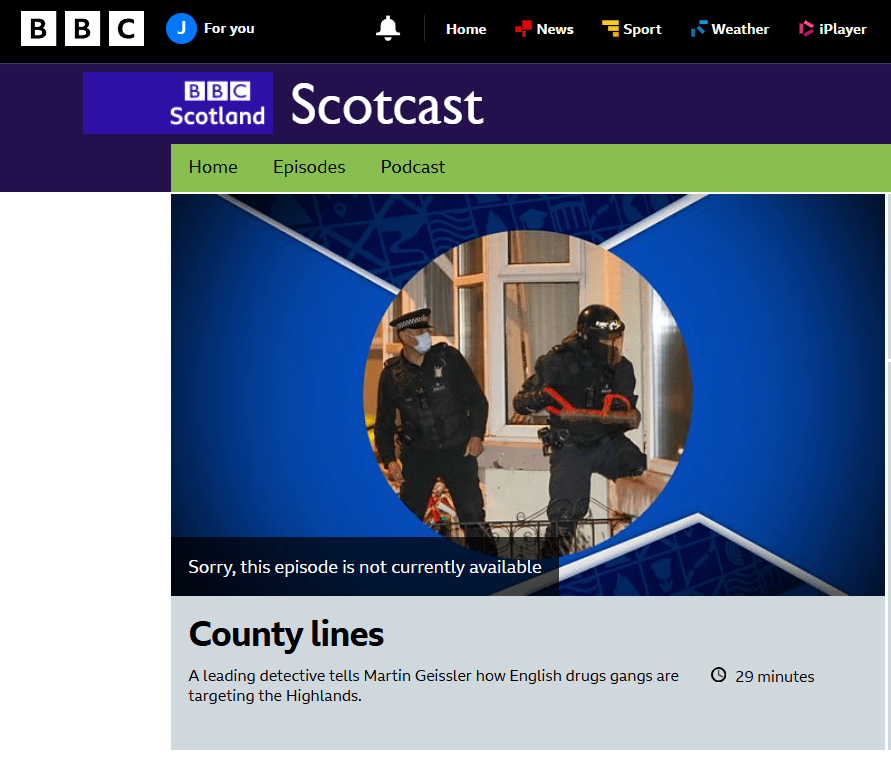
It’s been removed already leaving things largely as they were:
BBC Scotland still struggling to say ‘County Lines’ or ‘England’ or any English city in a drugs report on the flood that is keeping our drug deaths high
From BBC Scotland South in April 2025:
A woman has been charged after a police discovered heroin worth an estimated £180,000 during a car stop in Dumfries and Galloway. Officers acting on intelligence stopped the car on the M74 near Lockerbie at 20:25 on Friday.
The 25-year-old was arrested and released on an undertaking to appear at Dumfries Sheriff Court at a later date. Det Supt Steven Elliott described the recovery as “significant,” adding: “Drugs cause misery in our communities and we are committed to disrupting their supply.”
Now I know there are limits on what can be said about live cases but telling us if she was travelling north or south would be safe enough and that would tell us something important. I’d put money on it being north. Why do I say that?
A clear causal connection between Liverpool drug gangs, the flood of cheap, more powerful, drugs into Scotland and our still far too high drug deaths. Why are Scotland’s media ignoring that?
From BBC England:
Five members of a county lines drug gang known as the Scouse Dave Line have been jailed. A total of seven members of the organised crime group, which peddled crack cocaine and heroin between Liverpool, Gosport and Plymouth, were sentenced during the two-day hearing at Portsmouth Crown Court.
My Google Alert on 14 February 2025, offered Operation Apollo continues crackdown on County Lines with over 300 years in jail time secured [by the above members] from Cheshire Constabulary. There’s no mention of Scotland in it but it triggered a memory in me. This from 2022:
A series of raids across Scotland last week highlighted the continuing focus of Merseyside’s organised crime groups on the drugs market north of the border. Last week officers from Merseyside Police teamed up with Police Scotland for raids in Peterhead, Aberdeen and in Knowsley. On Wednesday, November 2, Police Scotland raided an address in Peterhead where cocaine and heroin were recovered and a man and woman arrested.
Debate has been raging north of the border over how to handle drug-related deaths, which have remained high for a number of years and show little sign of significantly reducing. Scotland still has the highest number of drug deaths in Europe. In 2021, 1,295 deaths were linked to illicit drugs in Scotland, albeit down from 1,411 in 2020 which represented the highest number on record.
Liverpool based street gangs do not appear to have been phased by the misery, death and addiction on the streets of Glasgow and other Scottish cities and towns, however. In 2018, a National Crime Agency (NCA) annual strategic assessment said: “Significant serious organised crime connections exist between Scotland and the north west of England, predominantly Merseyside.
Was any of that reported by BBC Scotland, STV? I can find nothing.
The Liverpool Echo is making a clear causal connection between Liverpool drug gangs, the flood of cheap, more powerful, drugs into Scotland and our still far too high drug deaths. Why are Scotland’s media ignoring that?
To what extent is BBC Scotland informing us on the above dangers?
Nearly four years since they could last bear to tentatively [they don’t mention where the drugs are coming from] link Scotland’s drug deaths to the broad shoulders of the Union and its pockets stuffed with cheap new more powerful drugs killing addicts from Gretna to Thurso.
https://www.bbc.co.uk/iplayer/episode/m002lvf5/highland-cops-series-3-4-the-surprise-monkey-raid
Discover more from Talking-up Scotland
Subscribe to get the latest posts sent to your email.
 Talking-up Scotland
Well done the Prof. for keeping tabs on this.
LikeLiked by 4 people
Do Police Scotland use Interpol? Surely they could persuade foreign forces to cooperate in controlling drug gangs with their weapons and ugly dogs.
What is INTERPOL?
LikeLike
Watched it again waiting eagerly to be informed about it on BBC Scotland no chance I just wonder if and when the powers that be will crack down on Highland Cops program from mentioning County Lines
LikeLiked by 2 people
I’ve wondered the same.
Late night viewing, small audience?
LikeLiked by 1 person
Are the viewing figures for individual programmes published anywhere? It would be interesting to see if the ones for Highland Cops have gone up since you started mentioning them here, I know we started watching because of this.
It’s a disgrace that the BBC and other media refuse to cover the County Line problem and origins. Several reports in the English press have police spokespeople stressing that public awareness is vital to recognising and understanding the problem, what to look out for, reporting concerns etc.
LikeLiked by 1 person
Are the viewing figures for individual programmes published anywhere?
I’ve been unable to find them but would love to know.
John
LikeLiked by 2 people
I’m useless at interpreting charts & graphs so the share figure for HC on P59 of http://www.ofcom.org.uk/siteassets/resources/documents/tv-radio-and-on-demand/bbc/bbc-annual-report/2024/ofcoms-annual-report-on-the-bbc-202324.pdf?v=392184 means nothing to me. However, the fact that this one show was singled out might be significant? possibly one of the most popular to show the BBC are doing good things?
Maybe instead of a complaint we could submit a thank you message for helping us to get some info on county lines, what do you think they would do?
LikeLike
WE NEED A CONSTANT SCOTTISH CAMPAIGN WITH POSTERS BANNERS
TO OUT ALL POLICE WHO DO NOT TELL TRUTH ABOUT THUGS
FROM ENGLAND TARGETING WOMEN AND CHILDREN
LikeLike
O/T tho’ still on policing. The National Audit Office (NAO, November 3, 2025) published this report: ‘Police productivity – Home Office. Report HC 1380’. (https://www.nao.org.uk/wp-content/uploads/2025/10/police-productivity.pdf)
It is concerned with policing in England and Wales. The NAO notes that the Home Office allocates the majority of police funding for England and Wales. Why relevant to TuS and to Scotland? In common with other devolved public services, what the UK government decides on resources for policing in England and Wales impacts financial resources made available to the Scottish Government via the so-called Block Grant. And it is not only the size of the Block Grant that is impacted but also the predictability of its future size.
Whilst manageable when such issues are limited to one or a few areas of devolved responsibility, when commonplace, the budgeting and forward planning challenges for a government with restricted, devolved powers can become seriously damaging.
The NAO report includes many notable statements – as you read, imagine BBC Scotland and other MSM outlets in Scotland’s reactions if such comments were being made in an Audit Scotland report about the Scottish Government and Police Scotland.
‘Police forces are managing increasing financial pressures but, to-date, the Home Office has not fully understood the implications. In 2024-25, police forces responded to financial pressures by reducing their reserves by £276 million and borrowing £632 million to help fund capital programmes. These are short-term measures, which may affect their financial resilience in the future.‘
‘To live within budgets, police forces have also run high levels of staff vacancies, used more officers in civilian roles and reprioritised the services they provide.’
All the above are indicative of a police service under-resourced relative to demand, need and Westminster governments’ policy expectations.
And more: ‘Fully funding the government’s policing commitments while managing existing pressures will require police forces to make significant savings. ….. The Home Office and policing do not
have a shared understanding of the resource implications of changing demands.‘
And on uncertainty over near to mid-term funding settlements: ‘As at September 2025, the Home Office had not yet allocated police funding for 2026-27 to 2028-29 but the projected average annual increase in total police funding of 1.7% is likely to be absorbed by pay increases and inflationary pressures.’
And following on from the last comment on funding: ‘The Home Office is seeking to achieve efficiency savings through its Police Efficiency and Collaboration Programme to help fund the government’s policing commitments, identifying potential savings of £354 million over 2025-26 to 2028-29. However, it has not yet agreed how it will support police forces to meet the Neighbourhood Policing Guarantee, or the funding implications of this.’
‘The Home Office reported it had achieved efficiency savings of £220 million over 2020-21 to 2024-25 but could only provide details to support £25 million in 2020-21 and did not know whether these have been sustained.’
Despite the importance being placed on policing productivity improvements by Westminster governments, the NAO notes: ‘The Home Office has not yet established an approach to measuring police productivity. We reported in 2015 and 2018 that the Home Office had limited data and analysis of police productivity. It does not yet have an agreed definition of productivity, nor a standard methodology for measuring it.’
‘The government’s focus on maintaining officer numbers means police forces have less flexibility in how they use resources and often do not have the capabilities needed to support transformation programmes and embed new technology.’
The NAO report offers up rich pickings for a headline writer – but seemingly this report is no interest to BBC and other MSM journalists elsewhere in the UK. Unless you know different?
LikeLiked by 1 person
Albanian gangs
More cannabis is home grown than imported. Strong marijuana.
LikeLike
Had never heard of the “Highland Cops” series, but this instance certainly puts to bed any notion Police Scotland are behind the BBC Scotland News embargo on mention of ‘County Lines’.
LikeLiked by 1 person