


By Professor John Robertson
A BBC US & Canada story popped up in my google alert today.
The name Andrew Picken, one of the authors, caught my attention. He’s a BBC Scotland reporter.
There is no mention of Scotland in the report which considers the deaths from cancers of a UK marine and his wife, 30 years after living for 2 years at Camp Lejeune in North Carolina USA.
Of particular interest to us but not to Picken, it seems, is this:
In 2021, Joe and Carol were living in Portsmouth when blood tests ahead of a hip replacement operation revealed that Carol, a teacher, had acute myeloid leukaemia. The doctors said to her, ‘Why have you got this type of leukaemia normally associated with asbestos and nuclear submariners?
and:
The MoD has not been able to provide the BBC with details of how many British service people were posted to Camp Lejeune. However, research by File on 4 – based on decades-worth of archive files and military newsletters – suggests nearly 1,200 British personnel and civilians were there for at least one day between 1953 and 1987.
They, and the tens of thousands of Americans who lived and worked at the camp at that time, did not know the water supply was contaminated. The pollution was found to come from multiple sources, including a leaking fuel farm and dumped solvents from a dry cleaner’s, that had seeped through the ground and into the water wells.
A series of public health studies found there was an increased risk of Parkinson’s disease and some cancers for people who had lived on the base. This included a 20% higher chance of developing acute myeloid leukaemia, the cancer that killed Joe’s wife, when compared to people stationed at another military base.
An outcry led to legislation being passed in the US to help those affected. President Biden signed a law in 2022 allowing compensation claims. This is open to any service personnel from around the world, or their families, who lived at the base for at least 30 non-consecutive days over the four decades in question.
The BBC’s research suggests at least 205 British people would qualify. But a two-year window to submit a compensation claim closes on 10 August.
Why have the BBC just published this scheme so late and in an out-of-the-way site?
There’s a key adjective omitted from ‘a leaking fuel farm‘ above – ‘nuclear‘.
From the more accurate wiki report:
In 2007, Jerry Ensminger, a retired Marine master sergeant, found a document dated 1981 that described a radioactive dump site near a rifle range at the camp. According to the report, the waste was laced with strontium-90, an isotope known to cause leukemia and other cancers.
You’d think a Scottish journalist, if his BBC Scotland editor agreed, of course, might think:
‘Hey there are nuclear submarines and their dumps as well as recently increasing dumping in a river on which my Pacific Quay office actually sits! I wonder if that’s connected to cancer levels in Scotland?’
Of course, he does no such thing. He even drops the word nuclear from the dump.
I’m aware of no published research into UK submariners but in June, we had this:
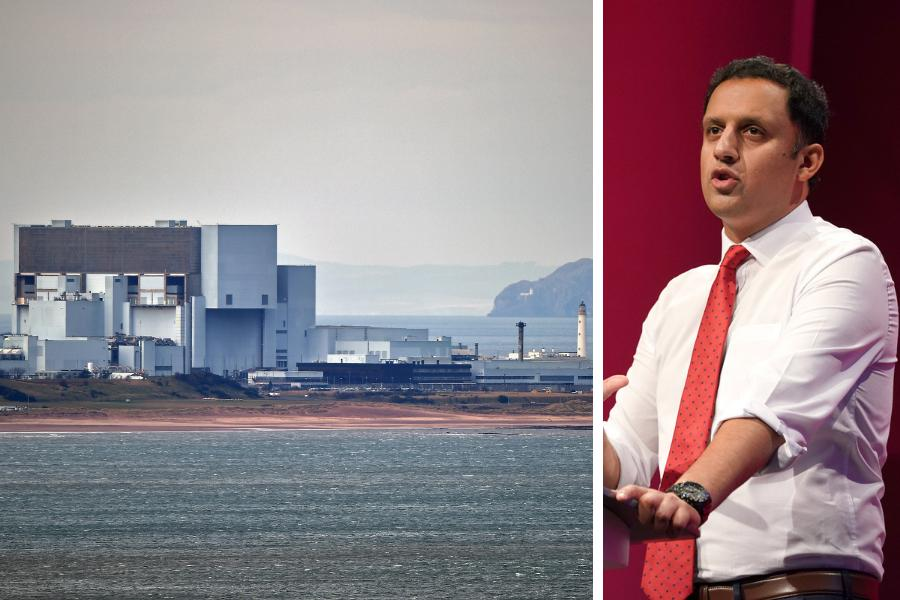
German research suppressed by Labour Government and media in 2008 revealed under 5’s living near nuclear plants more than twice as likely to develop leukemia
By Professor John Robertson
I’m grateful to JB for alerting me to this. I knew nothing of it because mainstream UK media do not seem to have covered it at all.
On 30th June 2011, the German Bundestag voted to phase out nuclear energy.
Why?
Safety was a paramount concern in the decision to phase out nuclear power: the use of nuclear energy causes highly dangerous radioactive radiation for humans and the environment and leaves behind highly toxic waste. High safety precautions must be taken throughout the entire life cycle – from the extraction of the raw material uranium to the production of the fuel, the operation of nuclear power plants and final disposal. This is the only way to reduce risks to humans and the environment, and to prevent misuse.
Yet, in the past, there have been several serious accidents that had catastrophic consequences for society and the environment affected. This is why the German society concluded that the risks of this technology exceeded the benefits, and subsequently decided to phase-out the use of nuclear energy. 1
What was the research evidence upon which they made this momentous decision?
This research from Germany published in October 2008 in Deutsches Ärzteblatt International:
An association was found between the nearness of residence to nuclear power plants and the risk of leukemia (593 cases, 1766 controls). Within the 5-km zone, the OR for the development of leukemia in children under 5 years of age was 2.19 compared to the rest of the region, and this elevation of the OR was statistically significant. The incidence of leukemia in the overall study region was the same as that in Germany as a whole (SIR=0.99; 95% confidence interval 0.92–1.07). 2
The authors held back from directly attributing the leukemia cases to radiation from the plants, as impartial researchers must, and UK Government commentary in March 2010 attempted to dismiss its findings as an outlier 3, but in Environmental Health, September 2009, a Commentary noted:
In 2008, the KiKK study in Germany reported a 1.6-fold increase in solid cancers and a 2.2-fold increase in leukemias among children living within 5 km of all German nuclear power stations. The study has triggered debates as to the cause(s) of these increased cancers. This article reports on the findings of the KiKK study; discusses past and more recent epidemiological studies of leukemias near nuclear installations around the world and outlines a possible biological mechanism to explain the increased cancers. This suggests that the observed high rates of infant leukemias may be a teratogenic effect from incorporated radionuclides. Doses from environmental emissions from nuclear reactors to embryos and fetuses in pregnant women near nuclear power stations may be larger than suspected. Hematopoietic tissues appear to be considerably more radiosensitive in embryos/fetuses than in newborn babies. 4
So, one of the most advanced nations in the world, Germany, decides to phase out nuclear power on health risk grounds after research finds higher rates of childhood leukemia near every one of their 17 nuclear power stations. The UK MSM ignore the report and the UK Labour Government of Gordon Brown, long wedded to nuclear power and weapons, funded by the GMB, commissions a report to debunk it, finding no causal link between the power plants and the disease?
The commentary in Environmental Health offers a possible mechanism to explain the clear and strong correlation for the under 5’s living 5km or less from the plants but, actually, we don’t even need that.
The onus is not upon us, to prove that the radiation around nuclear plants is safe but is upon the industry and our government to prove that it is not dangerous and to use genuinely independent researchers, not those working for government departments or in university research groups dependent on grants from government or the industry to show that it is not.
The much vaunted, by scientists, precautionary principle applies here. No potentially dangerous technology should be implemented until it is proven to be safe for all of us, from conception to the grave.
In the July 4th 2024 UK General Election, Scottish Labour and the Scottish Conservatives back new nuclear power stations in Scotland.
And this too:
Why is Scotland’s cancer rate significantly higher than that in England – nuclear waste, nuclear power and nuclear weapons placed as far from London as possible?
In Scotland:
In 2021, the rate, or risk, of new cancers also increased to 644 per 100,000 [around 700 for men and 600 for women (an increase of 3.1% compared with 2019).
In England, in 2020, the rate for men was 590 and for women, 487.
These are significant differences.
There are several explanatory factors including smoking (England lowest 13%, Scotland next at 13.9%, N Ireland at 14% and Wales at 14.1%) and better NHS detection services but you have to wonder about the Sellafield reprocessing plant, the most toxic nuclear plant in Europe, seeping pollutants around our coast for 70 years now, the nuclear submarines in the Clyde and munitions on the roads and rail, the waste travelling to Sellafield, the rotting nuclear hulks in Rosyth, as well as the power stations, only recently shut down.
Sources:
https://www.bbc.co.uk/news/articles/c72v9eny6d7o
https://en.wikipedia.org/wiki/Camp_Lejeune_water_contamination#cite_note-thompson2007-6
https://www.ncbi.nlm.nih.gov/pmc/articles/PMC2696975/
https://assets.publishing.service.gov.uk/media/5a7e0ccd40f0b62305b80788/HPA-RPD-066_for_website2.pdf
https://ehjournal.biomedcentral.com/articles/10.1186/1476-069X-8-43

Discover more from Talking-up Scotland
Subscribe to get the latest posts sent to your email.


But as far as unionists, especially ‘Scottish’ Labour is concerned, Scotland is ‘remote’ and so nuclear power stations can be based there because there are not too many people to be irradiated. In addition the thuggishly led an Scotland hating GMB is a main paymaster of Labour and it’s members work in the nuclear and oil and gas industries, so it wants nuclear stations here and oil and gas to continue. Finally, many members of the Blair/Brown governments moved into private energy and private health and other companies and made substantial sums. So, they want nuclear facilities in Scotland. A certain Jim Murphy runs a company which puts industry lobbyists in touch with Labour MPs, a fair proportion of whom receive funding from such lobbyists.
So, BBC Scotland has no interest in a story which impacts on the health of people in Scotland.
As General Wolf said when attacking Montreal and deployed Scottish soldiers to scale the Heights of Abraham to be able to attack the French from the rear, ‘it is a dangerous task, but it is no great loss if many are slaughtered.’
Alasdair Macdonald.
LikeLiked by 1 person
the most obvious example of the Britnat indifference to nuclear pollution affecting Scotland was the casual dumping of nuclear waste into the environment at Dounreay, which has never been cleaned up because it was so dispersed when it was finally revealed.
My sister (deceased) who was a cancer nurse in Ayrshire said—“ if anyone had revealed the substantial increase in breast and other cancers after Chernobyl, in the west of Scotland, there would have been a public scandal”.
Scotland has no journalism, only colonial propaganda.
gavinochiltree
LikeLiked by 3 people
Why are they so reticent TO MENTION SCOTLAND RADIOACTIVE
HOT SPOTS
ARE THEY SCARED OF CLAIMS FROM SCOTS CITIZENS
LikeLike
our politicians ahould be fighting this battle for us thats their job
LikeLike
This is an interesting article…….”Why Small Modular Reactors Can’t Compete With Renewable Energy”. https://cleantechnica.com/2023/01/18/the-nuclear-fallacy-why-small-modular-reactors-cant-compete-with-renewable-energy/
JB
LikeLike
An explanation why we can’t have armed Trident Submarines in England…….seemingly the only place they can berth them is Devenport which is far too close to Plymouth with it’s population of just over 250,000……so they put them in Scotland at Faslane and store the nuclear warheads at Coulport which ISN’T too close to Scotlands largest city, Glasgow, at just under 40 miles with it’s population of 1,708,147!!! https://www.nuclearinfo.org/wp-content/uploads/2023/10/John-Ainslies_Risk-from-Trident-missiles-in-Devonport.pdf
They could always try Canvay Island or Southend on Sea or is that too close to THEIR largest city?
JB
LikeLiked by 1 person
Or this from CND….https://www.banthebomb.org/newsevents/2005/March/Faslane.html
JB
LikeLike
Even more…….https://www.robedwards.com/2009/08/faslane-poses-risk-of-societal-contamination-says-mod.html
JB
LikeLike
More from CND….https://www.nuclearinfo.org/wp-content/uploads/2023/04/Scottish_CND_Protection_of_children_from_the_effects_of_a_nuclear_submarine_accident_on_the_Clyde_24_October_1997.pdf
JB
LikeLike
A Scottish Parliament Debate 2017……….Baillie defends GMB workers and therefore Trident as do the rest of Labour/Torieshttps://www.theyworkforyou.com/sp/?id=2017-02-08.19.0
JB
LikeLiked by 1 person