

Please Support Talking-up Scotland at:

https://www.crowdfunder.co.uk/p/support-talking-up-scotland

Click on the above.

Or direct bank transfer at Sort Code 08-91-04  Account - 12266421 Name - JOHN ROBERTSON
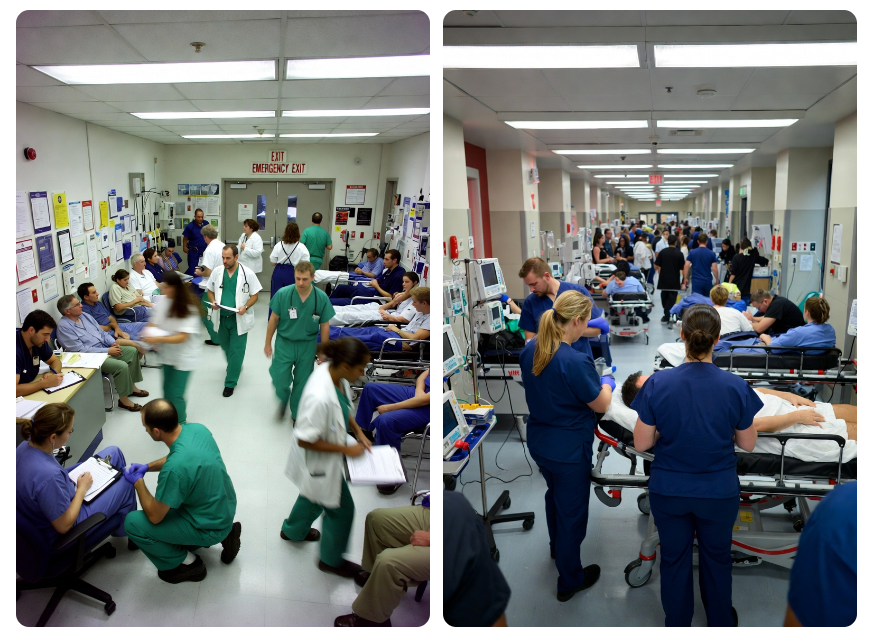
Is any A&E system, in the world, hitting targets, post pandemic?
Note - this is an AI report so far more trustworthy than anything you'll get from BBC Scotland, STV, the Herald.................
No, it appears that no major A&E (Accident & Emergency) or emergency department (ED) system worldwide is consistently hitting its pre-pandemic-style performance targets in the post-pandemic period (roughly 2022 onward, up to early 2026). The COVID-19 pandemic caused lasting disruptions, including backlogs, staffing shortages, increased demand, and changed patient behaviors, leading to widespread declines in meeting wait-time standards. Many systems (especially in English-speaking countries with explicit national targets) have struggled significantly:
- United Kingdom (NHS England) — The traditional 4-hour target (95% of patients admitted, transferred, or discharged within 4 hours) has not been met nationally since July 2015, and performance has worsened post-pandemic. In 2024/25, major (Type 1) departments achieved only around 59%. A revised interim target of 78% by March 2026 has been introduced, but recent data (e.g., January 2026) shows around 72.5% overall (lower for major departments at ~58%), with record highs in long waits (>12 hours). No full recovery to pre-pandemic levels, let alone the original target.
- Other UK nations (Scotland, Wales, Northern Ireland) — Similar issues with the 4-hour and 12-hour standards; performance has fluctuated but remains below targets, with increases in long waits post-pandemic.
- Australia — National Emergency Access Targets (NEAT, often the “4-hour rule” with >80% within 4 hours in some contexts) saw declines post-COVID. Urgent/semi-urgent patients on-time rates dropped (e.g., from 67% to 61% in recent data), though some elective surgery waits improved. No evidence of consistently meeting targets system-wide.
- Canada — Provincial variations exist, but ED wait times remain prolonged, with interventions showing mixed results. No national system is reported as fully meeting pre- or post-pandemic benchmarks consistently.
- United States — No strict national ED wait-time targets like the UK’s, but median waits are around 2-3 hours (higher than many European systems). Overcrowding and boarding persist post-pandemic, with emergency use for non-urgent issues common due to access barriers.
- Europe (general) — Average waits are shorter (~1 hour 40 minutes in some aggregates), thanks to universal systems, but specific country-level targets (where they exist) face similar pressures. No widespread reports of systems fully hitting ambitious targets post-pandemic.
Some isolated improvements or less stringent targets appear in places (e.g., minor/lower-acuity departments often perform better, or temporary gains during low-demand periods), but no entire national or major regional A&E/ED system is reliably achieving high-end targets (like 90-95% within 4 hours) as seen pre-2010s in some cases. Challenges like workforce shortages, rising attendances, and hospital bed block continue to hinder recovery.If you’re referring to a specific country, target, or hospital, more details could help narrow it down—performance varies by location and metrics.
40 sources at: https://x.com/i/grok?conversation=2024071678498656333
Please Support Talking-up Scotland at:

https://www.crowdfunder.co.uk/p/support-talking-up-scotland

Click on the above.

Or direct bank transfer at Sort Code 08-91-04  Account - 12266421 Name - JOHN ROBERTSON
Discover more from Talking-up Scotland
Subscribe to get the latest posts sent to your email.
 Talking-up Scotland
One thought on “No A&E system in the world is reported as hitting targets, post pandemic yet Scotland’s media are addicted to it”