

From Scottish Budget 2026 to 2027, published today:
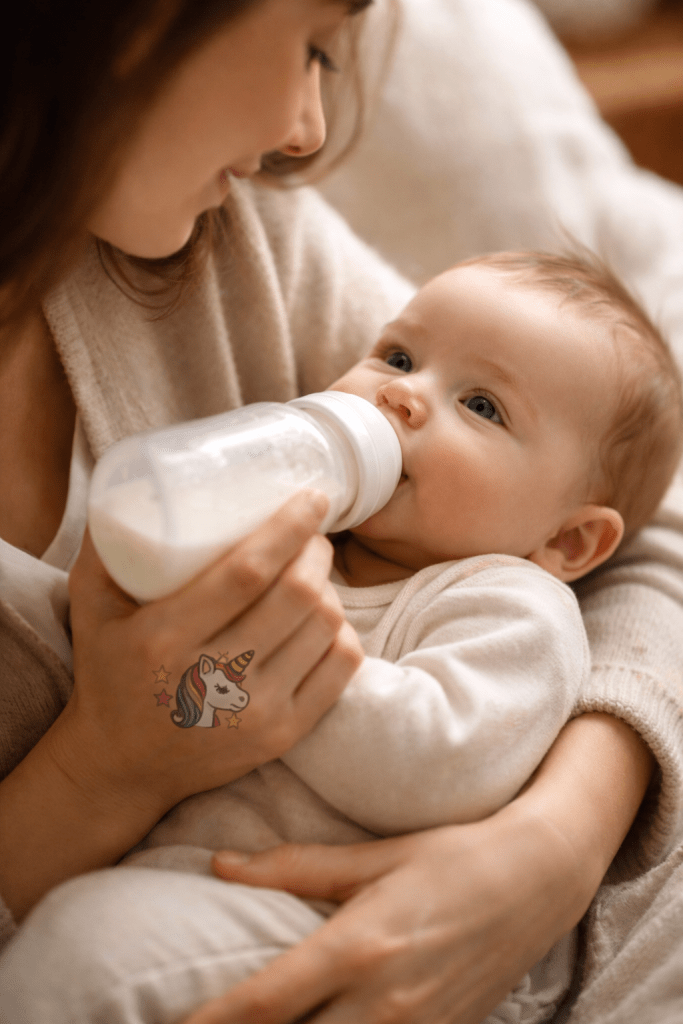
We will uprate the SCP in line with inflation to £28.20 per week per child. We will also begin the necessary work in 2026‑27 to introduce a new SCP Premium for under ones in 2027‑28. This will result in a total payment of £40 per week in respect of every child in the household under one. The additional payment is estimated to benefit the families of around 12,000 children.
https://www.gov.scot/publications/scottish-budget-2026-2027/pages/2/
This has been reported widely but in no case, to my knowledge, has it been linked to these numbers.
Also, important context into which to set this new development, but not being reported – how is the wider Child Payment programme rated by expert opinion in the UK and beyond?
The Scottish Child Payment (SCP), a weekly cash benefit provided by the Scottish Government to low-income families with children under 16, has generally received high praise from experts across the UK for its effectiveness in reducing child poverty and material deprivation. Evaluations highlight its role in improving family well-being, with some international comparisons positioning it as a leading model in Europe. While there are minor debates around potential work disincentives or the need for further increases, the consensus from academics, think tanks, and anti-poverty organizations is overwhelmingly positive, based on data showing tangible impacts.
Below is a breakdown of key expert ratings and analyses.UK Expert Evaluations
- Child Poverty Action Group (CPAG): In response to a 2025 Scottish Government evaluation of family payments including the SCP, CPAG described it as having a “positive impact” on families, enabling purchases of healthy food, school supplies, and participation in activities, while improving children’s happiness and parental mental health. They noted a 4% drop in child poverty in Scotland compared to rises elsewhere in the UK, calling for an increase to £40 per week to build on this success. cpag.org.uk
- Poverty and Inequality Commission: Their 2024 response to a parliamentary inquiry emphasized that the SCP is “very highly valued” by recipients, with qualitative feedback from experts by experience (people in poverty) highlighting its direct financial support. The commission’s advice for the 2022-2026 child poverty plan reinforced its societal-level impact on reducing inequality. povertyinequality.scot
- Institute for Fiscal Studies (IFS): A 2025 analysis found that the SCP does not create significant work disincentives in practice, despite theoretical concerns about income thresholds. Simulations and difference-in-difference comparisons with England showed no reduction in labor supply, even for secondary earners, suggesting criticisms of it weakening incentives are “overplayed.” ifs.org.uk
- London School of Economics (LSE), University of York, and University of Glasgow: A 2025 cross-nation study provided early evidence of “statistically significant reductions” in child material deprivation and food insecurity in Scotland compared to England post-SCP introduction. Without it, an estimated 70,000 more children would face these issues, marking it as a transformative policy. sticerd.lse.ac.uk
- Scottish Government Evaluations (via ScotCen and Ipsos): The 2022 interim evaluation and 2025 full evaluation of five family payments (including SCP) reported progress toward short- and medium-term outcomes, such as better labor market relationships and family support. Mixed-methods research confirmed its complexity but overall positive effects on low-income households. gov.scot +2
- Joseph Rowntree Foundation (JRF) and Other Poverty Experts: A 2025 JRF study credited targeted interventions like the SCP with potentially lifting thousands of children out of poverty, aligning with broader UK anti-poverty goals. childrenslegalcentre.wales Experts like those cited in media have called it “significantly reducing child poverty,” with high uptake rates (e.g., 94% in areas like West Lothian) demonstrating its importance. facebook.com
International and Broader Perspectives
- Professor Danny Dorling (University of Oxford): He has forecasted that the SCP’s expansion could shift Scotland from one of Europe’s most unequal regions to one of the most equal, describing it as creating “the largest fall in child poverty anywhere in Europe for at least 40 years.” This positions Scotland as a benchmark for fairer societies. facebook.com +1
- UNICEF and Global Evidence: Broader reports referenced in evaluations link direct child benefits like the SCP to reduced poverty worldwide, with improvements in health, education, and food security. The SCP is seen as an “economic stimulus” in low-income areas, with calls for similar models in places like Wales, where the Bevan Foundation labeled it the “most powerful and effective” intervention for child poverty. childrenslegalcentre.wales
- Children’s Legal Centre (Wales): Their 2025 assessment hailed the SCP as a “successful intervention” with positive outcomes for children’s well-being, recommending it as a lesson for Wales through grant-based schemes or top-ups. childrenslegalcentre.wales
Critiques are limited; some public discourse questions its targeting or potential misuse, but expert analyses (e.g., from IFS) refute major flaws. Recent budget updates, like uprating to £28.20 per week and a £40 premium for under-1s by 2027/28, have been welcomed as steps to enhance its impact. Overall, the SCP is rated as a flagship policy driving Scotland’s unique decline in child poverty amid UK-wide rises.
That well? Heard any of this mentioned by Scottish media? Thought not.
Discover more from Talking-up Scotland
Subscribe to get the latest posts sent to your email.
 Talking-up Scotland
ITV briefly touched on the Scottish Budget with their reporter , Peter Smith , doing his usual putting the boot into the Scottish Government for his UK masters .
According to Peter , only a few thousand babies will be helped by the upgrade in the Child Payment but gave the impression that these were the ONLY recipients of the Scottish Child Payment . As for the lowest taxes in the UK , well , this only amounts to about £28 per year on average , says Peter .
Job Done !
If Peter Smith ever reports positively on the Scottish Government /SNP then it will be a cold day in Hell !
LikeLike
He’s obviously a liar then, we don’t need his lies repeated.
LikeLike
Keir Starmer posted this on ‘X’ on 8 January….
“I won’t apologise for lifting almost half a million children out of poverty. I won’t apologise for putting money back in people’s pockets. That’s why we are scrapping the two-child limit”.
Will he then apologise for wilfully retaining the two child limit from July 2024 to November 2025 , as this Tory generated policy was one that his Labour UK government decided to retain, so then he and his Labour party decided to keep punishing those families with children who were in poverty.
Also surely he, Starmer, should feel the need to apologise to the seven Labour MP’s who his party suspended for not voting with the party in keeping this Tory policy but instead those seven Labour MP’s voted to scrap it in 2024 !
Labour in power as UK government since July 2024 and only in November 2025 did they announce that the two child cap would be scrapped, that is an announcement they made in the November 2025 budget, that is months before the elections in Scotland & Wales in 2026.
Conveniently and so not a coincidence , the two child cap is to be scrapped the month before the elections in Scotland and in Wales in May 2026 as it is to be scrapped as a policy in April 2026.
Apparently fiscal responsibility was Starmer’s excuse for not scrapping it in 2024 , yet implementing a wealth tax upon the wealthy was not ever considered as a sound partial fiscal solution for the supposed financial shortfall left by the Tories.
How stupid does Labour , Keir Starmer & Morgan McSweeney think we all are ?
Not that stupid to swallow the content of that post by Starmer on the 8 January.
The polls tell us that is a fact , hence why Labour HQ are trying to backtrack on S*** decisions that they have made , ones that they know for sure will be rejected by voters in Wales & Scotland.
Karma finally visiting Starmer’s insufferable gloating and lies at PMQ’s when speaking to and about the SNP.
That’s the same SNP , who as a Scottish government, had said in June 2025 prior to Labour’s announcement on scrapping the two child cap in November 2025 that they, the Scottish government would “effectively scrap the impact of the two-child limit“ with them once again having to mitigate yet another cruel WM government’s bad policy that yet again impacts the most vulnerable and needy in our society. You won’t hear that being the chosen political ‘take’ from the BBC in the news where we are , that’s for sure.
As the BBC are way way too entrenched in only promoting anyone but the SNP.
Liz S
LikeLiked by 4 people