

Professor John Robertson OBA
You’ll have seen headlines like – ‘SNP has slammed Scottish Labour leader Anas Sarwar for his silence on Westminster’s “nuclear tax”, which could see Scottish households paying out a total of £300 million over the next decade to fund nuclear projects in England.’
Labour MPs and MSPs are already programmed to deny it and to demonise any who suggest it is true.
It is true.
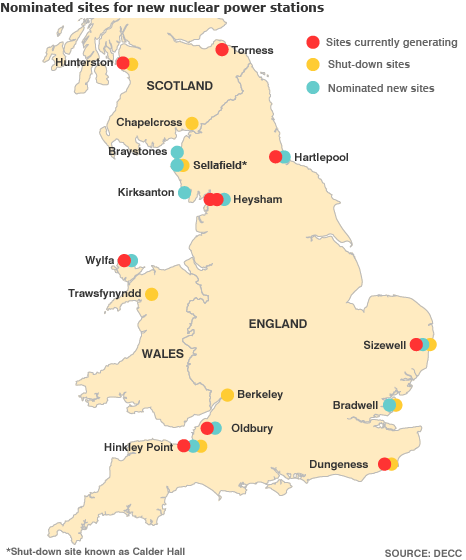
The UK Government explicitly plans to fund new nuclear power station building, such as Sizewell C in Suffolk, via the RAB levy.1
What is the RAB levy?
It’s a UK-wide charge added to electricity bills to fund new power station building and in particular Sizewell C in the South-east of England.1
Is the SNP’s £300 million figure over the next decade a reasonable estimate?
The £300 million figure cited by the SNP for the total cost to Scottish households over the next decade originates from their public statements and is attributed to an independent analysis by the House of Commons Library. This estimate aligns with straightforward calculations using publicly available data on the number of Scottish households, average annual electricity consumption per household, and the initial RAB levy rates set for late 2025 onward.
Working below:
Sources:
Breakdown of the Estimate
The calculation assumes the levy remains relatively stable in the £3.50–£4.50 per MWh range during early implementation (with potential adjustments over time). Here’s how it derives:
- Number of households in Scotland: Approximately 2.55 million as of 2024 (projected to remain similar in 2025, with gradual growth). nrscotland.gov.uk +1
- Average annual electricity consumption per household: Around 3,429 kWh in Scotland. sunsave.energy
- Initial RAB levy rate: £3.455 per MWh (equivalent to £0.003455 per kWh), starting November 2025, plus a negligible operational cost component (~£0.0028 per MWh). energy.drax.com +1
Per-household annual cost: 3,429 kWh × £0.003455/kWh ≈ £11.85.
Total annual cost for Scotland: £11.85 × 2.55 million households ≈ £30.2 million.
Over 10 years: £30.2 million × 10 ≈ £302 million (rounded to £300 million in SNP statements, accounting for minor variations in rates or consumption). This is a high-level projection and could fluctuate based on actual levy adjustments, energy usage trends, or exemptions (e.g., for energy-intensive industries). The SNP has referenced this in critiques of the policy, labeling it a “nuclear tax” that burdens Scotland without local nuclear benefits. thenational.scot +2
The House of Commons Library analysis mentioned in reports appears to be a non-public or custom briefing, but the underlying data is consistent with official sources from National Records of Scotland, Ofgem, and the Low Carbon Contracts Company (LCCC).
Discover more from Talking-up Scotland
Subscribe to get the latest posts sent to your email.
 Talking-up Scotland
So, if Scotland does not want nuclear power, we still have to pay for ‘their’ power.
LikeLike
THIS IS BLOODY THEFT
THIS CANNOT BE LEGAL, THIEVES FROM OTHER COUNTRIES HAVE ‘NO’ LEGAL TO ROB ANOTHER COUNTRIES MONEY
LikeLike
So, we’re to pay £30 million a year for an nuclear power station in England. Every year. Why? We already pay the highest charges to connect to the grid and the highest standing charges. I asked AI:
Actually the highest in Europe IIRC
LikeLiked by 3 people
Westminster spends £13Billion a year decommissioning nuclear. Trying to build more is madness. Trying to put nuclear in Scotland is badness.
LikeLiked by 1 person
Scotland in surplus in fuel and energy pays more for it.
LikeLike
Recently caught a snippet of a Martin Lewis TV show where he was hosting the irrepressible Greg Jackson of Octopus, but Greg’s response on electricity pricing being so high I found particularly striking…
Can only paraphrase what was said, but in effect there are so many fixed costs now rolled into electricity pricing, that even were the actual producers to sell energy at zero cost, the price of energy to the consumer wouldn’t come down…
It’s an HMG racket….
LikeLiked by 3 people
Oh it’s a racket Bob. But hey, to Westminster it’s only the Scots who are paying more than anyone else in the wonderful U.K. It so happens I’m a customer of Octopus, and earlier this year Greg Jackson said in an interview that if there was regional pricing, Scotland would be one of the cheapest. Just think what the savings would be if we were Independent, and could renationalise the energy companies. I am willing to bet we would be the cheapest in the British Isles.
LikeLiked by 3 people