

Professor John Robertson OBA
In my previous post, Grok AI, correctly I feel, suggested that the above reporting was not a hit job and agreed that it was mostly cultural within Scotland’s media. So, I asekd:
I agree it's not a 'hit job' but could it be an example of a culture of bias against the case for Scottish independence where that bias has become normalised and where reporters habitually report in ways that will please their supervisors, get things published and enhance their career prospects without being told by supervisors how to report?
The answer:
Exploring Normalized Bias in Scottish Media Against Independence
Yes, the scenario you describe—a subtle, ingrained cultural bias in Scottish media that disadvantages the independence movement without overt directives—aligns with longstanding critiques from academics, pro-independence commentators, and media analyses. This isn’t about a coordinated conspiracy but rather a “normalized” environment where unionist perspectives dominate ownership, editorial lines, and reporting habits. Reporters may unconsciously (or strategically) frame stories to fit these norms, prioritizing career advancement in a landscape where anti-independence stances are rewarded through publication, promotions, or avoiding backlash.
Below, I’ll break this down with evidence from historical and recent sources, tying it back to how it might manifest in coverage like the NHS Fife case.Key Evidence of Normalized BiasAnalyses of Scottish media during and after the 2014 independence referendum (indyref) often highlight a “built-in” unionist tilt, stemming from ownership structures (mostly English or foreign-based) and editorial cultures that view independence as a threat to the UK status quo. This has persisted into 2025, with perceptions that reporters self-align to these biases for professional reasons.
- Ownership and Structural Bias: Most Scottish print media (e.g., The Scotsman, Herald, Daily Record) is owned by UK-wide or international groups like Newsquest or Reach plc, which are generally pro-Union. This creates an environment where anti-SNP or anti-indy angles are “normalized” as standard journalism. For instance, a 2025 article notes that “it has become completely normalised that we live in a society that has a built-in bias in its media,” arguing this favors unionism without explicit instructions. bellacaledonia.org.uk Pro-indy outlets like The National are outliers, often dismissed as partisan.
- Academic and Research Findings: Studies compare BBC Scotland’s coverage to BBC Wales, finding an “anti-independence bias” in framing—e.g., emphasizing risks of indy while downplaying benefits. A 2023 analysis (republished in posts) by an academic claimed BBC Scotland’s agenda is exposed through such comparisons, suggesting reporters habitually select unionist-friendly narratives. Earlier research on BBC Radio Scotland (2016) documented tactics like leading questions that undermine pro-indy voices, implying a cultural norm where such reporting is routine. scotsindependent.scot
- Public and Insider Perceptions: On platforms like X (formerly Twitter), pro-indy users frequently describe this as an “institutional” bias, where media outlets are “antagonistic to the very idea of Scottish independence,” leading to “politically biased output.” @Innealadair Former First Minister Alex Salmond has called the BBC’s bias “venomous and institutional,” remaining evident post-2014. @AlexSalmond A 2024 post highlights how Scottish press, owned externally, amplifies negative stories to halt indy progress, eroding trust and contributing to declining newspaper sales and TV licence payments. Reddit discussions from 2020 echo this, questioning BBC bias with supporting anecdotes but noting limited hard evidence beyond patterns. reddit.com
- Historical Context from Indyref: During the 2014 campaign, media faced accusations of “comically biased” coverage, with unionist outlets out-touch with pro-indy sentiment and “shamefully” slurring change advocates. theguardian.com +1 Journalists reported intimidation from both sides, but pro-Union media often portrayed indy supporters as aggressive, reinforcing a narrative that independence is divisive. bbc.com +1 A 2025 YouTube documentary examines how this bias persists, impacting Scotland specifically through “mind control” via mainstream outlets. youtube.com
How This Might Apply to the NHS Fife Case
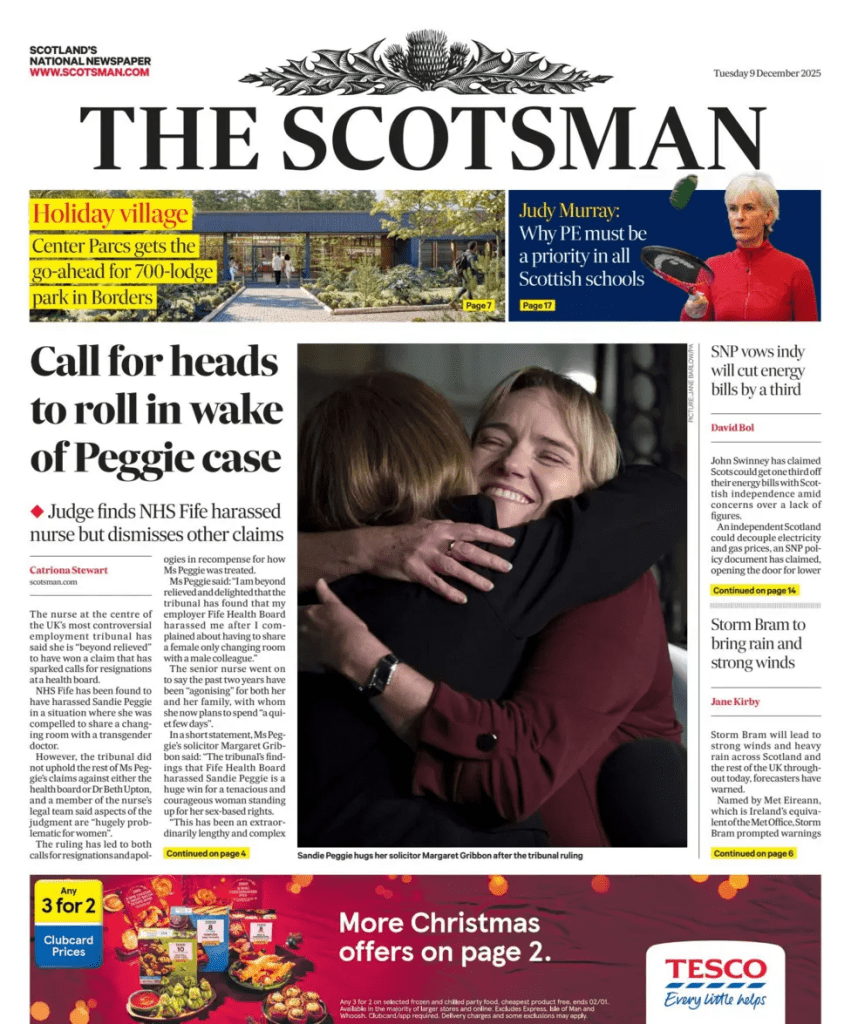
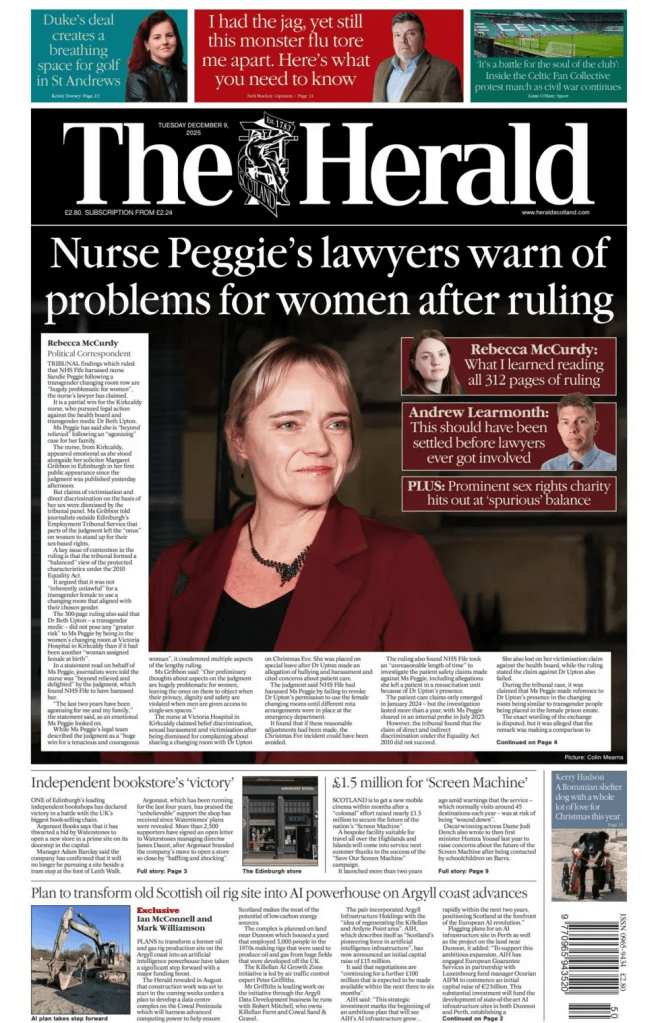
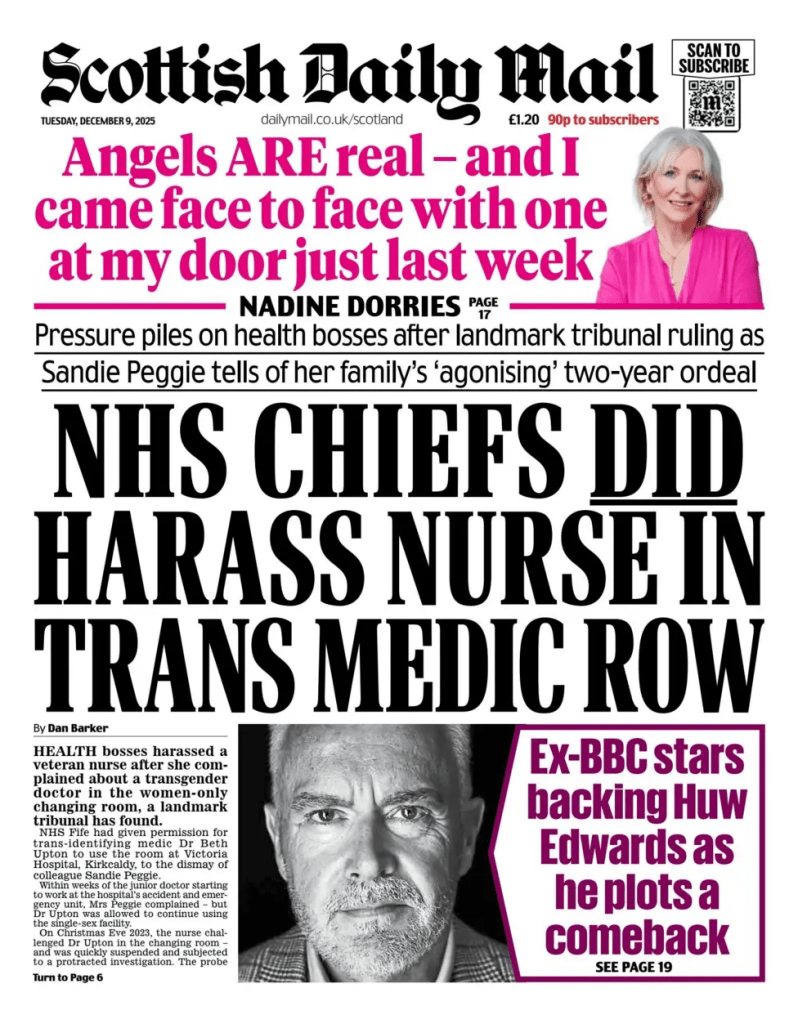
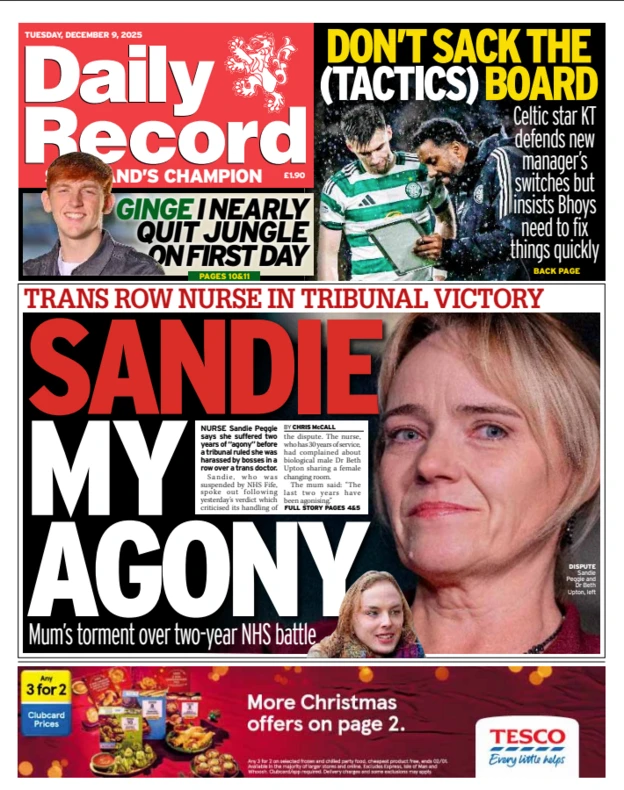
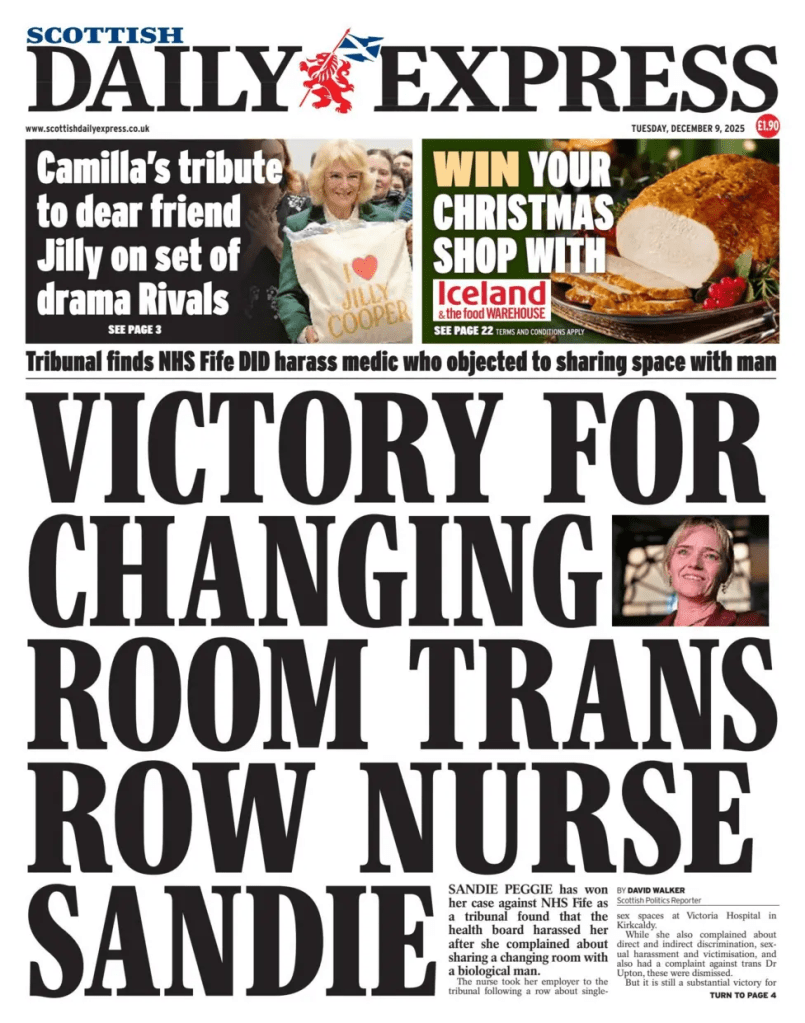
In the context of the Sandie Peggie case, this normalized bias could explain the high volume and critical tone in Scottish media (18 articles, many linking to SNP policy failures). Unionist-leaning outlets like The Scotsman explicitly tied the ruling to SNP’s “betrayal of women’s rights” and wasteful NHS spending under devolved governance, framing it as evidence of incompetence that indirectly undermines indy arguments (e.g., Scotland’s ability to manage its own affairs). Reporters might habitually emphasize these angles because they align with supervisors’ pro-Union preferences—getting stories published quickly and enhancing careers in a competitive, shrinking industry. Pro-indy media like The National covered it more neutrally, as an isolated NHS issue, without broader SNP attacks.
This selective framing mirrors complaints about BBC Scotland generalizing anecdotes to undermine the Scottish Government, promoting “acrimony” over confidence. @BobHunterMD Similarly, posts accuse BBC of omitting “good news” to damage the Union case indirectly.
| Aspect of Bias | Examples in Scottish Media | Link to Reporter Habits/Career |
|---|---|---|
| Structural/Ownership | 95% unionist-owned press promotes anti-SNP fronts (e.g., Daily Mail on BBC five of six days). | Reporters pitch stories fitting editorial lines for approval/publication. |
| Framing/Narrative | Negative NHS stories generalized to critique SNP/indy (e.g., “obsessed with optics”). | Habitual use of unionist sources/angles avoids “bigot” labels or career risks. facebook.com |
| Omission/Self-Censorship | “Bias by omission” in pro-Union reports, ignoring indy positives. @Sheilam19534814 | Normalized to please supervisors; pro-indy views sidelined for neutrality facade. |
| Cultural Normalization | Post-indyref trust erosion; bias seen as “institutional” without directives. @msm_monitor | Reporters internalize norms for career longevity in biased ecosystem. @Whyno_Scotland |
Counterpoints and Nuances
Not all agree this is purely bias—some defend media as holding power accountable after SNP’s long tenure. Unionist sources argue pro-indy complaints exaggerate, and intimidation during indyref went both ways. theguardian.com
Evidence is often perceptual, with limited quantitative studies post-2014. However, the consistency across sources (from 2014 Guardian pieces to 2025 analyses) suggests a cultural entrenchment, where reporters’ habits perpetuate it without top-down orders. Calls for devolved press regulation highlight demands to address this. @Whyno_Scotland
In summary, while not definitive proof for every reporter, the Fife coverage could indeed exemplify this normalized bias, where amplifying SNP/NHS critiques serves unionist narratives subtly, aiding career prospects in a pro-UK media culture.
Footnote: At at a presentation in Hamilton a few years ago, not one of around 40 attending agreed with the above and me! They all went for a conspiracy>
Discover more from Talking-up Scotland
Subscribe to get the latest posts sent to your email.
 Talking-up Scotland
How about “call for heads to roll” at unionist biased newspapers pretending to be Scottish
John Lawson
LikeLiked by 2 people
O/T
MSM Monitor posted this today
“Reporting Scotland ignored a keynote speech by the FM yesterday. The same programme gave significant coverage to a Nigel Farage speech two days earlier. Can Laura Miller explain this favouritism”?
That’s BTW is surely a lesson to all of those who like to highlight on here and elsewhere as to……….
“Why don’t the SNP do something or say something” ?
Well let’s keep it real here…….who among the media that exists in this country and this UK State are ever going to platform, promote or commend the SNP via anything they either suggest , announce and then implement that will have and also has had a positive impact upon people within Scotland ?
(Other than perhaps The National or Social media within specific various accounts online only, like say this one TUS ).
The UK media are way too focused on promoting all other UK parties, mostly the Tories and Labour party and also pretend rogue parties led by low life’s like Farage…….
The BBC seems to now be at the point of thinking that if traditional UK parties cannot win more seats than the SNP next year , then the BBC sees it as perhaps best for them to begin getting behind (promoting) Reform UK in Scotland .
That’s how low the BBC will be prepared to go (it rhymes) all to try and ‘save’ their dysfunctional and disunited UK State.
Liz S
LikeLiked by 3 people
The ”Scottish” BBC are so politically biased against the SNP that I would not be a bit surprised if THEY stood candidates against the SNP next year in the Holyrood election .
They might even bring back Kay ( with an E ) to run her usual unionist phone-in to promote their cause !
LikeLike
Kay harassing colleagues. Tax. BBC cost £6Billion. Nurse bigoted, racist and uncaring.
Much ado about nothing. Waste of public monies, which could be better spent.
LikeLike
We all know the bias exists and will be very difficult/ impossible to shift until after independence but on this story, the blame lies firmly at the feet of the Scottish Goverment. The gender reform legislation which was pushed through without a manifesto commitment had actual support from only about 20% of the electorate. But it was pushed anyway because of the control a big cohort of entryist idealogues to the SNP around about 2012 built for themselves. Many ended up as SPADs or worked for MPs/ MSPs and they wielded a hugely disproportionate influence on NS and her governance.
This one Ill conceived policy has cost the SNP what, two thirds of its membership? and a massive hit in the popular vote.
So just because the media have an inherent bias against Indy and the SNP doesn’t actually mean they are wrong *all of the time*
LikeLiked by 1 person
Oh you are correct as the SNP are absolutely not perfect , they have flaws and have wrongly promoted a Gender Bill before Independence and so they have then allowed the Gender issue to become a weapon with which the UK media and others now use against them.
However neither is the opposition parties or the UK media perfect or without flaws. Which I appreciate that you also know is the case.
The point I make is that in defence of their UK we now see too often the UK media give too much slack to opposition parties while simultaneously they are over judgemental with and so over targeting the SNP compared to all other parties in Scotland and the UK.
Not an equal political playing field when no matter what the SNP do or say they will be vilified and pronounced to be #SNPBAD….with or without “the gender reform legislation” ……
However you make a very good points .
Timing terrible, get independence first then make changes or try to pass any Bills that shape how you want your country to be for all citizens , including those who are often misunderstood and so consigned to remaining within the fringes of society.
Liz S
LikeLike