

Support Talking-up Scotland's work to counter the lies and get you the facts, daily, at: https://www.crowdfunder.co.uk/checkout/help-talking-up-scotland-tell-truth-about-scotland/payment/nBQxjVzq/details or by direct bank transfer method - Sort code 08-91-04, Account 12266421
Professor John Robertson OBA
From BBC Health today and broadcast on BBC Breakfast on repeat:
Senior cancer doctors are warning that excessive red tape means some patients in England are struggling to access the latest cancer treatments. The Royal College of Radiologists (RCR) says bureaucracy is “stifling innovation” and that applying for funding to pay for new treatments can be “cumbersome” for some cancer centres. It says the situation is leading to an unacceptable postcode lottery with some cutting-edge treatments only available in the larger, better-funded units.
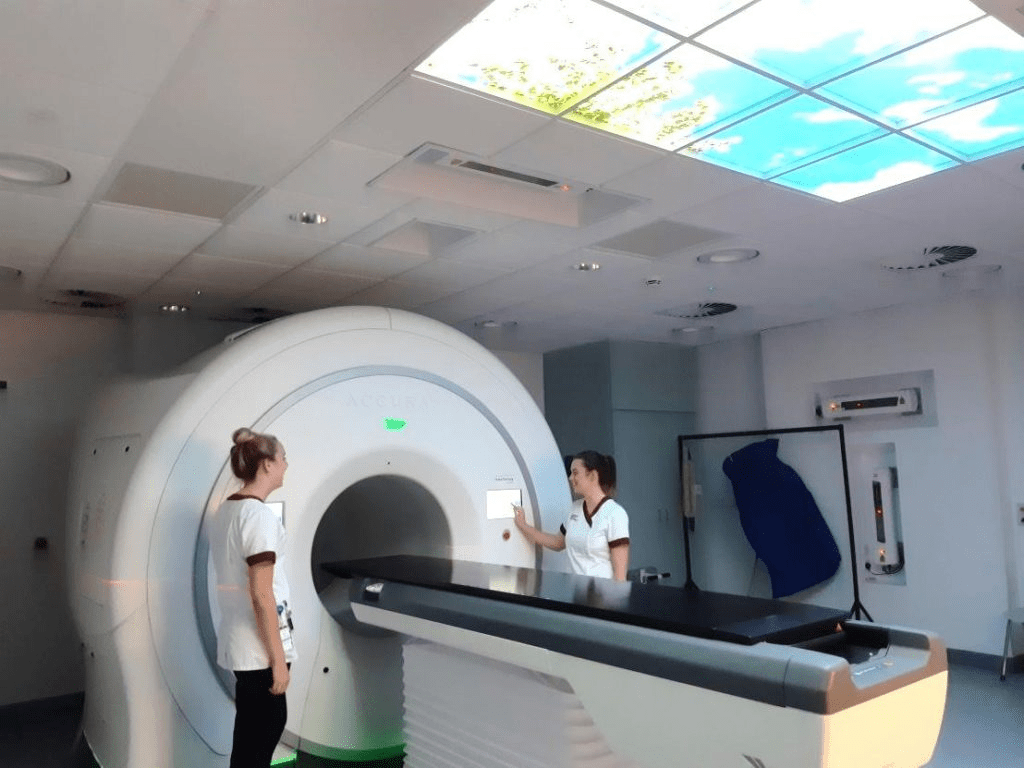
The RCR says that even some well-established advances, such as Stereotactic Ablative Body Radiotherapy – or SABR – can still be difficult to access.
The situation in Scotland?
No Significant Postcode Lottery as of 2025 – Official policies and investments indicate uniform national commissioning, with no evidence of major geographical inequalities. Patients from rural areas are referred to centres with support (e.g., via NHS travel expenses). The 2022 plan’s focus on “person-centred access without geographical disparities” and ongoing monitoring (e.g., via the National Radiotherapy Programme Board) support this. Updates in the 2023-2026 Cancer Action Plan and 2024 progress reports show continued implementation without reported disparities.
Cancer Action Plan for Scotland 2023-2026: Additional up to £2.8 million for SABR rollout, including network development for oligometastatic treatment, ensuring sustained national access.
National Cancer Plan Progress Report (August 2022): Confirms the radiotherapy plan’s delivery, including SABR expansion, with quarterly oversight to maintain equity. No mentions of access variations by location.
Source: Scottish Government publication (October 2022). Available at: https://www.gov.scot/publications/scotlands-national-cancer-plan-report-progress-actions-31-august-2022/
The above has had no media coverage and in June 2025, stewartb exposed bias in the Scottish media reporting on supposed radiology staff shortages in Scotland, key to the above success:
What of the ‘cancer time bomb’ that is headline news in several newspapers in Scotland and above the BBC News website’s ‘Scotland’s papers’ feature and also in a separate BBC Scotland article on the the same website?
This has all been catalysed by the following Royal College of Radiology (RCR) reports: (i) ‘Clinical Radiology – Workforce Census 2024’ and (ii) Clinical Oncology – Workforce Census 2024.
Both reports cover all four nations of the UK although one would be hard pressed to realise this from the newspapers front pages. One would not know of the UK-wide scope EVEN after careful reading the BBC Scotland piece in FULL
I can find no reference to these reports – and this ‘time-bomb’ – anywhere else in the BBC News website. Not even in the Health section – at least up till c.6pm this evening. So can we find the ‘time-bomb’ – is it located only in Scotland?
The RCR issued a press statement (June 5) to accompany the publication of its reports. It has this title: ‘Staff shortages are a ‘ticking time bomb’ for cancer patients, doctors warn’. It also has this: ‘Cancer patients are facing dangerous delays to life-saving scans and treatment as the chronic shortage of doctors threatens to derail cancer care across the UK, new data reveals.’
And: ’A patient’s risk of death can increase by 10% for every month cancer treatment is delayed. Despite this strong evidence, in 2024 every radiology leader in the UK reported delayed diagnostic scans due to staff shortages. Worryingly, 9 in 10 cancer centre leaders reported delays to patients starting treatment, and 7 in 10 were concerned about staff shortages putting patient safety at risk.‘
So the ‘ticking time-bomb’ and the RCR’s more measured statements in the two reports expressing concerns for the state of the cancer-related NHS workforce, are directed clearly, explicitly at NHS management and responsible governments in all four nations of the UK!
The BBC Scotland piece on the BBC News webs site referred to above – ‘Cancer care ‘time-bomb’ warning over doctor shortage’ (it has a ‘Scotland politics’ tag) – provides quotes from Dr Katharine Halliday, president of the RCR. These were lifted from the RCR’s press release on its two new reports: Dr Halliday was commenting on UK-wide issues, not Scotland-only issues as the BBC article either deliberately or though flawed journalism/editing implies.
So candidly, there are specific metrics that reveal Scotland in a less favourable light, specifically concerning aspects of the oncology workforce: there are others which reveal Scotland to be ‘best’.
The BBC News article notes that Scotland currently has a 25% shortage of radiologists. What does the actual RCR report state about the radiologist workforce?
‘Northern Ireland has a 27% workforce shortfall, Scotland a 25% shortfall, England a 30% shortfall and Wales a 32% shortfall.’
Adding: ‘There are also variations at the regional level. Some areas have below-average shortfalls, such as the 6% shortfall in South East Scotland.
‘Some regions’ shortfalls are significantly higher; North and West Wales’ workforce is almost half of what it should be, with a 46% shortfall.’
These substantially worse statistics outside Scotland are seemingly unremarkable, not newsworthy and irrelevant to BBC Scotland which is a context and perspective desert!
Are Scotland’s voters being ‘played’ by BBC Scotland and others – are these media organisations attempting deceit and/or manipulation?
Discover more from Talking-up Scotland
Subscribe to get the latest posts sent to your email.
 Talking-up Scotland